
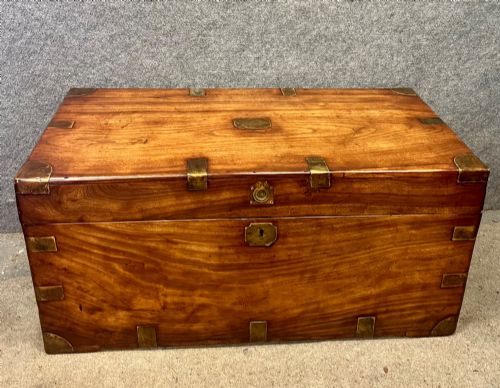
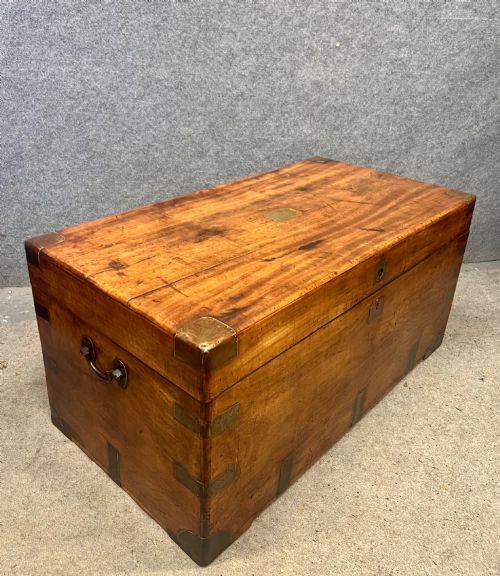
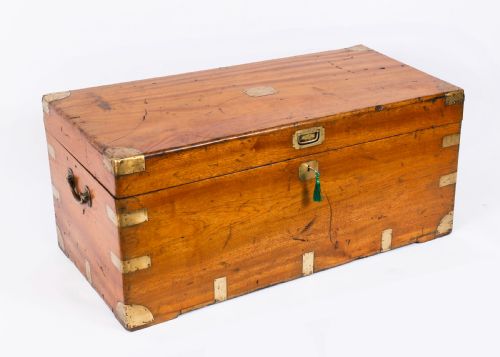

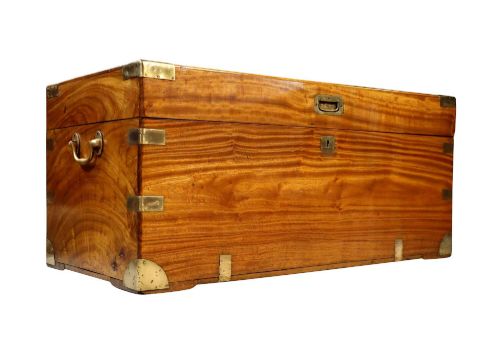
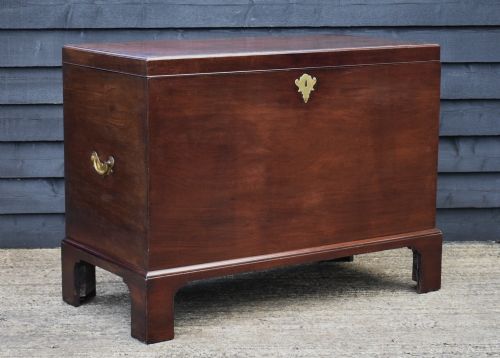
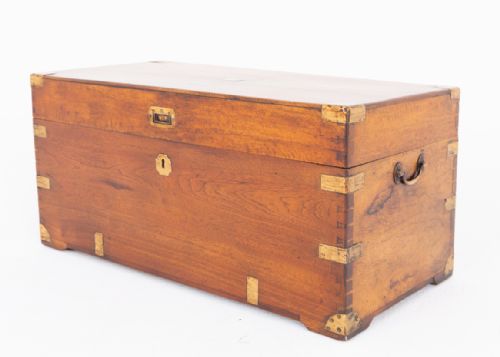

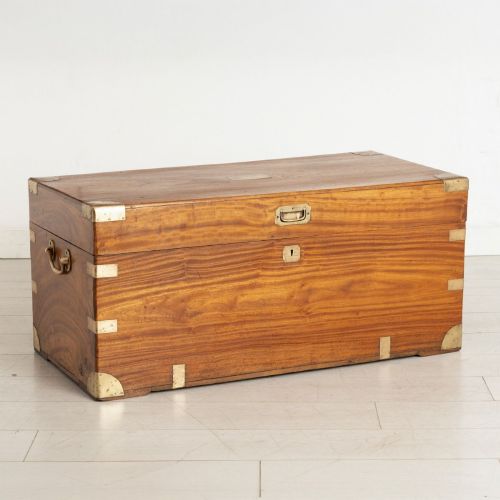
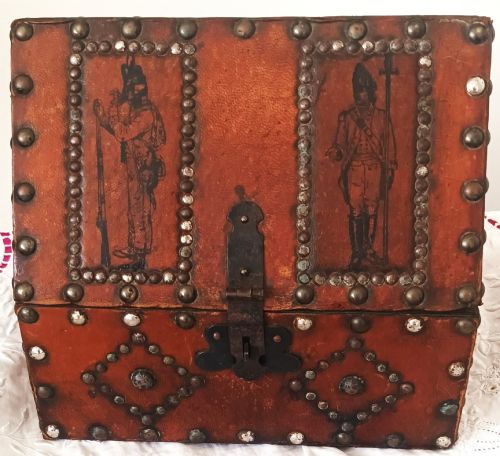
Brass Bound Military Coffer
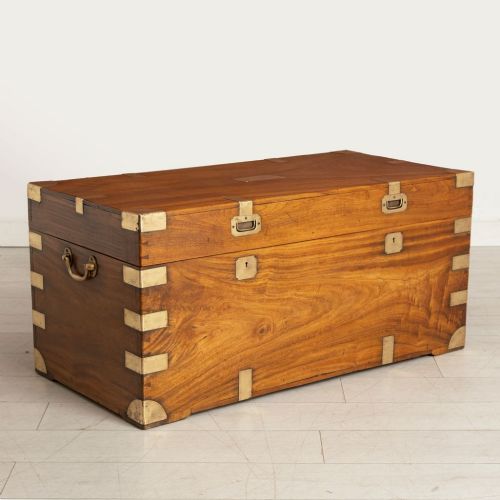
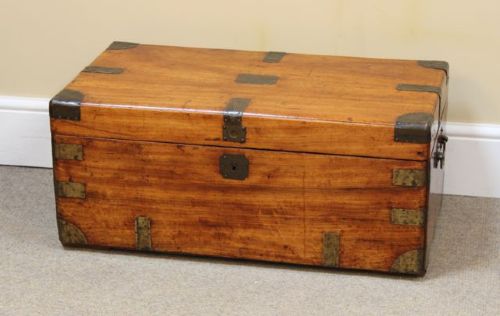
A brass bound military coffer is a robust travelling chest built for officers on the move, offering sturdy storage and enduring campaign style.
Brass Bound Military Coffer
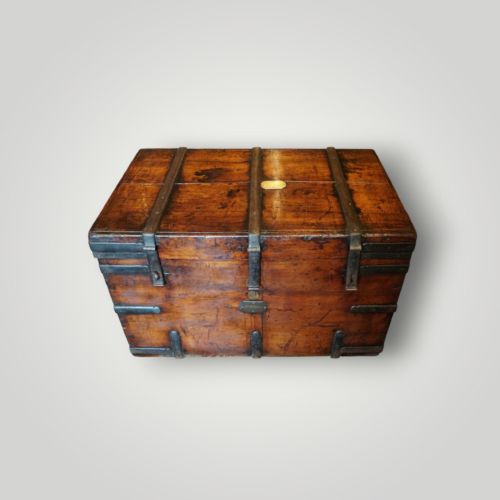
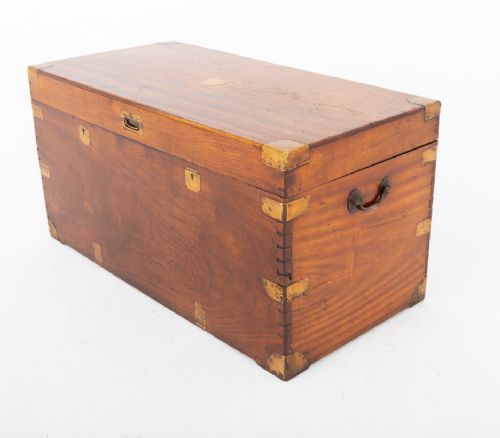
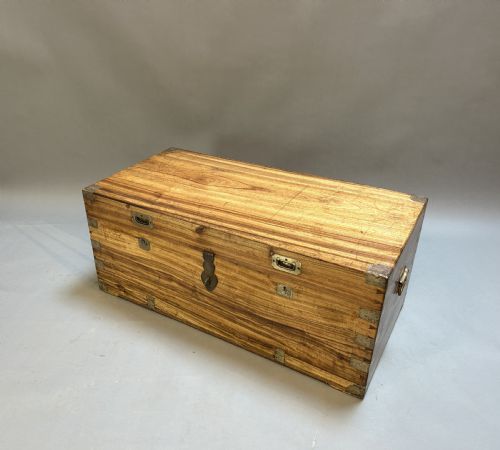
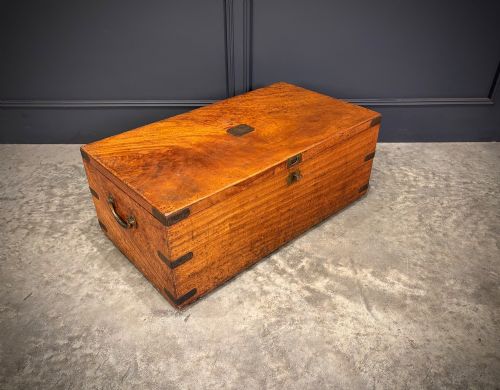
A brass bound military coffer primarily takes the form of a campaign trunk or chest designed for transport during the Georgian and Victorian periods. Buyers frequently encounter these pieces constructed from fragrant camphor wood or teak, often separated into modular sections for ease of travel.
The origins span British military deployments globally, resulting in trunks fashioned by colonial workshops or domestic makers for officers stationed abroad. These pieces serve practical storage roles today while retaining the distinct hardware and recessed handles of active service.
Quality and Detail
The calibre of a brass bound military coffer rests in the integrity of its timber selection and the precision of its brass work. Superior examples display carefully matched grain patterns across the lid and sides, accompanied by fully operational internal compartments and original locks.
Finishing touches like recessed carrying handles, working keys, and dovetail joints executed with strict accuracy distinguish better workshops from utilitarian field supply. The retention of original hardware rather than modern replacements preserves the character and historical integrity of the piece.
Several trunks retain the original water-resistant seals and faint traces of distant spices buried deep within the camphor grain.
The Brass Bound Military Coffer Glossary
- Campaign trunk
- A portable chest built in sections with flush fittings and protective brass corners designed for military officers on active service. These boxes packed easily onto pack animals or wagons.
- Camphor wood
- An aromatic timber native to Asia utilised for campaign furniture because its natural scent repelled moths and insects. It also resisted moisture in tropical postings.
- Flush handle
- A metal lifting ring recessed into the surface of a trunk so it does not project during transport. This design prevented snagging in tight packing spaces.
- Dovetail joinery
- An interlocking woodworking joint formed by interlocking wedges that provides exceptional tensile strength. It held strong against the constant motion of travel.
- Escutcheon
- A protective plate surrounding a keyhole, usually cast in brass on these pieces. It reinforced the wood around the lock mechanism.
Brass Bound Military Coffer: Frequently Asked Questions
What is a brass bound military coffer?
A brass bound military coffer is a heavy-duty storage chest fitted with metal hardware to protect against the wear of travel. Officers used them to transport uniforms, maps, and personal possessions during campaigns.
Today, these pieces function as coffee tables or blanket boxes in domestic interiors. Their durable construction allows them to handle everyday modern use.
How do I date a campaign trunk?
Dating relies on timber choices, construction methods, and the style of the brass fittings. Pieces from the Georgian era often show hand-cut dovetails and specific brass corner plate shapes, while Victorian examples frequently utilise solid camphorwood and marked locks.
Examining the internal layout and any surviving inscriptions or military titles provides further clues. Comparison with documented pieces helps narrow down the decade of manufacture.
Why use camphor wood for military trunks?
Camphor wood possesses a strong natural aroma that effectively repels moths, silverfish, and other destructive insects. This property proved essential for officers storing wool uniforms and papers in tropical climates.
Furthermore, the wood is relatively lightweight yet resilient, resisting warp and moisture damage. These traits made it the preferred material for colonial campaign furniture.
How do I care for camphor wood furniture?
Maintenance requires avoiding direct sunlight and excessive heat sources that can dry out the natural oils in the timber. A light application of appropriate wax preserves the surface sheen without harming the wood.
Keeping the interior clean ensures the distinctive scent remains fresh. Gentle dusting with a dry cloth maintains the exterior brass and timber.