




Brass Bezel Bracket Clock
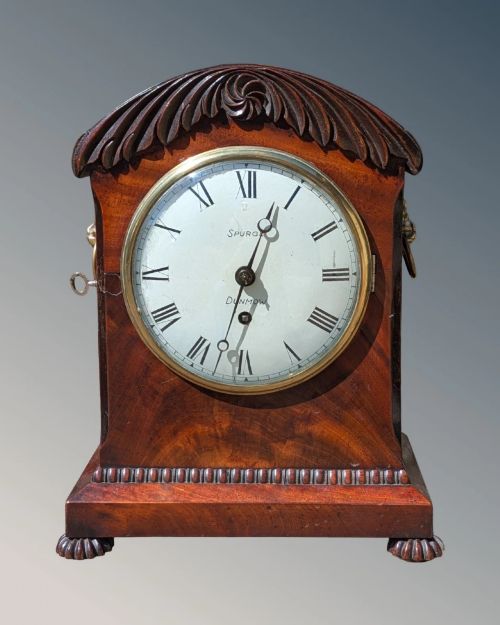
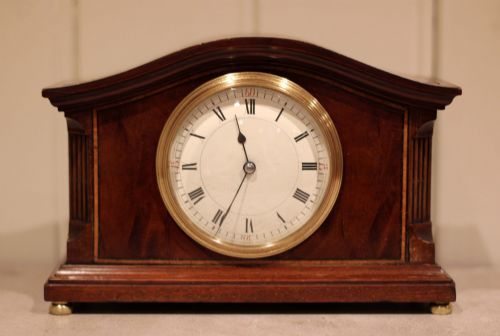
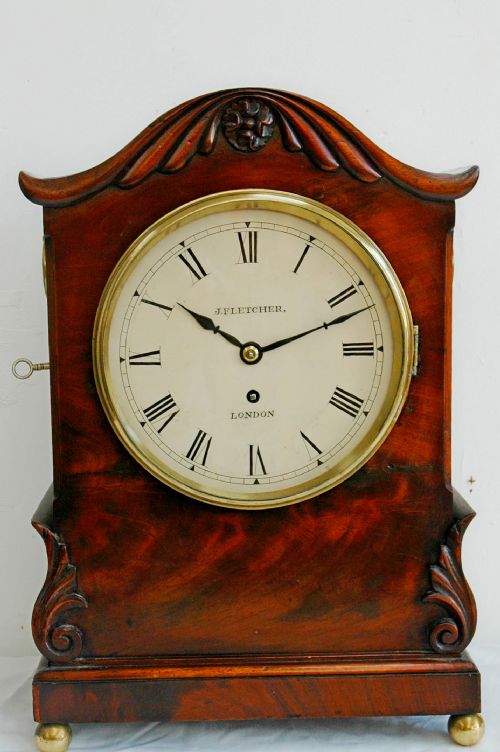
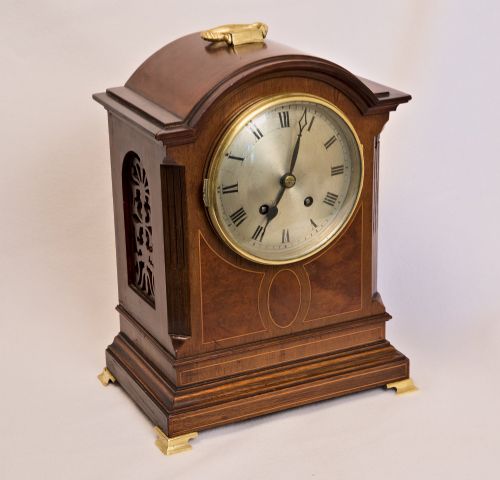
A brass bezel bracket clock brings precision engineering and rich mahogany or oak woodwork to a mantelpiece.
Brass Bezel Bracket Clock
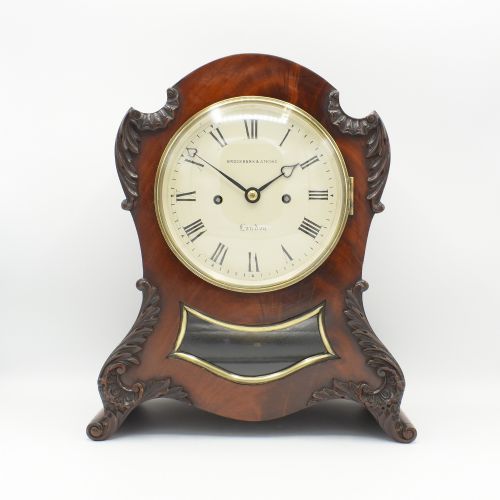
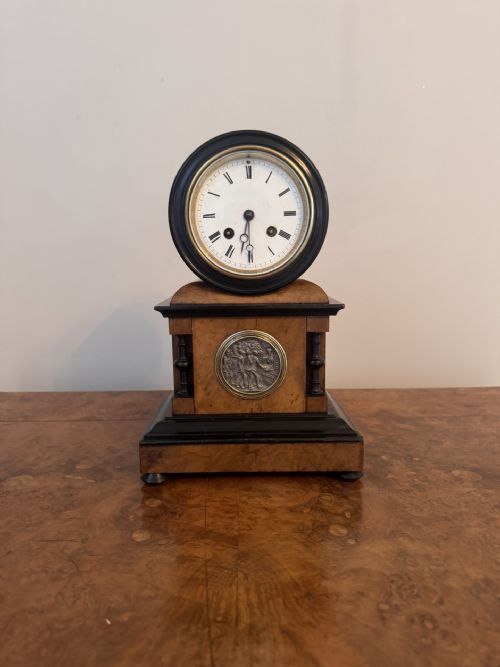
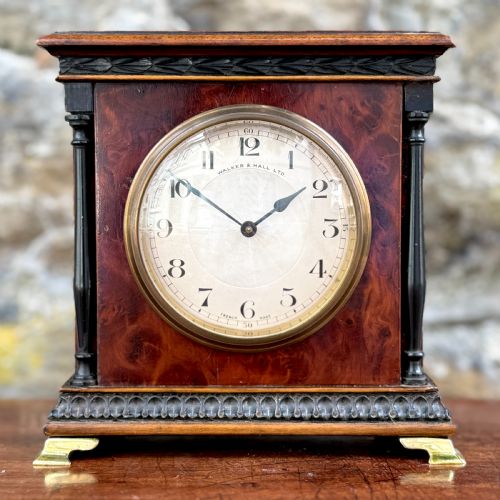
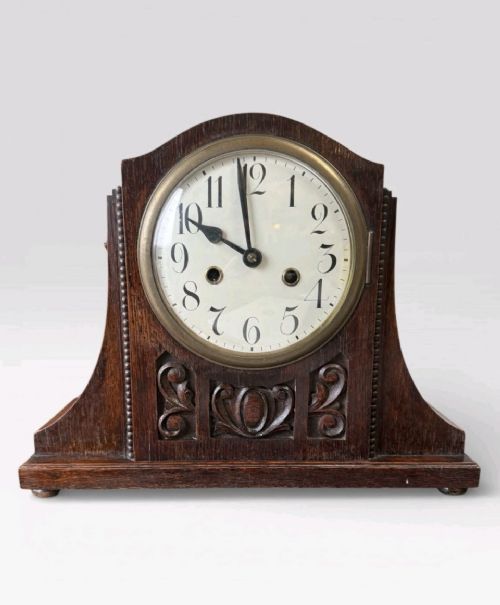
A brass bezel bracket clock is a timekeeper designed to sit on a bracket, shelf, or mantelpiece, distinguished by the metal rim holding its glass dial cover. When you search for a brass bezel bracket clock, you encounter pieces spanning from the Regency and Victorian eras through the Edwardian period and the early twentieth century.
Origins stretch across British workshops and makers from London to provincial towns, supplemented by 19th-century French examples. These clocks served both domestic sitting rooms and institutional spaces, resulting in a diverse array of sizes and decorative schemes.
Materials and construction methods
Clockmakers utilised dense timbers such as mahogany, oak, and walnut for the structural cases, often enhancing them with satinwood inlay, ebonised wood, or faux tortoiseshell finishes. The metalwork relies heavily on brass for bezels and dials, paired with glass to protect the face.
Movements span mechanical fusee systems and standard spring-driven mechanisms, requiring careful gear assembly and metalworking skill. Enamel and silvered metal dials provide a clear reading surface beneath the protective brass bezel.
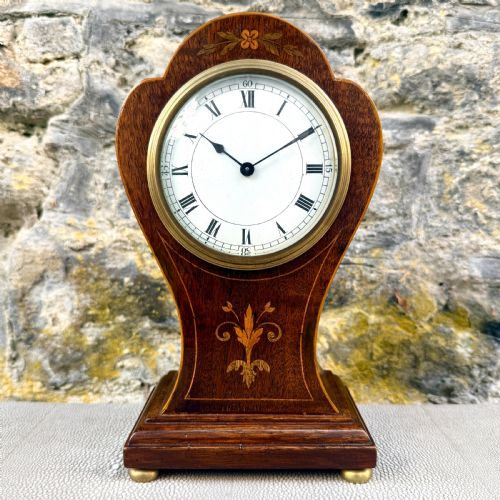
Timekeeping includes an Edwardian model inlaid with a whimsical Dutch girl.
Distinguishing quality across examples
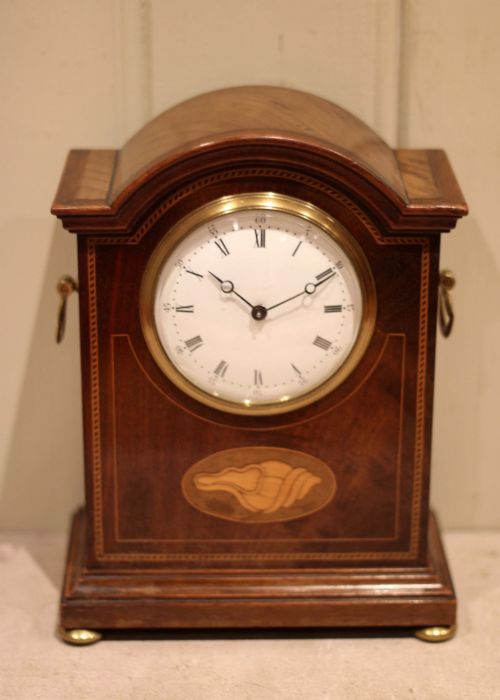
The distinction between standard production pieces and superior examples rests on the crispness of the cabinetwork and the complexity of the movement. Finely figured mahogany, intricate floral or figural inlay, and substantial brass bezels indicate higher workshop standards.
The presence of a fusee movement, which maintains even tension as the mainspring unwinds, points to superior horological craftsmanship compared to simpler timepieces. Signed dials by recognised makers also elevate the standing of a piece.
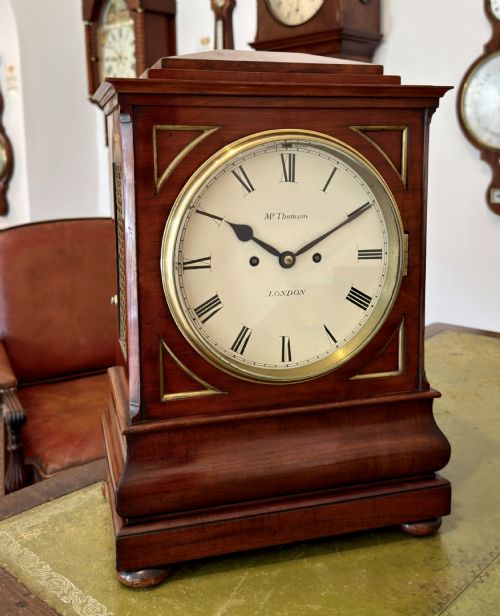
Thomson of London·Brockbanks & Atkins·Walker and Hall·Spurge Dunmow·W. Burton·Piggin Norwich·Hampson & Son·Louis Recordon·Jas Whitelaw of Edinburgh·J.W.Benson·DeLa Salle And Christie·Osborn of Bognor Regis
The Brass Bezel Bracket Clock Glossary
- Bezel
- The metal ring, typically brass, that holds the glass door or cover in place over the clock face.
- Fusee
- A conical pulley connected to the mainspring by a chain or cord that equalises the driving power as the spring runs down.
- Bracket clock
- A portable timekeeper originally designed to stand upon a matching wall bracket or shelf.
- Timepiece
- A clock that tells the time without incorporating a striking mechanism to chime the hours.
- Dial
- The face of the clock where the numbers and hands indicate the time, often rendered in enamel or silvered metal.
Brass Bezel Bracket Clock: Frequently Asked Questions
What is a brass bezel bracket clock?
It is a portable mechanical timekeeper housed in a wooden case, featuring a metal ring that secures the glass over the dial.
These clocks were built to rest on shelves, mantelpieces, or dedicated wall brackets in homes and offices.
How do fusee movements work?
A fusee uses a conical drum and a chain to regulate the pull of the mainspring.
This mechanism ensures consistent power delivery to the gear train as the spring unwinds, improving timekeeping accuracy.
Are these clocks purely decorative?
While they served as striking interior furnishings, they were also vital tools for keeping daily domestic schedules.
Many examples retain working mechanical movements designed to keep accurate time or strike the hour.
How do I identify an Edwardian piece?
Edwardian clocks often feature solid or inlaid mahogany cases with softer decorative motifs like marquetry poppies.
They frequently date from the early 1900s and reflect the refined cabinetmaking trends of that specific era.