
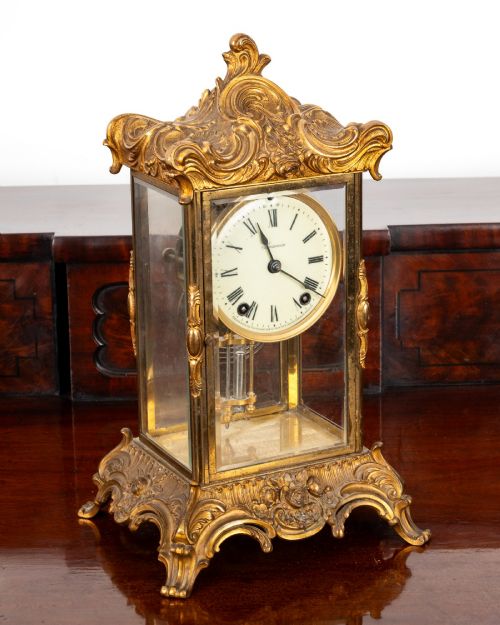


Brass Bevelled Glass Clock
A brass bevelled glass clock brings domestic timekeeping into focus through heavy metal frames and clear, thick panes.
Brass Bevelled Glass Clock
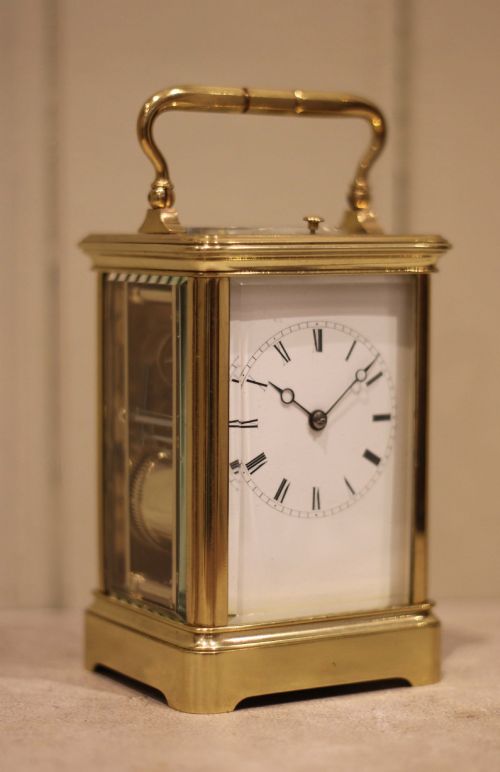
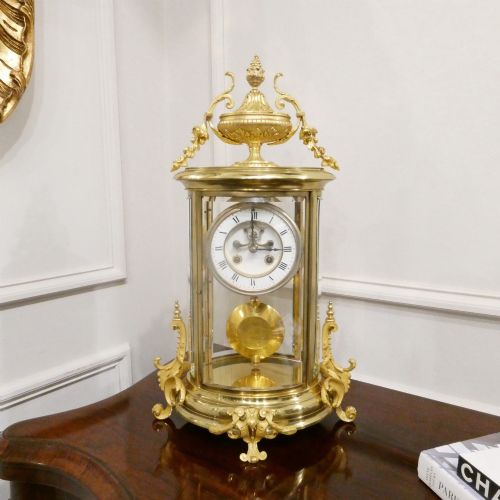
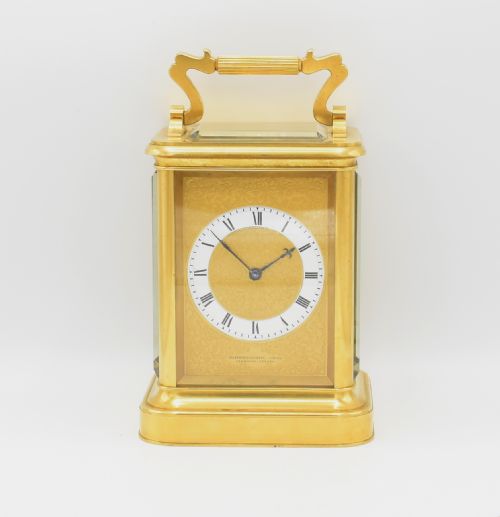
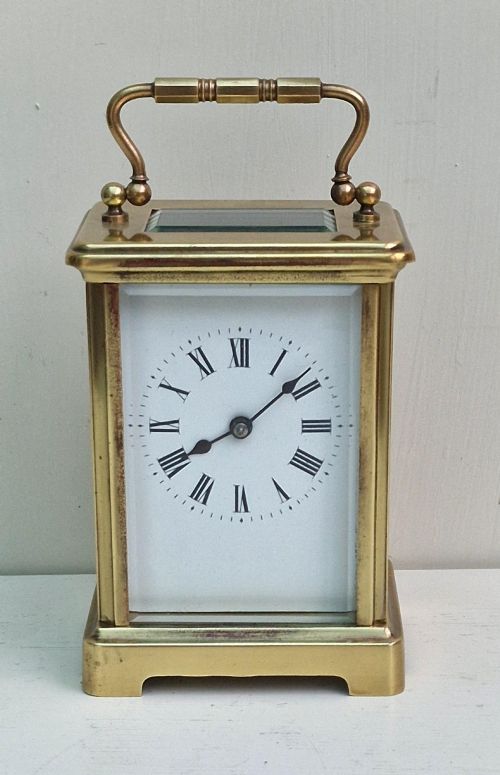
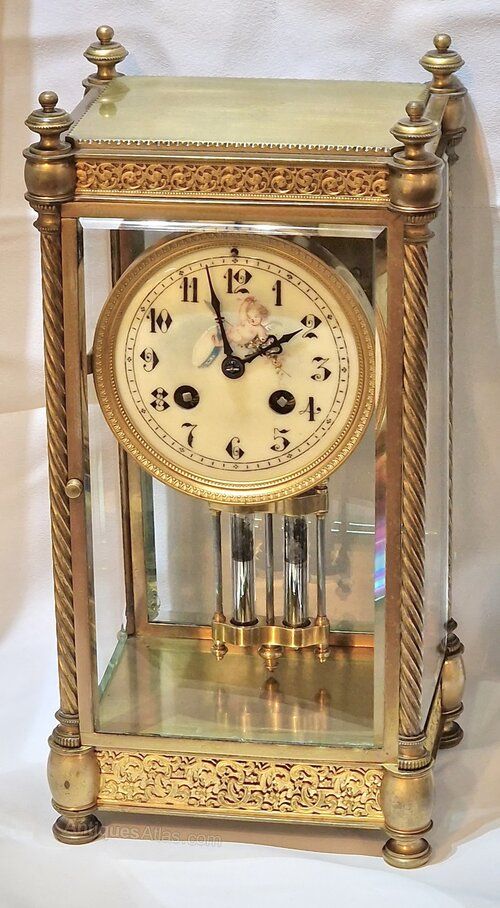
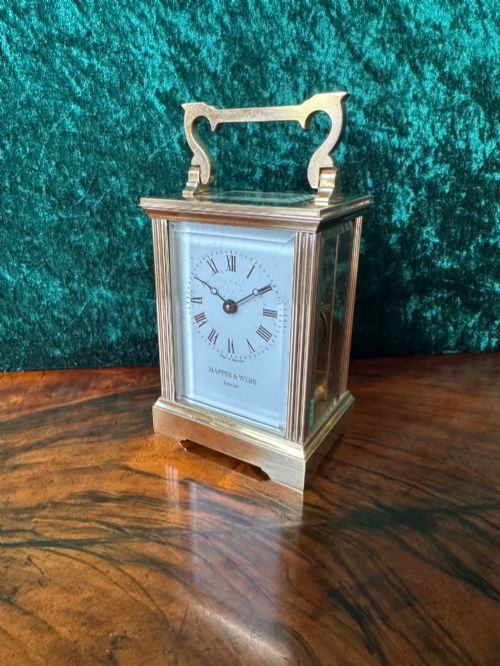
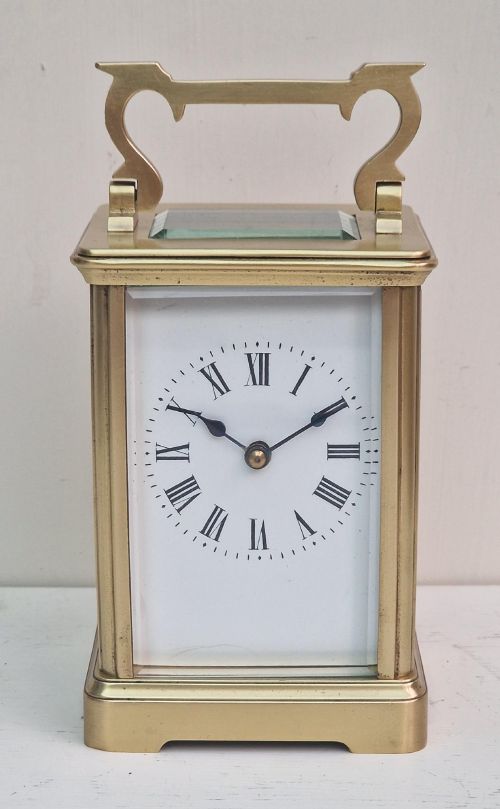
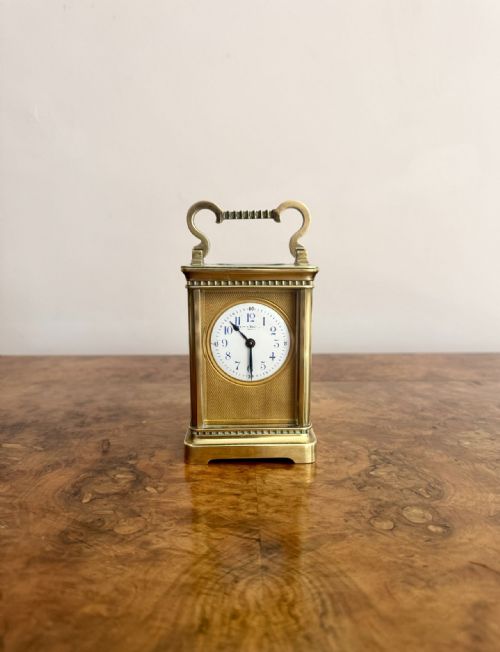
A brass bevelled glass clock typically takes the form of a portable carriage clock or a stationary four glass mantel clock. These pieces span from the late nineteenth century into the mid-twentieth century, with French and British makers dominating the selection.
Carriage clocks offer a compact silhouette designed for travel, often featuring a swing handle and white enamel dials. Mantel versions stand taller, displaying internal movements clearly through transparent glass panels on every side.
Distinctions in quality
The weight of the brass case and the thickness of the glass panels set baseline standards for durability and presence. Superior examples display crisp engraving on the metal housing and sophisticated movement complications like quarter striking or alarm functions.
Maker attribution elevates a piece significantly, particularly when signed by established horologists or prominent retail jewellers. The clarity of the enamel dial and the precision of the escapement mechanism further separate standard production items from workshop highlights.
Listings span the Victorian era into the mid-twentieth century, featuring brass, gilt bronze, and steel elements within French and British designs.
Samuel Marti·Goldsmiths Alliance Ltd·Mappin and Web·John Morley·Duverdrey and Bloquel·Tiffany·Delépine Barrois·Drocourt
The Brass Bevelled Glass Clock Glossary
- Bevelled glass
- Glass panes featuring an angled edge ground down to a thinner perimeter. This technique adds depth and decorative refraction to the viewing windows of the clock case.
- Carriage clock
- A portable spring-driven timepiece developed for travel during the nineteenth century. These clocks usually feature a rectangular brass case, a flat glass top, and a folding handle.
- Four glass clock
- A mantel clock enclosed by glass panels on the front, back, and both sides. This design reveals the mechanical movement and pendulum clearly from multiple angles.
- Gorge case
- A distinct rectangular carriage clock case style characterised by stepped mouldings at the top and base. It represents a classic French format from the Victorian era.
- Repeating movement
- A clock mechanism that chimes the last hour or quarter-hour on demand when a button or lever is pressed. This feature allowed owners to check the time in the dark.
- Crystal regulator
- A mantel clock housed in a heavy brass frame with four glass panels and a visible mercury or pendulum swing. Samuel Marti produced notable examples of this style.
Brass Bevelled Glass Clock: Frequently Asked Questions
What is a carriage clock?
A carriage clock is a portable spring-driven timepiece equipped with a folding handle for transport. They were originally designed for travellers during the nineteenth century.
Most examples sit within heavy brass frames featuring bevelled glass panels that reveal the escapement and gear train from multiple angles.
How do four glass clocks work?
Four glass mantel clocks rely on spring-driven or weight-driven movements enclosed by transparent panes on the front, back, and sides. This open construction displays the internal mechanics and swinging pendulum clearly.
They generally sit on flat surfaces in reception rooms rather than serving as portable travel items.
How do I wind an antique clock?
Antique clocks require a matching winding key inserted into arbors on the dial face or backplate. Turning the key tensions the mainsprings that store power for the movement.
Care must be taken not to overwind the springs, stopping as soon as resistance increases to prevent internal damage.
Where were these clocks made?
The majority of these timepieces originate from French workshops, particularly in Paris and surrounding horological centres. British makers and retailers also produced and commissioned significant numbers.
Signatures on dials or movements often indicate the specific maker or the high-end retailer who sold the finished piece.
What does a repeating mechanism do?
A repeating mechanism sounds the most recent hour or quarter-hour when the owner presses a button or lever on the case. This allowed users to check the time during the night without striking a continuous bell.
It represents a complex addition found in higher-grade carriage clocks from the Victorian period.