


Brass Barrel Firearm
A brass barrel firearm is a functional piece of military or civilian history, sought after for its gleaming metalwork and mechanical action.
Brass Barrel Firearm
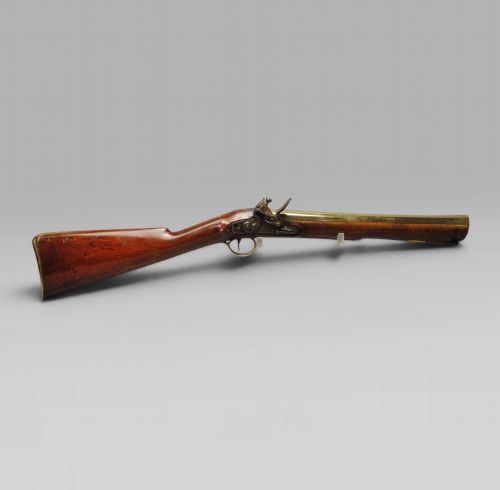
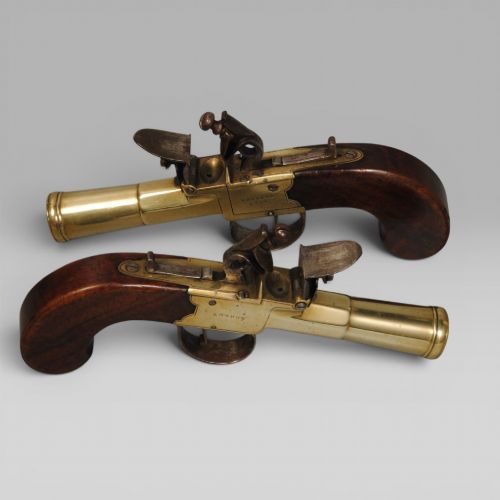
When you search for a brass barrel firearm, you encounter a selection of historic weaponry spanning the eighteenth and nineteenth centuries. These pieces encompass diverse forms, including flintlock blunderbusses, pocket pistols, dragoon service arms, and matchlock muskets originating from Britain, Europe, and India.
The most common examples on this page are eighteenth-century flintlock and percussion pistols, alongside larger martial blunderbusses and muskets. Stylistic influences range from Georgian and Napoleonic military issues to Queen Anne designs and Indo-Persian traditions.
Materials and construction
Makers constructed these arms using cast brass for the barrels, paired with stocks carved from walnut and other hardwoods. Iron and steel components form the internal lock mechanisms, while certain pieces feature bone inlay or brass furniture.
Blacksmiths and gunsmiths employed traditional casting, forging, and hand-finishing techniques to shape the metal components and fit them securely to the wooden stocks. Matchlock and flintlock mechanisms required precise metalworking to ensure the ignition systems functioned correctly.
Some blunderbusses came equipped with spring bayonets, ensuring an argument was settled whether the powder stayed dry or not.
Evaluating quality and execution
Quality in a brass barrel firearm depends on the crispness of the engraving on the lock plate and the clean casting of the barrel. Maker signatures, such as those by known London or provincial gunsmiths, elevate the standing of a piece.
The harmony between the woodwork and the metal furniture indicates the skill of the original maker. Well-preserved stocks with minimal timber replacement and clear proof marks demonstrate superior manufacturing standards.
La Motte·Thomas Henshaw·I Parr·John Rimes·J Robinson
The Brass Barrel Firearm Glossary
- Flintlock
- An ignition mechanism that uses a piece of flint struck against a steel frizzen to create sparks for firing gunpowder.
- Blunderbuss
- A muzzle-loading firearm with a flared barrel designed to scatter shot at close range.
- Turn-off pistol
- A firearm featuring a barrel that unscrews from the breech for easy loading.
- Miquelet
- A type of flintlock ignition mechanism commonly used in Spain, Italy, and the Ottoman Empire.
- Percussion cap
- A later ignition system utilising a small explosive-filled metal cap placed on a nipple, replacing the flintlock.
Brass Barrel Firearm: Frequently Asked Questions
How do I clean a brass barrel firearm?
You should maintain the metal surfaces with light oil and soft cloths to preserve the aged patina.
Avoid using harsh chemical polishes that strip away the historical character of the brass.
Are these firearms legally safe to shoot?
Most antique pieces are sold as historical artefacts or collector items rather than functional shooters.
Professional inspection by a qualified gunsmith is necessary before attempting any live firing.
What is the difference between flintlock and percussion?
Flintlocks rely on a flint striking a steel frizzen to generate sparks for the gunpowder charge.
Percussion ignition uses a hammer striking a primed cap, offering greater reliability in wet weather.
How can I tell the age of a pistol?
Maker signatures, proof marks, and stylistic traits like stock shapes provide reliable dating clues.
Military service marks often reference specific monarch reigns or government contracts.