




Brass Baluster Vase
A brass baluster vase brings distinct oriental and European weight to a room, offering tactile metalwork and classical profile.
Brass Baluster Vase
A brass baluster vase presents a characteristic curved profile with a wider lower portion tapering toward a narrow neck, echoing classical forms. When searching for a brass baluster vase, collectors encounter pieces spanning the nineteenth century through the early twentieth century, alongside related copper-alloy and bronze examples.
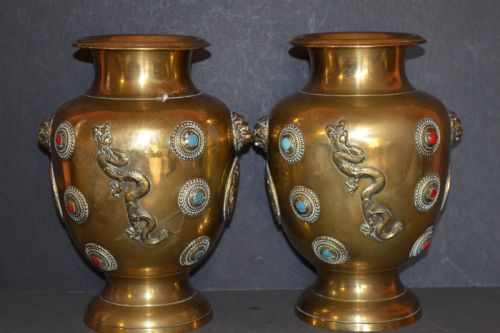
The selections available here frequently cross paths with Asian art traditions, featuring Chinese export styles, cloisonne, and Tibetan or Nepalese metalwork. Many examples have been adapted over time into table lamps, merging decorative metal bodies with domestic lighting functionality.
Alongside metal iterations, the listings include porcelain and ceramic pieces sharing the baluster silhouette, such as celadon, famille verte, and Paris porcelain. Buyers also find brass candlesticks incorporating vase-shaped columns into their structural design.
Materials and construction methods
Metal vessels in this category utilise brass, bronze, and copper alloy, often shaped through casting techniques to achieve the characteristic swelling baluster profile. Heavier examples display substantial weight, reaching up to several kilograms, which indicates thick-walled casting.
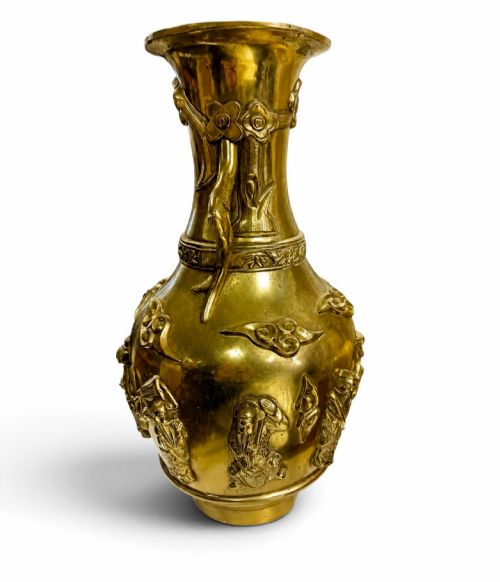
Surface ornamentation on the metal pieces involves high-relief casting, depicting figures such as Daoist immortals or dragon motifs. Other variants incorporate enamel work, including cloisonne techniques, or painted porcelain surfaces featuring floral bands and traditional palettes.
Several heavy bronze specimens weigh in at over three kilograms, ensuring nobody mistakes them for flimsy mantelpiece ornaments.
Distinctions in execution and detail
The distinction between standard production and superior examples lies in the crispness of the surface relief and the precision of the casting. High-end bronze and copper-alloy pieces exhibit deep, well-defined sculptural detail on motifs like dragons and figures, whereas simpler items show softer contours.
Quality also manifests in the harmony of proportions across the baluster curve, neck, and base, alongside the integrity of maker or reign marks where present. The integration of decorative elements, such as enamelling or applied handles, demonstrates the maker's technical capability.
The Brass Baluster Vase Glossary
- Baluster
- A vertical architectural form resembling a shaped pillar, which defines the swelling profile of these vases.
- Cloisonne
- An enamelwork technique where metal wires are soldered to the vase body to create compartments filled with paste and fired.
- Celadon
- A term describing European-derived ceramics featuring pale green jade-like glazes seen on certain vase-lamps.
- Famille Verte
- A porcelain palette dominated by green enamels, utilised on nineteenth-century decorative vessels.
- Xuande
- A historical Chinese imperial reign mark sometimes found inscribed on the base of copper-alloy metalwork.
Brass Baluster Vase: Frequently Asked Questions
Are these vases converted to lamps?
Several pieces in this selection are documented as lamps or vase lamps, indicating that historical wiring has been added to the original ceramic or metal bodies.
Buyers frequently encounter these conversions within nineteenth and early twentieth-century groupings, blending antique decorative objects with functional domestic lighting.
What metals are used besides brass?
The listings incorporate various copper alloys and bronze alongside standard brass, reflecting diverse regional manufacturing traditions.
Heavier examples often utilise solid bronze or thick copper alloy, sometimes weighing multiple kilograms and featuring high-relief ornamentation.
How do I identify Chinese export styles?
Chinese export and Qing dynasty pieces often feature characteristic motifs like dragons, Daoist immortals, or alternating floral bands.
Materials range from bronze and copper alloy to porcelain variants such as Canton, Rose Medallion, and Paris porcelain.
What periods do these pieces span?
The available items primarily originate from the nineteenth century, including Victorian and Edwardian examples, stretching into the 1920s and 1930s.
This timeframe captures both traditional cast metalwork and early twentieth-century decorative adaptations.