


Brass and Wood Shelf
These brass and wood shelf designs combine warm timber surfaces with metal mounts, turning practical wall storage and display into striking furniture.
Brass and Wood Shelf
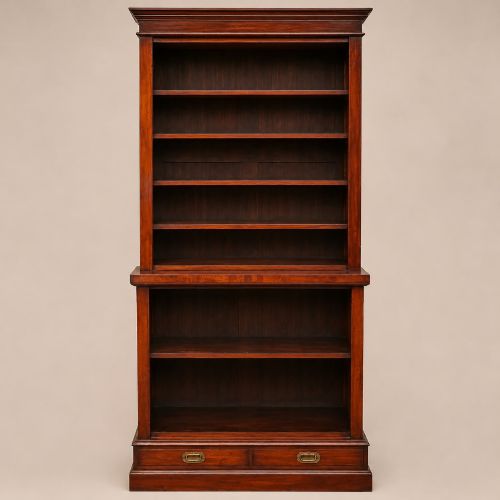
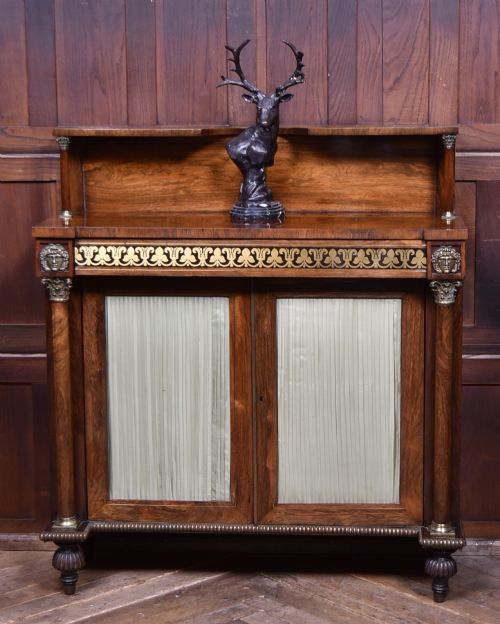
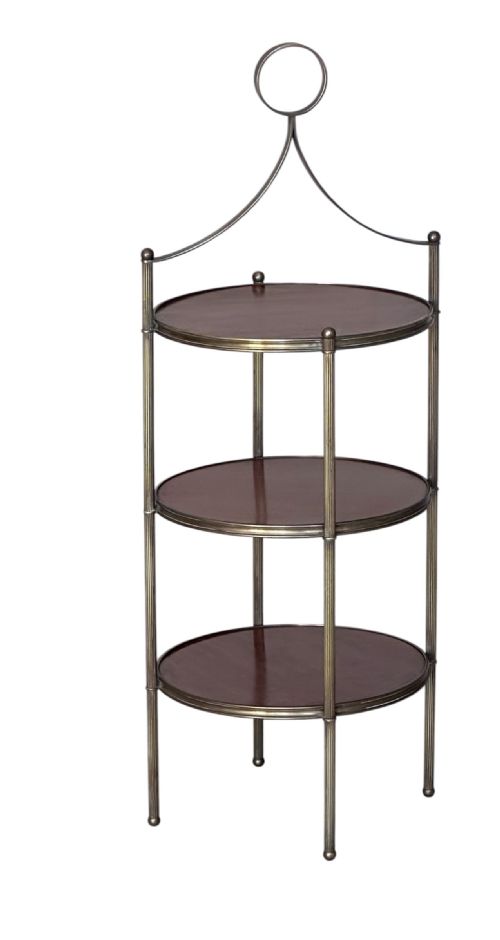
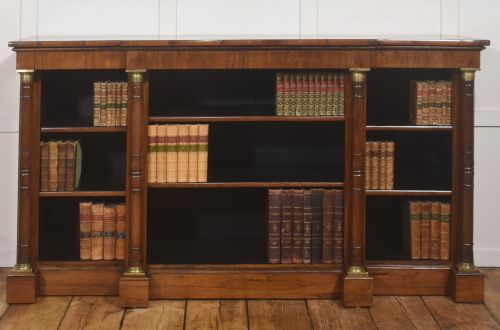
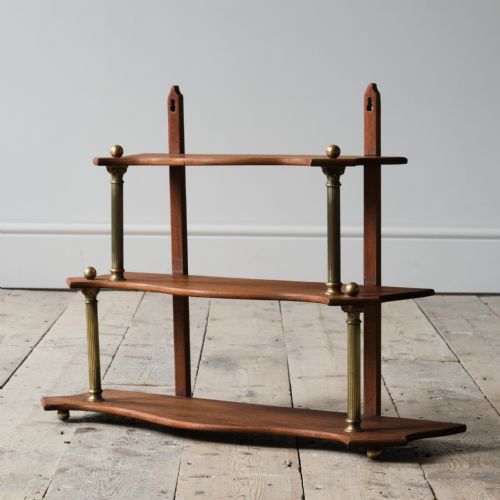
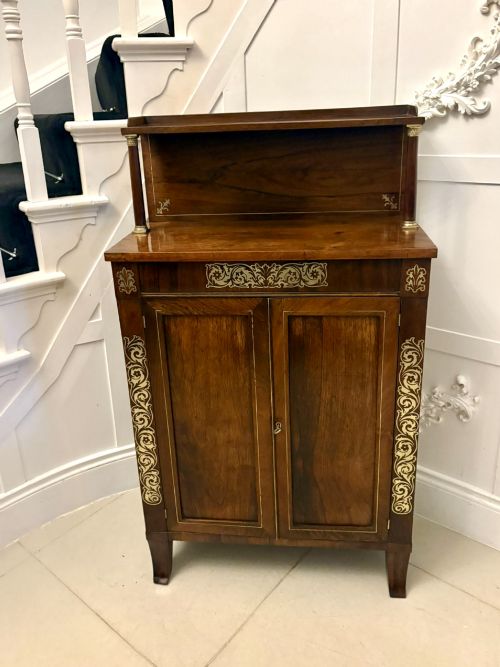
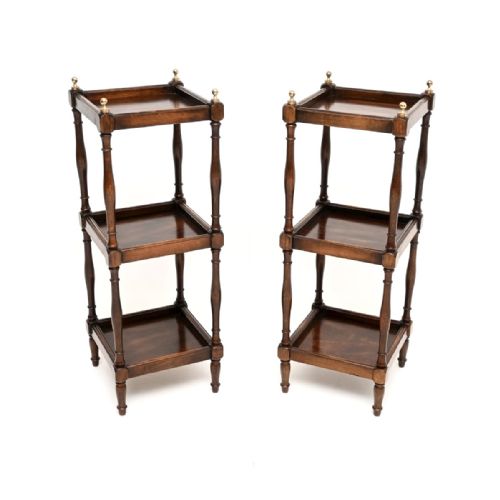
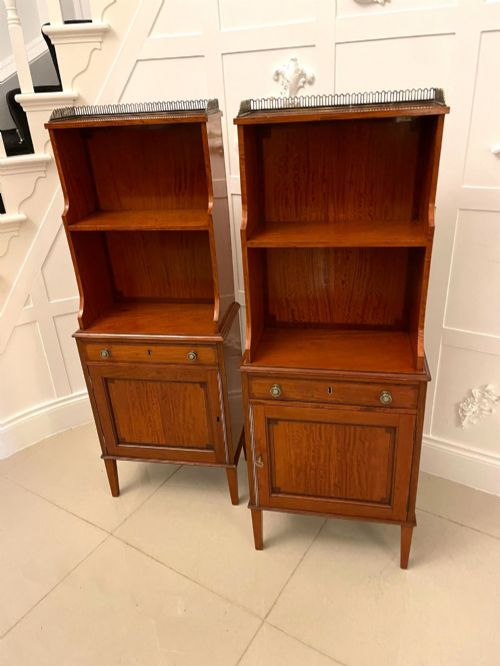
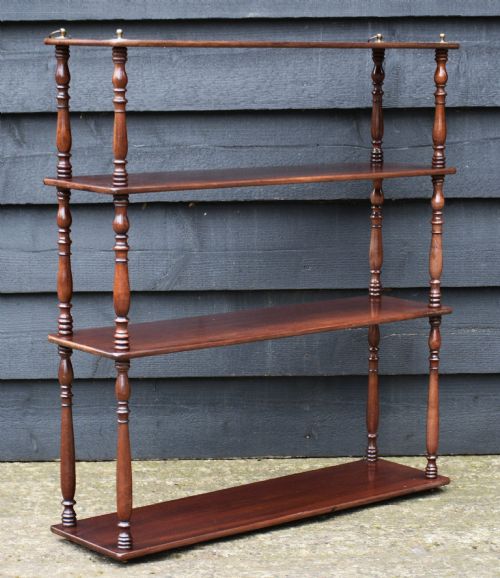
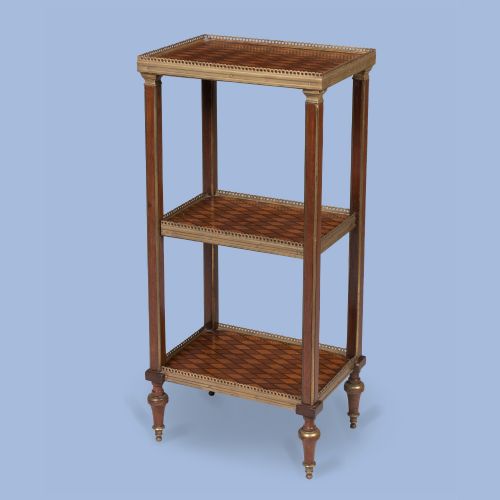
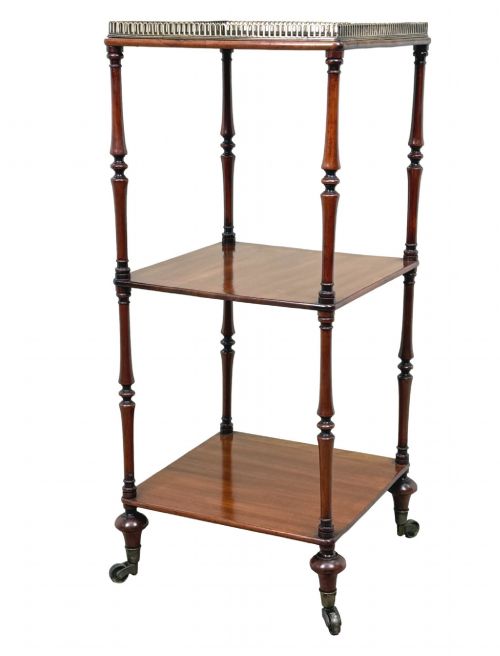
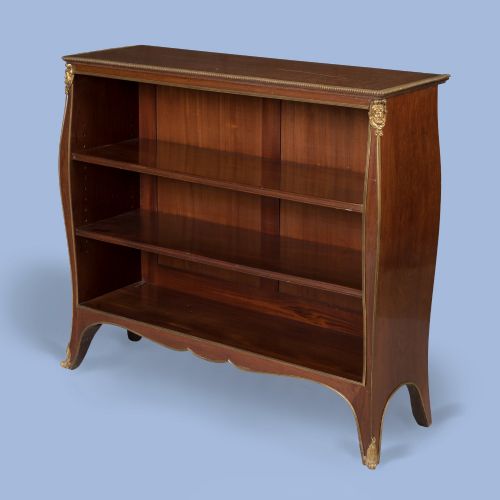
When you search for a brass and wood shelf, you encounter items ranging from compact wall-hanging shelves to large open bookcases, etageres, and chiffoniers. The selections on this page lean heavily towards nineteenth-century Regency and Victorian pieces, alongside Edwardian designs and occasional twentieth-century examples.
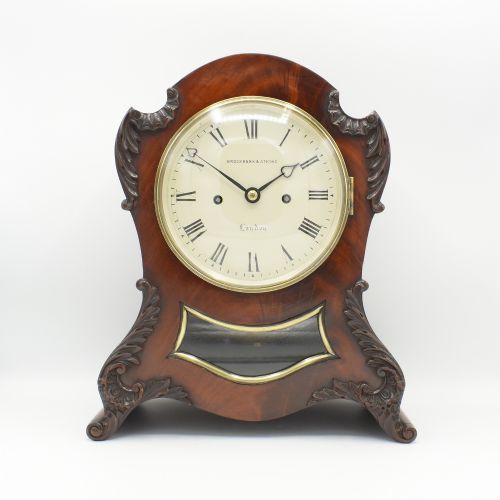
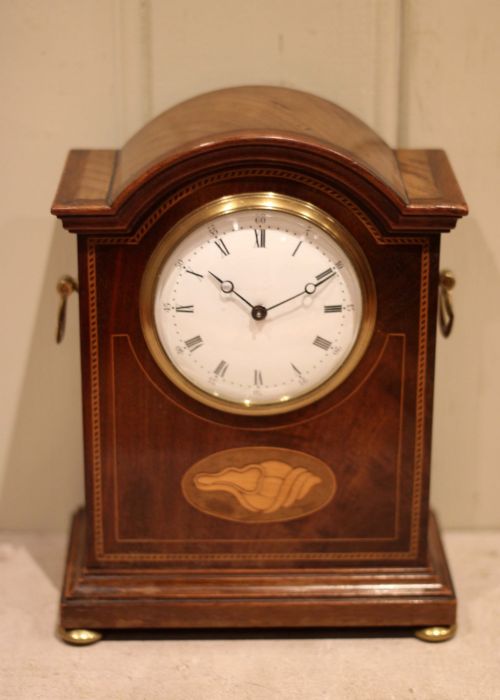
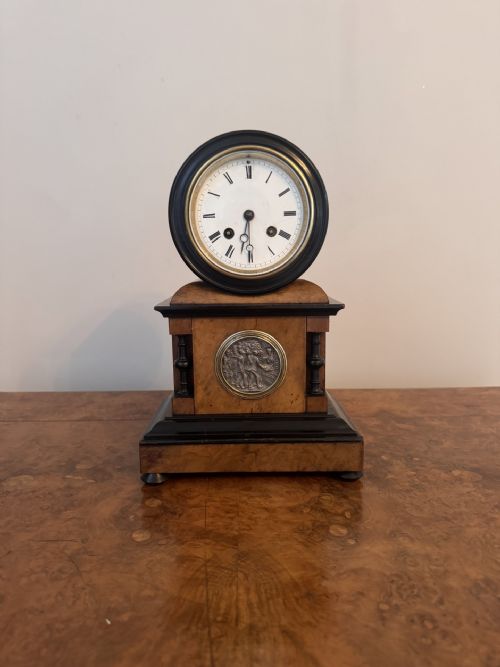
Makers and cabinetmakers utilised varied timbers, constructing these wall shelves and bookcases primarily from mahogany and rosewood. Brass mounts, inlays, and galleries frequently accent the wood, creating functional storage units that also served to display prized ornaments and books in period interiors.
How they were made
Craftsmen built these pieces using solid and veneered hardwoods like mahogany, rosewood, and satinwood, often shaping them into tiers, cabinets, or wall brackets. Brass was incorporated as inlaid stringing, structural mounts, or protective galleries around shelf edges.
French polish and traditional joinery methods predominated in the construction of these items. Ormolu mounts and fine brass casting further ornamented the timber frames on the more elaborate bookcases and etageres.
Brass and Wood Shelf Retail Price Guide 2026
Typical asking prices for brass and wood shelf among the pieces listed under this phrase on Sellingantiques today, from the lower quarter to the upper quarter. They describe what is for sale here now, not the wider market.
Listings feature items from the Regency, Victorian, and Edwardian periods, constructed in mahogany, rosewood, and oak.
What varies in quality
The precision of the brass inlay and the crispness of the cast ormolu mounts set the finer pieces apart from standard workshop output. Well-defined wood grains, such as figured rosewood or flame mahogany, indicate careful selection by the cabinetmaker.
Structural integrity and the retention of original brass fittings dictate the standing of an item. Pieces that display harmonious proportions, intact mounts, and unblemished timber surfaces represent the upper tier of the range.
Gillows·Brockbanks and Atkins·Robert Strahan·Piggin Norwich·Barrett London·Paul Garnier·Junghans
The Brass and Wood Shelf Glossary
- Brass mount
- Cast or sheet brass affixed to timber furniture for decoration or reinforcement. These elements are typical of nineteenth-century French and English cabinet work.
- Etagere
- A set of open shelves for displaying small objects or ornaments. These pieces often feature multiple tiers supported by slender columns.
- Ormolu
- Gilded bronze or brass applied to furniture as decorative mounts. This technique was widely utilised during the Regency and Napoleon III periods.
- Chiffonier
- A low cabinet with shelves or drawers, originating in the nineteenth century. They frequently combine timber construction with brass detailing.
- Waterfall bookcase
- A set of open shelves where each tier steps back progressively from the one below. These items became popular during the nineteenth and Edwardian eras.
Brass and Wood Shelf: Frequently Asked Questions
What is a brass and wood shelf?
A brass and wood shelf is a wall-mounted or freestanding piece of furniture that combines timber construction with brass brackets, rails, or inlay. These items range from simple hanging shelves to elaborate etageres.
They were built to hold books, clocks, and decorative ceramics while adding a refined decorative element to the room.
How were wall shelves used historically?
Historically, these shelves provided display space for small ornaments, clocks, and books in principal rooms. They kept useful items accessible while decorating blank wall surfaces.
In Victorian interiors, they often held decorative porcelain plates or glassware.
How do I care for timber and brass?
Clean the timber surfaces with a soft, dry cloth and apply occasional high-quality beeswax to nourish the wood. Avoid modern liquid polishes containing silicones.
Polish the brass elements sparingly with a dry microfiber cloth to prevent abrasion to the surrounding wood.
How can I tell Regency pieces apart?
Regency items often feature classical architectural motifs, rosewood veneers, and precise brass inlay work. The proportions tend to be clean and restrained.
Later Victorian versions frequently incorporate heavier mouldings and darker mahogany finishes with cast brass mounts.