
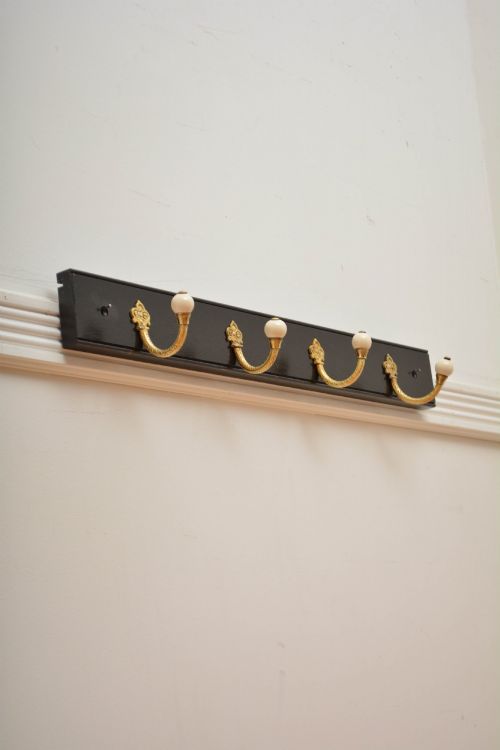


Brass and Wood Hooks
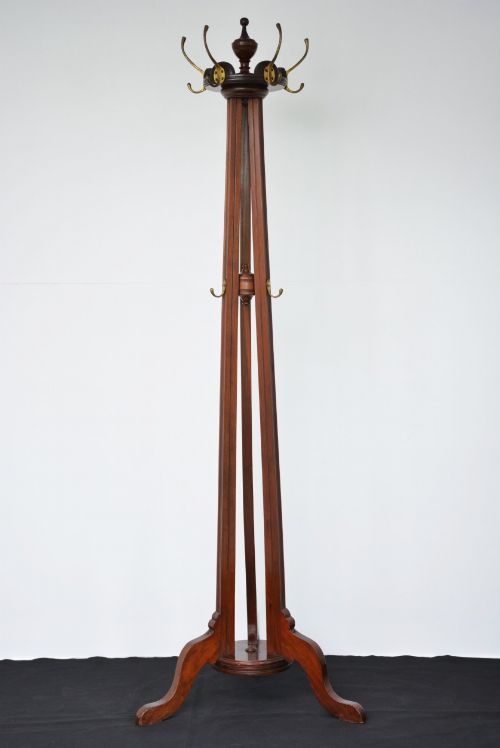
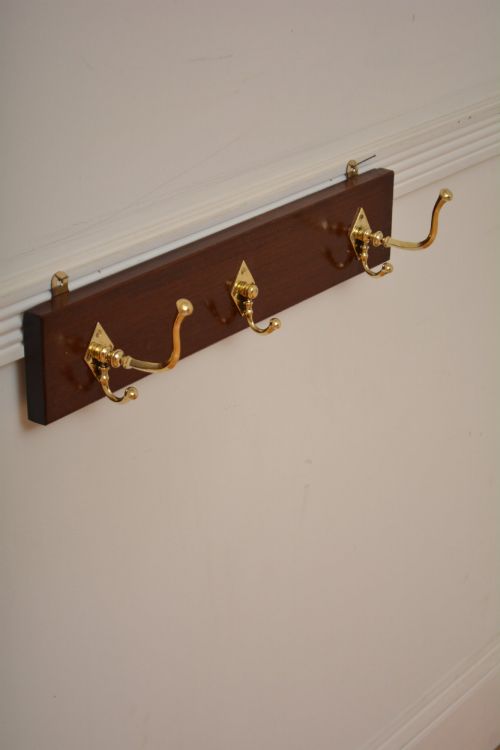
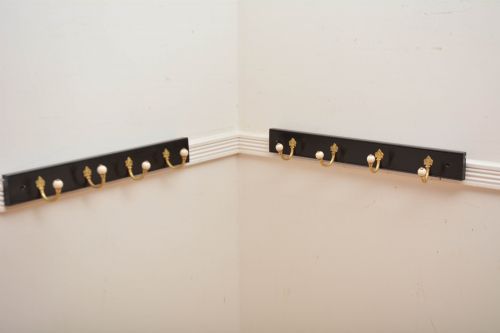
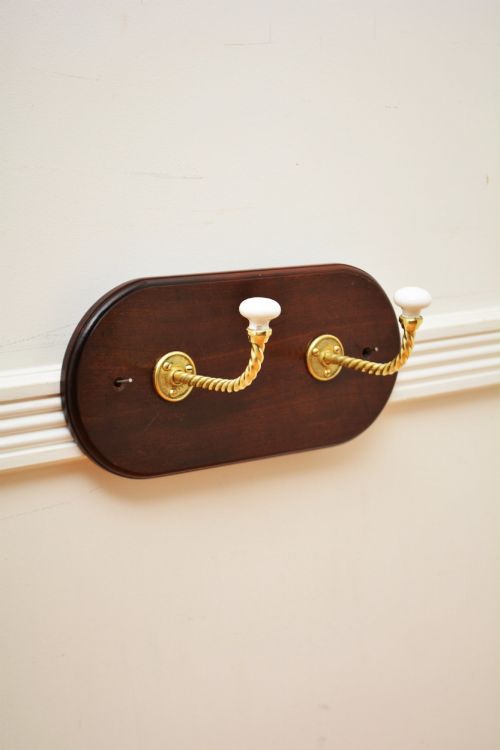
These brass and wood hooks combine sturdy timber mounts with cast metal fixtures, offering practical hanging space with a distinct period character.
Brass and Wood Hooks
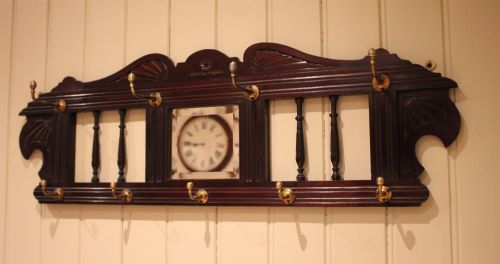
Brass and wood hooks appear primarily as wall-mounted coat racks, hall stands, and coat stands originating from the nineteenth century. The examples on this page span the Victorian era, the Arts and Crafts movement, and the Aesthetic Movement, reflecting the domestic needs of their periods.
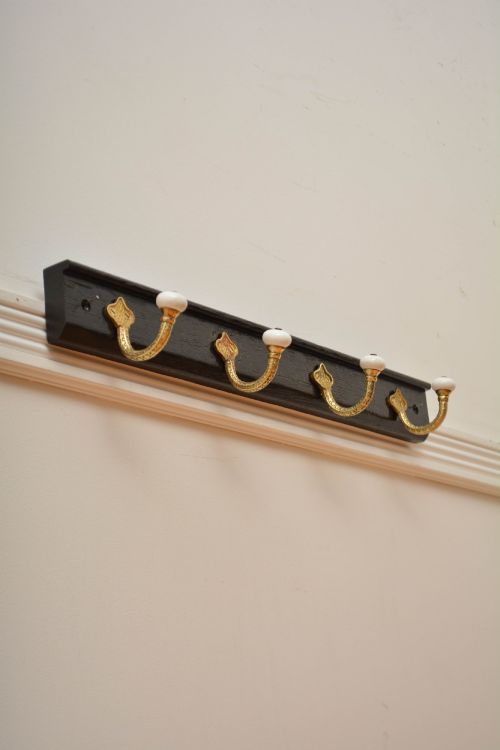
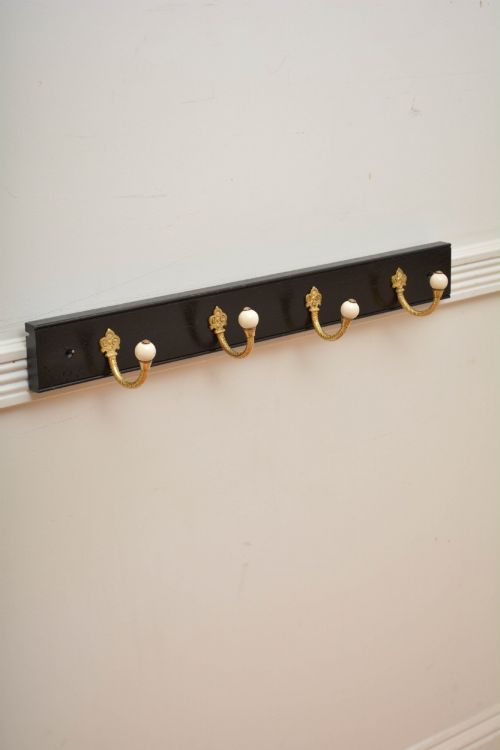
Buyers will most frequently encounter mahogany and oak backplates fitted with brass hooks, occasionally complemented by ceramic or glass details. These range from simple rail mounts to elaborate hall stands incorporating mirrors and key cabinets.
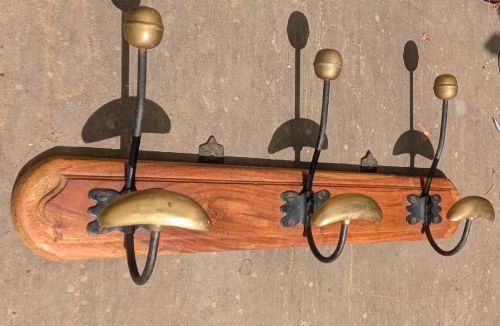
French regional styles also feature among the selection, offering variations such as portmanteaus and bistro-style hangers. Each piece serves the functional purpose of organising garments and accessories in entrance halls and corridors.
Differences in quality
Quality rests upon the selection of timber and the execution of the metalwork, distinguishing standard utility items from finer domestic furnishings. Solid timber backplates with deep bevelling or integrated mirrors demonstrate a higher ambition of design than plain functional boards.
The finishing of the brass components also defines the grade of the piece, with crisper casting details and substantial gauge metal indicating superior production. Additionally, the inclusion of maker attribution or distinctive regional styling elevates individual examples above standard workshop output.
Recorded object types include wall-mounted coat racks, hall stands, coat stands, and key cabinets originating from the Victorian era onward.
Jas Shoolbred
The Brass and Wood Hooks Glossary
- Ebonised wood
- Timber treated with a dark stain or finish to imitate ebony. This process was common in Victorian and Aesthetic Movement pieces to provide a dramatic dark contrast against polished brass.
- Portmanteau
- A wall-mounted or freestanding rack designed for holding coats, hats, and travel accessories. These items often feature multiple tiers or folding brackets.
- Aesthetic Movement
- A late nineteenth-century design style that emphasised visual beauty over narrative subject matter. Pieces from this movement often combine refined timber surfaces with carefully arranged brass hardware.
- Bevelled plate
- Mirror glass featuring an angled, polished edge around the perimeter. This technique adds depth and refinement to hall stands and mirror-backed coat racks.
Brass and Wood Hooks: Frequently Asked Questions
How do I mount a coat rack securely?
These racks require fixing directly into wall studs or using heavy-duty wall anchors suitable for the weight of the timber and hanging garments. Ensuring solid anchorage prevents the screws from pulling free under daily loads.
Position the rack at a height that accommodates the intended users while distributing weight evenly across the mounting points provided in the backplate.
Are these hooks suitable for modern hallways?
The pieces integrate readily into contemporary interiors, providing functional storage for coats, bags, and keys in narrow spaces. Their varied lengths and forms suit diverse hallway proportions.
Selecting a piece with a mirror or key cabinet adds dual functionality to entrance areas where space is limited.
How should I clean the brass and wood?
Maintenance involves dusting the timber regularly and applying appropriate wood wax to nourish the surface. Avoid harsh chemical cleaners that strip the finish.
Clean the brass elements gently to preserve their natural patina, as excessive polishing removes the historical character accumulated over decades of use.
How do I identify a Victorian piece?
Victorian examples often feature dense hardwoods like mahogany or oak, combined with solid cast brass hooks and sometimes ceramic inserts. Construction details such as hand-cut screws and deep bevelling point to nineteenth-century manufacturing methods.
Stylistic cues like Aesthetic Movement decoration or robust Gothic proportions further help place a piece within the nineteenth-century timeline.