




Brass and Rosewood Set
A brass and rosewood set combines rich tropical timber with bright metallic inlay, offering unmatched warmth and formal elegance for period interiors.
Brass and Rosewood Set
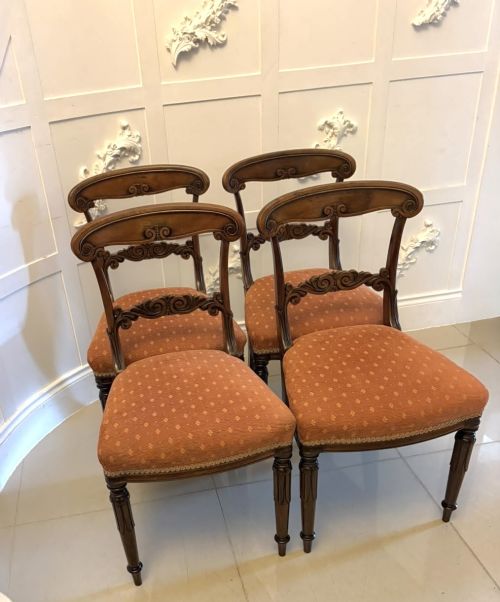
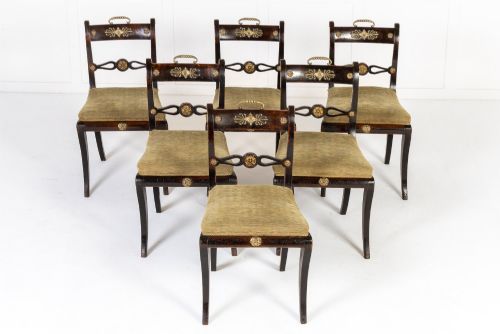
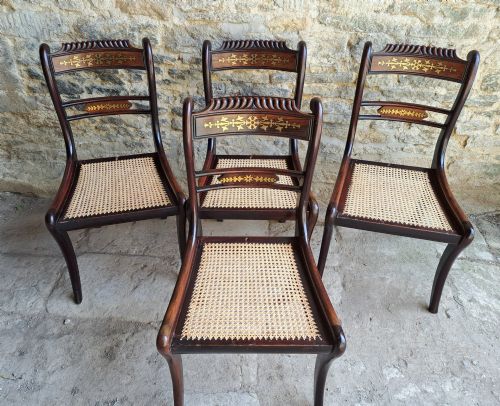
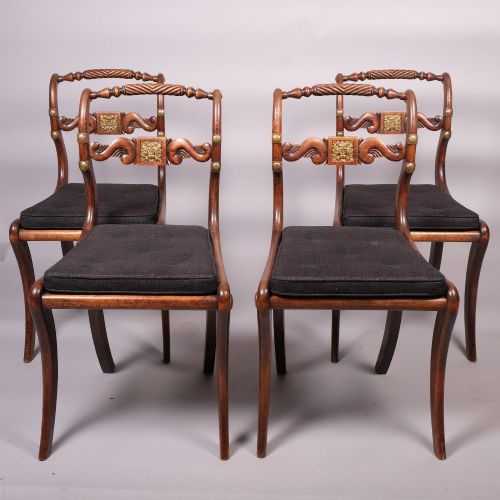
A brass and rosewood set most commonly appears here as matched groups of dining chairs originating from the Regency period, often featuring contrasting metallic inlay along the top rails and splats. These seating groups range from four to twelve chairs, designed to create a unified appearance around a formal dining table.
The materials reflect the tastes of the Georgian, Regency, and Victorian eras, moving from genuine exotic timber to simulated or faux rosewood finishes. Each group demonstrates the period preference for coordinated furnishings that unified a domestic interior.
How they were made
Cabinetmakers constructed these pieces using solid and veneered rosewood or mahogany, sometimes substituting simulated grain finishes on alternative hardwoods to achieve the desired dark reddish-brown tone. Brass was beaten, cast, or drawn into wire and sheet form before being meticulously inlaid into routed channels across the timber surfaces.
Upholstered elements within these sets incorporate traditional stuffing materials, fabrics, silk, and velvet, secured to the frames using traditional methods appropriate to the Georgian and Victorian workshops. Glass and inkwells were integrated into fitted desk accessories and scent bottle cases to provide functional utility alongside decorative appeal.
Brass and Rosewood Set Retail Price Guide 2026
Typical asking prices for brass and rosewood set among the pieces listed under this phrase on Sellingantiques today, from the lower quarter to the upper quarter. They describe what is for sale here now, not the wider market.
Listings for this phrase feature materials spanning rosewood, mahogany, brass, silk, velvet, and glass across the Regency and Victorian periods.
What varies in quality
The standard of a brass and rosewood set depends heavily on the precision of the metal inlay and the depth of figure in the timber grain. Finer examples display tight, seamless integration of brass work into the wood surface without excessive use of filler, alongside consistent colour matching across every piece in the group.
Structural integrity and the preservation of original surfaces separate standard production items from master-worker output. Sets that retain their original upholstery materials, genuine timber frames, and unpolished patination command greater appreciation among traditional collectors.
JOHN GEE
The Brass and Rosewood Set Glossary
- Rosewood
- A dense, heavily figured tropical timber prized for its dark purple-brown colour and contrasting black grain lines. It provided a luxurious dark surface ideal for contrasting metallic inlay during the Regency era.
- Brass inlay
- The technique of embedding thin sheets or wire of copper-zinc alloy into carved channels in the wood surface. This created geometric or floral motifs that caught the candlelight in formal dining rooms.
- Simulated rosewood
- A painted or stained finish applied to a lighter secondary timber to mimic the distinctive grain pattern of genuine rosewood. Makers utilised this method to lower production costs while maintaining a fashionable aesthetic.
- Sofa table
- A rectangular occasional table designed to stand in front of a sofa, typically featuring drop leaves on either end. Regency examples were frequently produced as part of a matching suite alongside card tables.
- Card table
- A folding table specifically designed for evening entertainment and parlour games, featuring a hinged top that swivelled open to reveal a baize-lined playing surface.
Brass and Rosewood Set: Frequently Asked Questions
How do I care for rosewood furniture?
Keep these items away from direct sunlight and heat sources to prevent the dark timber from fading and the natural oils from drying out. Dust regularly with a soft, dry cloth and avoid modern silicone polishes that can damage the historic surface.
Ensure the brass inlay remains clean and dry to prevent tarnishing around the timber edges. Gentle maintenance preserves the depth of colour and the stability of the metalwork over decades of use.
Can I use these dining chairs daily?
These antique chairs function well for everyday dining provided they receive gentle handling and routine structural checks. The historic joinery benefits from occasional professional tightening rather than heavy, continuous weight loads.
Consider the original scale of Regency seating, which tends to be slightly more compact than modern counterparts. Placing them around a suitable period table ensures proper clearance and preserves the frames.
What defines Regency style furniture?
Regency design draws heavily on classical Greco-Roman motifs, featuring clean structural lines, dark exotic woods, and striking metallic contrasts. The aesthetic values symmetry, restraint, and architectural proportion across both seating and case pieces.
Craftsmen of this period embraced contrasting materials like brass and rosewood to create visual drama under evening candle illumination. This distinctive vocabulary separates Regency work from earlier Georgian heaviness and later Victorian elaboration.
How do I identify a matching set?
Examine the timber grain, colour tone, and brass inlay patterns across every piece to confirm consistent workshop origin. Minor variations in hand-cut brass work are normal, but overall dimensions and turning details should align perfectly.
Look for uniform wear patterns and construction techniques on the undersides of chairs or tables. True matched groups share identical framing methods and material selection from the initial workshop production.