


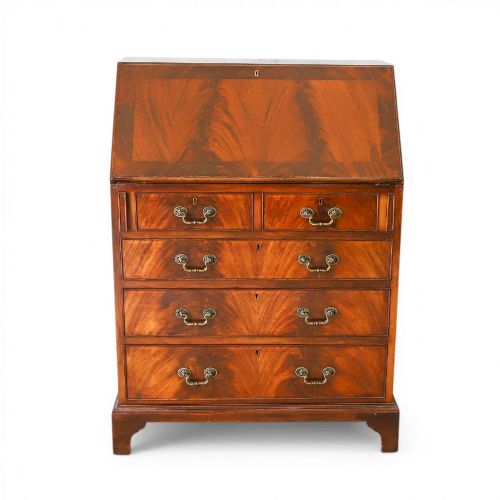

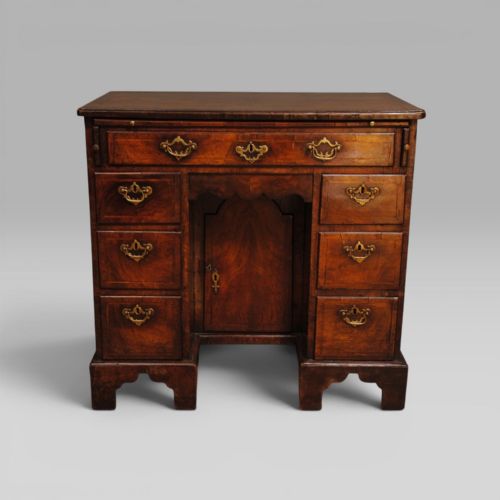
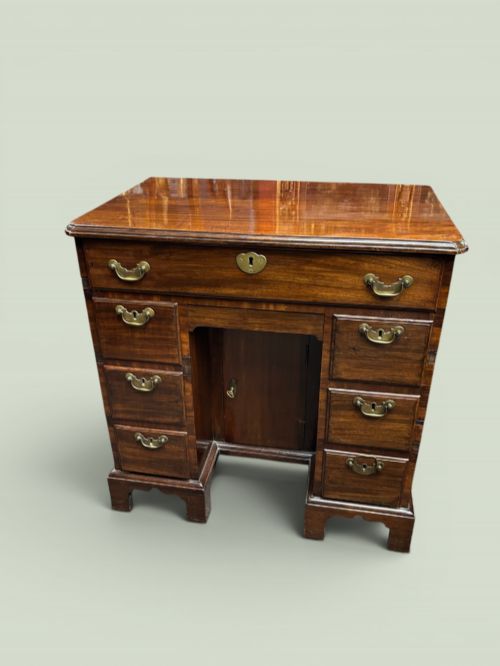


Bracket Feet Bureau Desk
A bracket feet bureau desk brings practical writing space and fitted drawers together on neat bracket supports, making it a staple of period interiors.
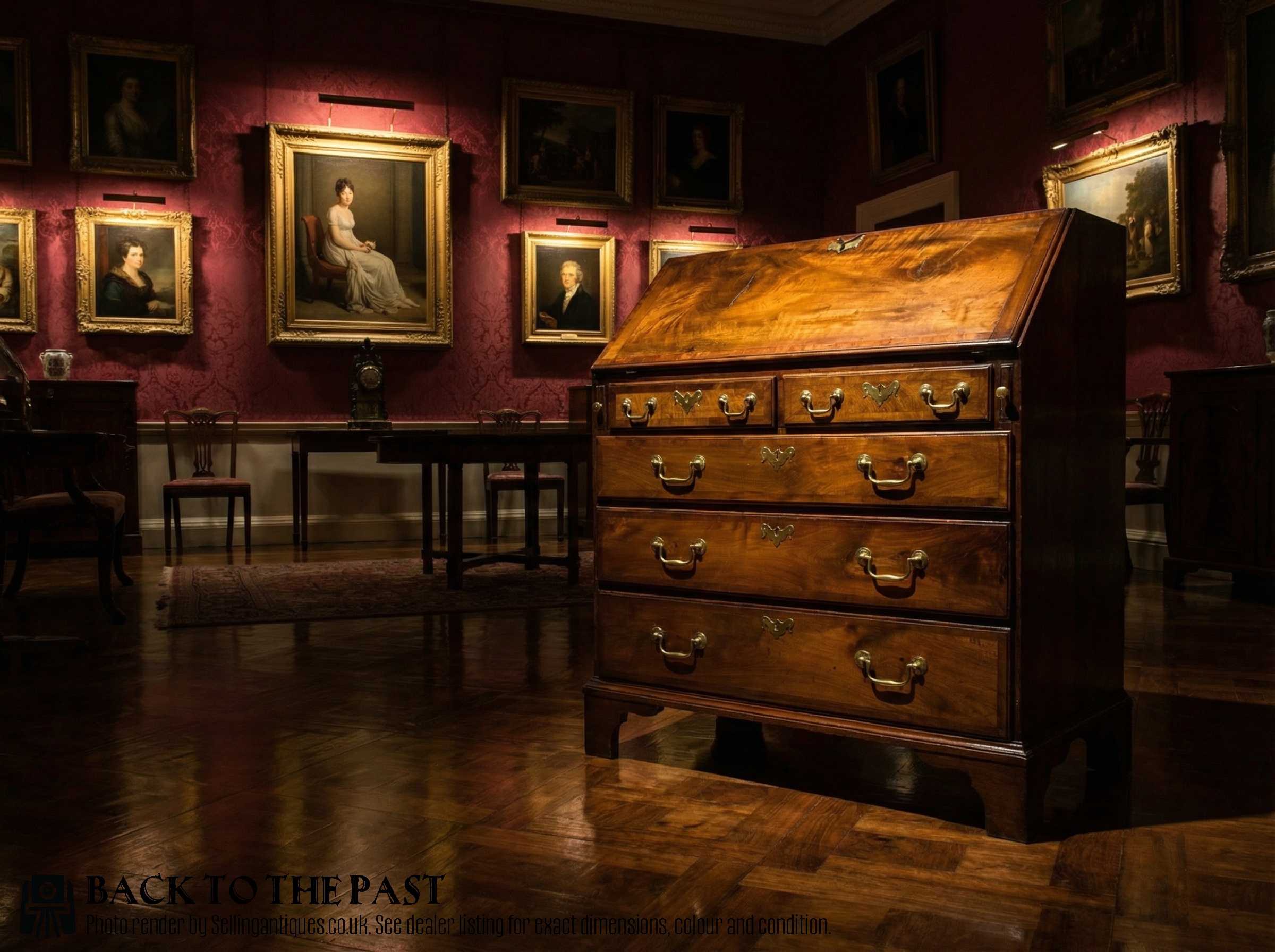
Bracket Feet Bureau Desk
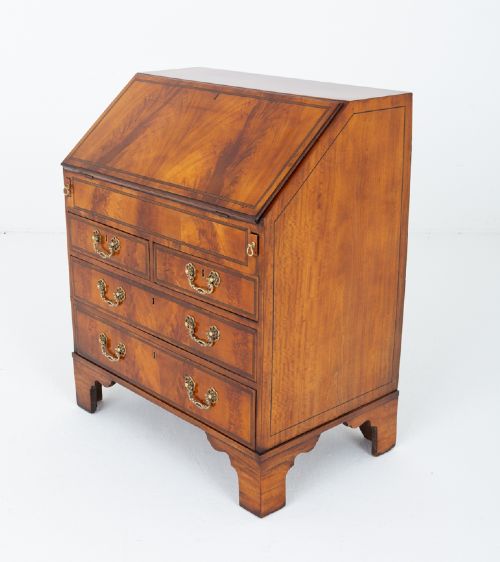
A bracket feet bureau desk combines a sloping fall-front writing surface with banks of graduated drawers, resting firmly on characteristic shaped corner supports. These writing pieces span from the early 18th century through the Georgian era, extending into later revival periods.
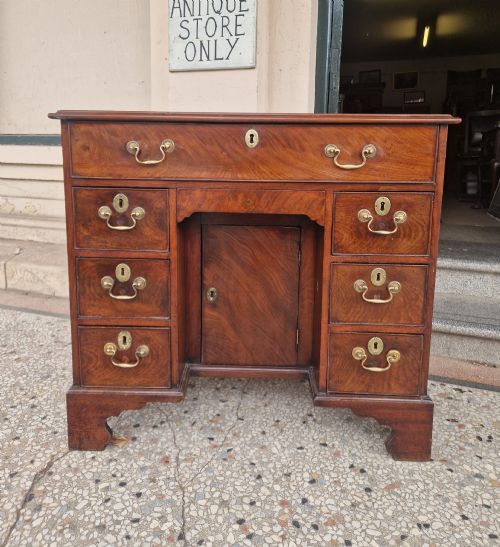
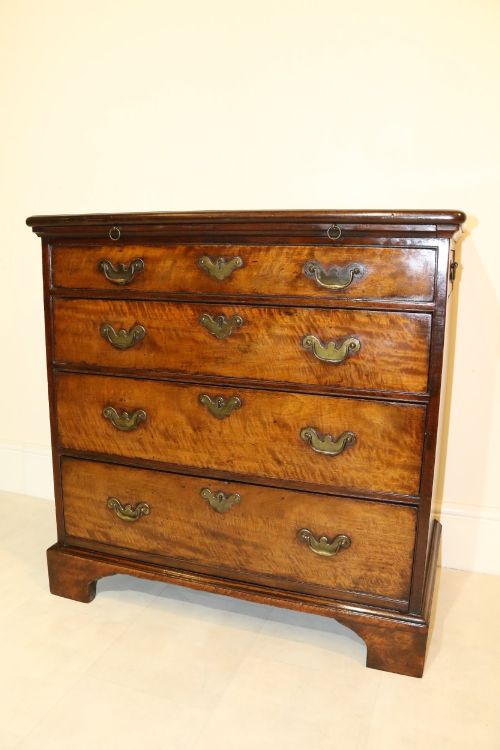
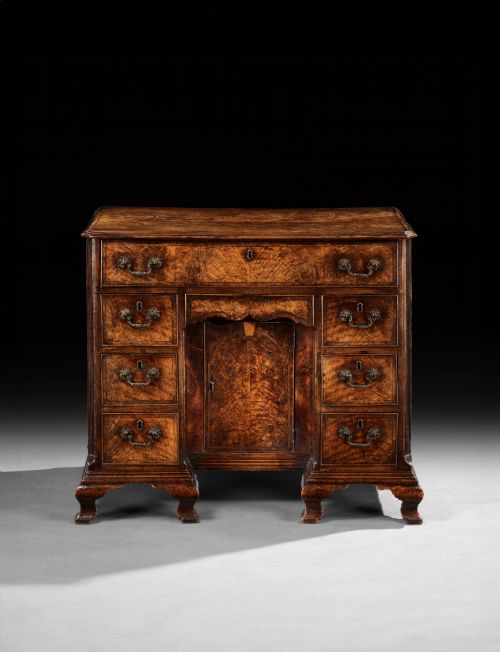
The version most commonly encountered on this page is the Georgian mahogany bureau or kneehole desk, often constructed in smaller proportions. Walnut and oak examples also appear alongside rarer timbers, forming a diverse selection of antique writing furniture.
How they were made
Cabinet makers utilised dense hardwoods such as mahogany, walnut, and oak, frequently applying burr veneers and decorative featherbanding to the primary surfaces. Solid elm and burr oak also feature in regional English pieces from the 1700s.
Internal fittings commonly incorporate baize-lined writing slides, pigeonholes, and secret compartments, while brass handles and escutcheons accent the drawer fronts above the distinctive bracket feet.
Bracket Feet Bureau Desk Retail Price Guide 2026
Typical asking prices for bracket feet bureau desk among the pieces listed under this phrase on Sellingantiques today, from the lower quarter to the upper quarter. They describe what is for sale here now, not the wider market.
Listings feature woods spanning mahogany, walnut, burr walnut, oak, burr oak, elm, and yew.
What varies in quality
The refinement of the timber selection dictates the visual impact, from plain boards to highly figured flame mahogany and richly patterned burr walnut. Finer execution shows in the crispness of the bracket feet profile and the careful symmetry of veneered panels.
Interior complexity separates standard utility writing furniture from exceptional examples equipped with finely carved prospect doors, concealed document wells, and original brass hardware.
The Bracket Feet Bureau Desk Glossary
- Bracket foot
- A simple, architectural foot shaped like an L-bracket, supporting the corners of case furniture such as desks and chests of drawers. This support style emerged in the late 17th century and remained popular throughout the Georgian period.
- Bureau
- A sloping desk designed for writing, typically enclosing small drawers and pigeonholes beneath a hinged fall-front. When closed, it presents a neat cabinet front.
- Kneehole desk
- A compact writing table featuring a central recessed well flanked by pedestals of small drawers. These pieces often include a shallow long drawer directly beneath the top surface.
- Featherbanding
- A delicate form of stringing using contrasting veneers laid in a chevron pattern around drawer edges or panel borders. Cabinet makers applied this technique to highlight the principal timbers of 18th-century writing furniture.
- Baize
- A coarse woollen woven fabric used traditionally to line writing surfaces and pull-out slides. It provides a soft, flat pad for writing with quill or pen.
Bracket Feet Bureau Desk: Frequently Asked Questions
What is a bracket feet bureau desk?
A bracket feet bureau desk is a period writing cabinet featuring a fall-front writing flap or kneehole configuration supported by shaped corner feet. These pieces combine enclosed storage with a dedicated writing surface.
Originating primarily during the 18th century, they served domestic writing and record-keeping needs in Georgian homes.
How do I date an antique bureau?
Dating relies on observing timber choices, construction methods, and hardware styles across different eras. Georgian pieces often display dense mahogany or walnut veneers with hand-cut dovetails.
Later revival pieces from the 20th century utilise similar traditional forms but lack the specific patination and structural wear found in 18th-century originals.
Where were kneehole desks used?
Kneehole desks functioned as private writing tables and dressing chests in bedrooms or withdrawing rooms. Their compact proportions allowed them to fit neatly against walls in smaller apartments.
The central recess accommodated a chair, while the flanking pedestals stored correspondence and personal documents.
How should I care for walnut furniture?
Walnut and mahogany surfaces benefit from stable room humidity and protection from direct sunlight to prevent timber drying and fading. Regular dusting with a dry, soft cloth maintains the natural wax finish.
Harsh chemical polishes should be avoided in favour of traditional beeswax applied sparingly.