


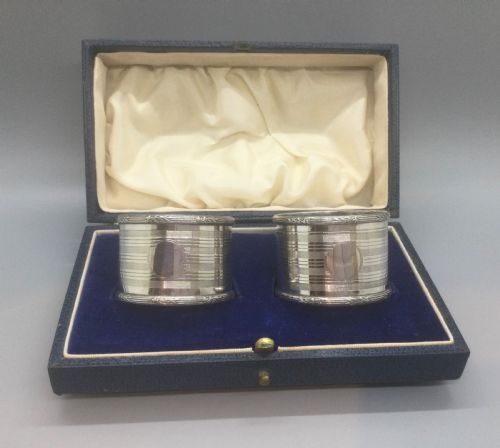

Boxed Silver Serviette Rings
Boxed silver serviette rings are matching table accessories kept in fitted presentation cases, offering a glimpse into formal dining customs from the Victorian period to the mid-twentieth century.
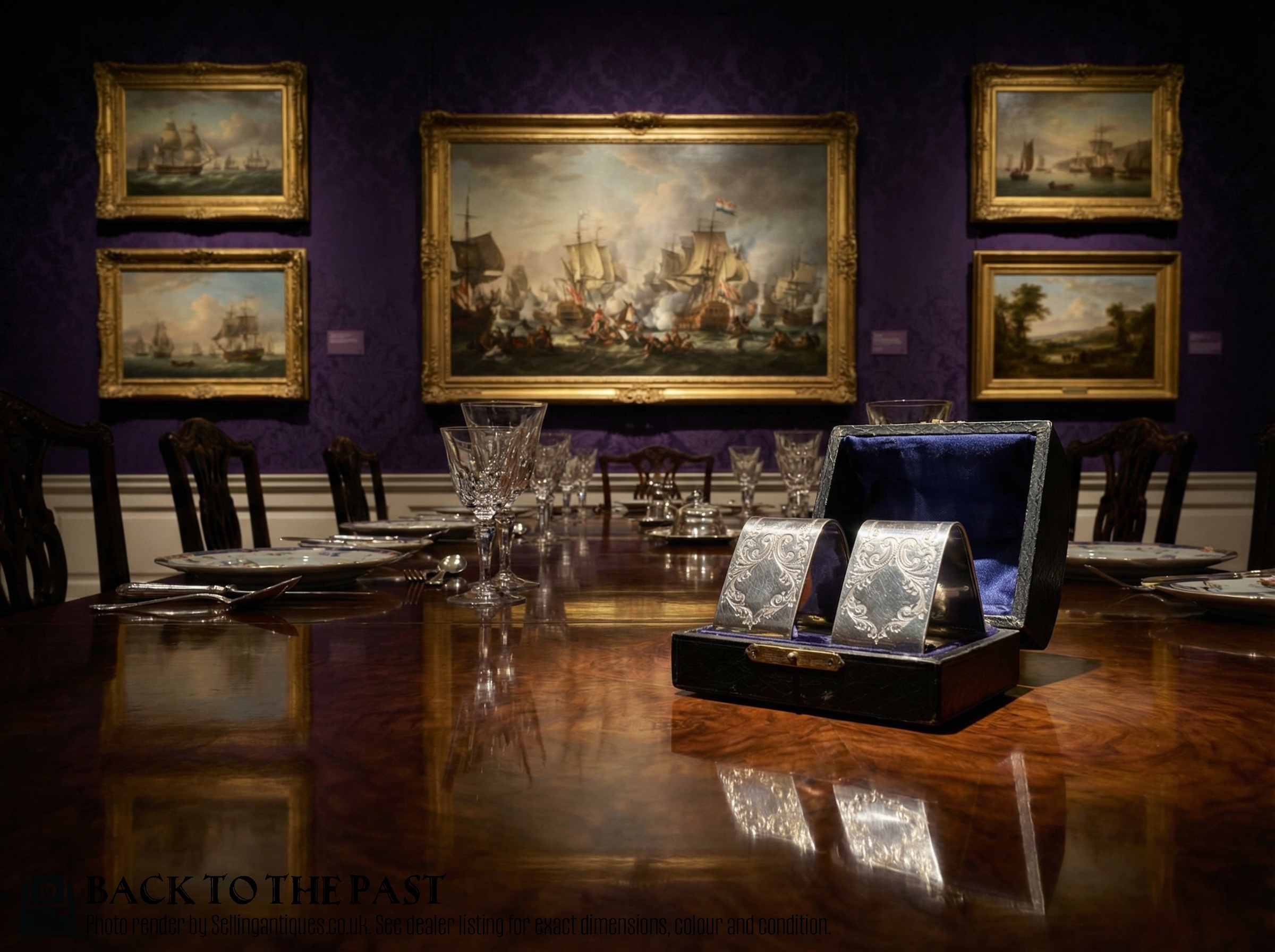
Boxed Silver Serviette Rings
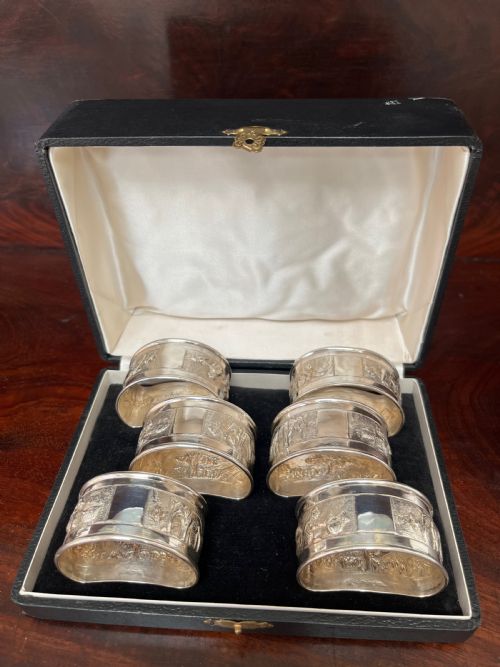
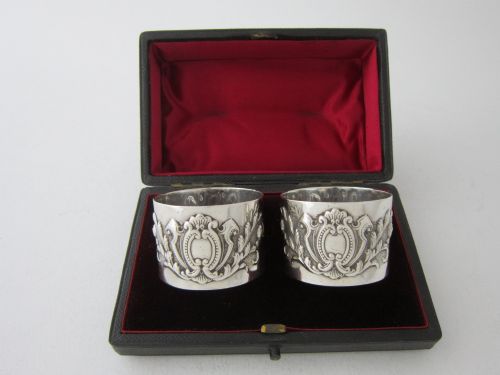
When searching for boxed silver serviette rings, buyers encounter matched sets and pairs housed in their original protective containers. These tabletop items appear across several distinct historical eras, including the Victorian, Edwardian, George V, and Art Deco periods.
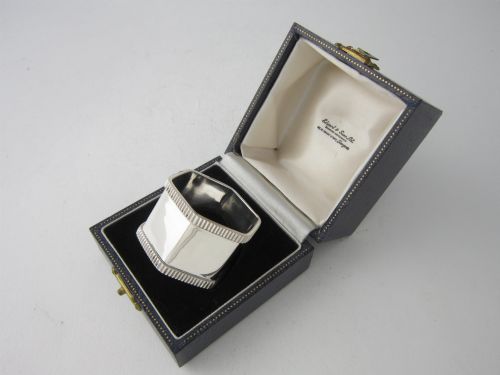
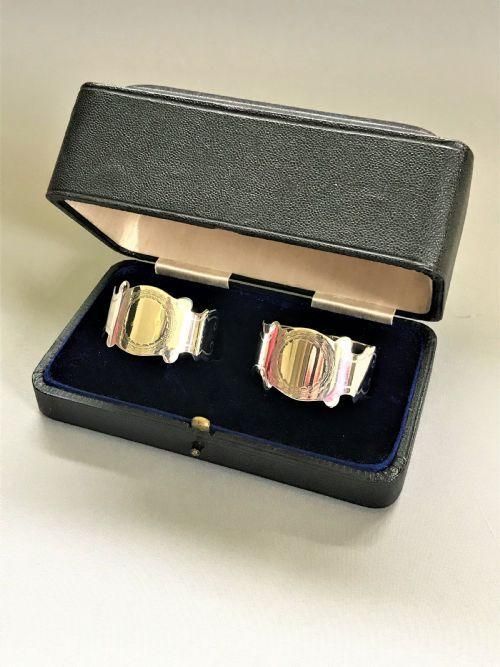
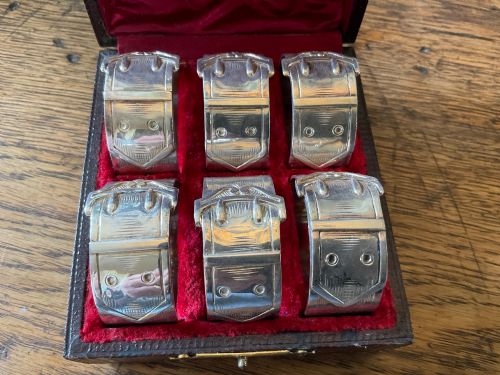
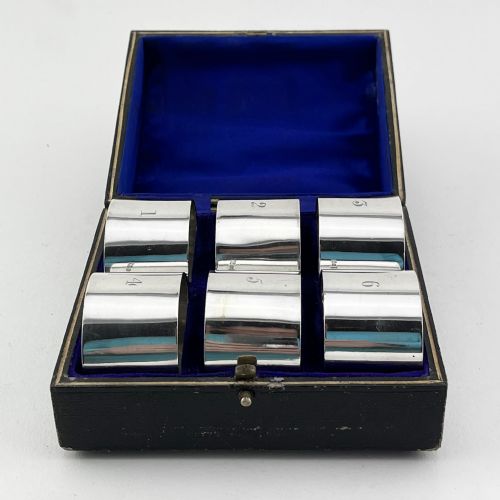
The pieces listed on this page predominantly take the form of napkin rings made of solid sterling silver or silver plate. Sets range from pairs to full groupings of six, sometimes modelled as belt buckles or shaped with plain surfaces.
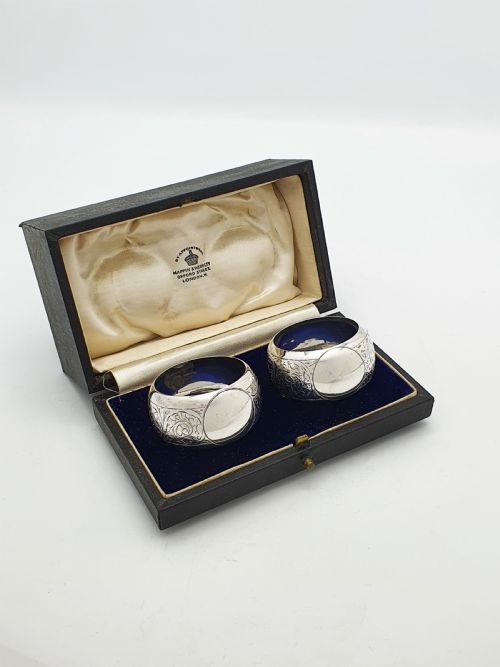
Origins trace back to English assay offices such as Birmingham, Chester, and London. The accompanying presentation boxes often feature internal linings of silk, velvet, or leatherette to cushion the metalware.
Materials and Construction
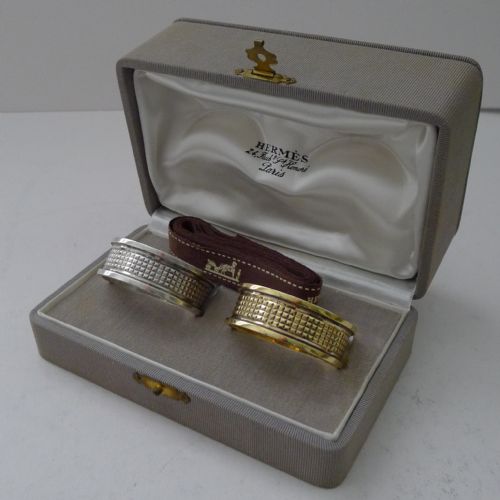
Construction relies heavily on sterling silver and silver plate, shaped into circular bands designed to hold individual dining napkins. Certain examples incorporate silver gilt highlights for added visual contrast on the inner surfaces.
Storage containers utilise rigid outer shells of leather or leatherette, paired with soft interior fabrics like silk and velvet. These custom fitted trays protect the polished metal from tarnishing and abrasion during storage.
Factors of Quality
Quality separates ordinary table sets from finer examples through the crispness of the maker's marks and the structural integrity of the container. Complete sets housed in their original silk-lined boxes retain higher desirability among collectors.
The weight of the metal and the presence of decorative techniques, such as belt buckle modelling or clean architectural lines, distinguish standard production items from workshop pieces created by known makers.
Hermes Paris·C.T. Burrows & Sons·Mappin & Webb
The Boxed Silver Serviette Rings Glossary
- Sterling silver
- A silver alloy containing 92.5 percent pure silver by mass, with the remainder consisting of other metals. This standard grade forms the basis of most antique napkin rings.
- Silver plate
- A layer of silver applied to a base metal substrate, such as copper or nickel brass. This technique offered a more affordable alternative to solid silver table services.
- Assay office
- A statutory body charged with testing the purity of precious metal items and stamping them with official hallmarks. Birmingham, Chester, and London offices appear frequently on these pieces.
- Silver gilt
- Sterling silver that has been coated with a thin layer of gold on its surface. This treatment provides a rich two-tone appearance inside the ring.
- Leatherette
- A synthetic material designed to imitate leather, commonly used for the exterior covering of antique presentation boxes. It provided a durable and uniform protective shell.
Boxed Silver Serviette Rings: Frequently Asked Questions
What periods do these silver napkin rings date from?
The available selection spans from the late nineteenth century through to the mid-twentieth century. Key eras represented include the Victorian, Edwardian, and George V periods.
Most items originate from English workshops operating between the 1890s and the 1950s. Hallmarks stamped onto the metal provide precise dates of manufacture and assay office origins.
How were boxed serviette rings originally used?
These rings were utilised at formal dining tables to identify and hold individual napkins for family members or guests between meals. Keeping them in fitted cases protected the polished metal from dust and tarnish.
Complete sets of four or six allowed hosts to set a uniform table. The presentation boxes also made these items popular choices for wedding or anniversary gifts.
Are the presentation boxes original to the rings?
Many sets survive with their original fitted cases, often lined with silk or velvet and covered in leatherette. These boxes were specifically shaped to secure each individual ring in place.
The presence of an original maker stamp inside the lid helps confirm the association between the case and the silver contents.
What is the difference between sterling silver and silver plate?
Sterling silver consists of solid precious metal throughout, marked with official assay office symbols indicating its purity standard. These pieces carry intrinsic metal value alongside their antique appeal.
Silver plate involves a thin coating of silver bonded over a base metal foundation. Plated sets provided dining households with the bright appearance of silver at a lower cost.