
Bowfront Storage Cabinet
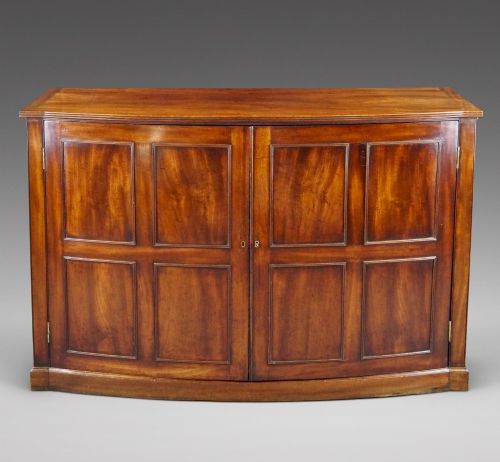
A bowfront storage cabinet brings curved elegance and ample capacity to a room, offering a distinct alternative to flat-fronted furniture.
Bowfront Storage Cabinet
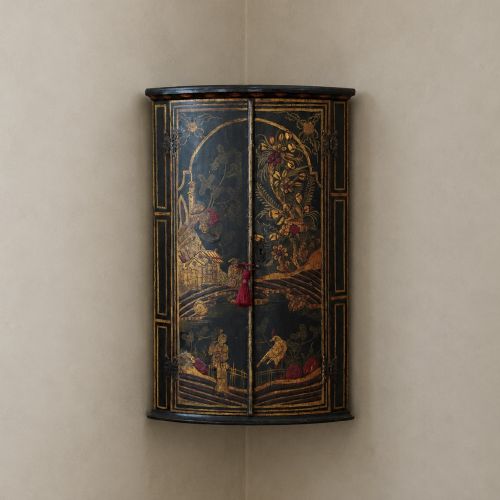
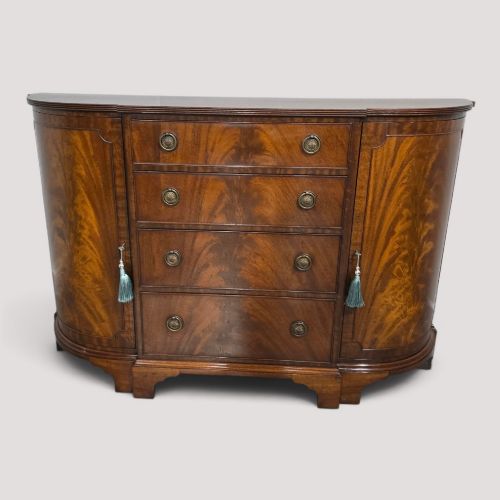
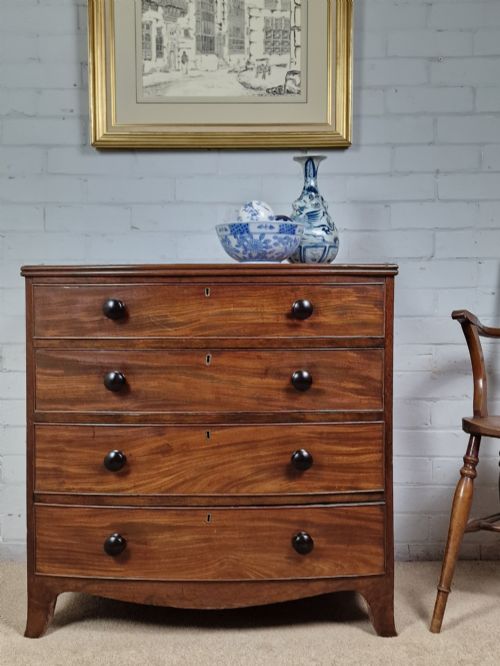
When you search for a bowfront storage cabinet, you encounter a variety of forms designed to hold domestic goods while presenting a rounded facade. These items span the Georgian, Regency, Victorian, and Edwardian periods, stretching into the early twentieth century.
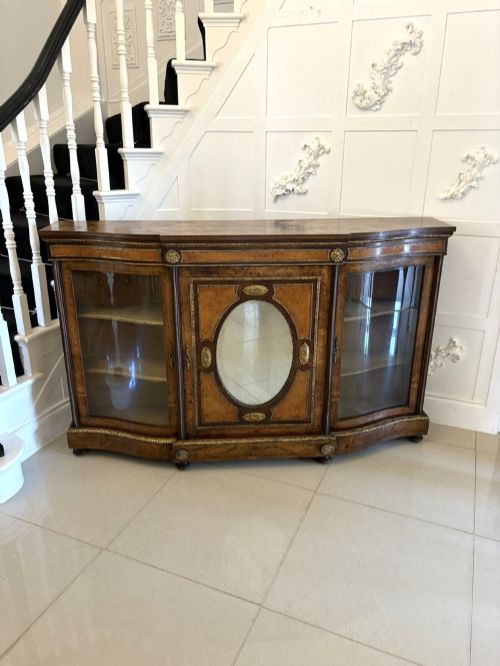
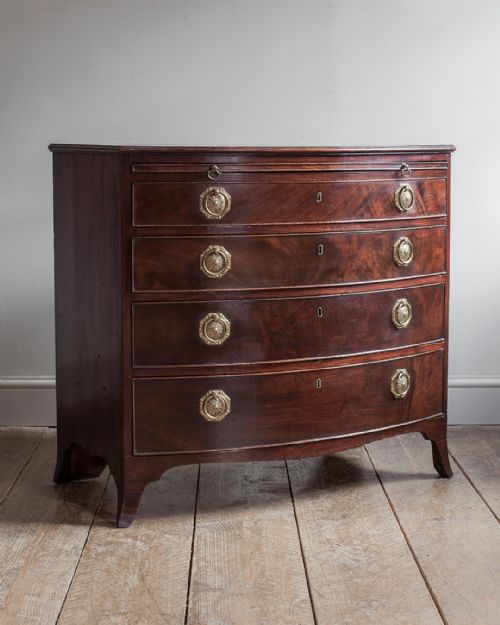
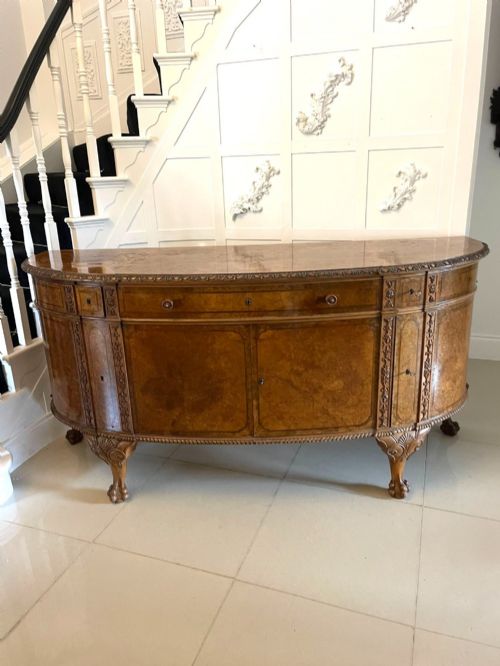
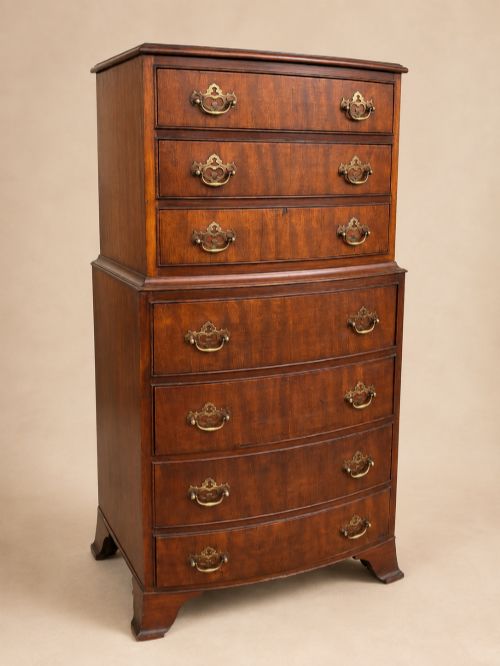
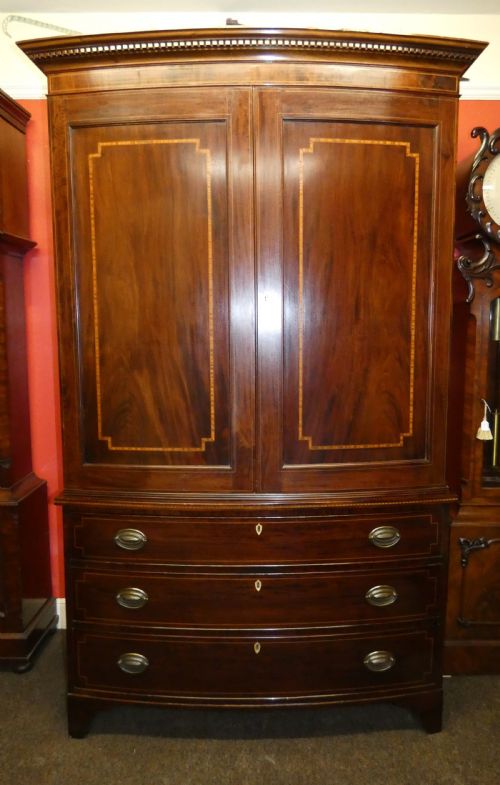
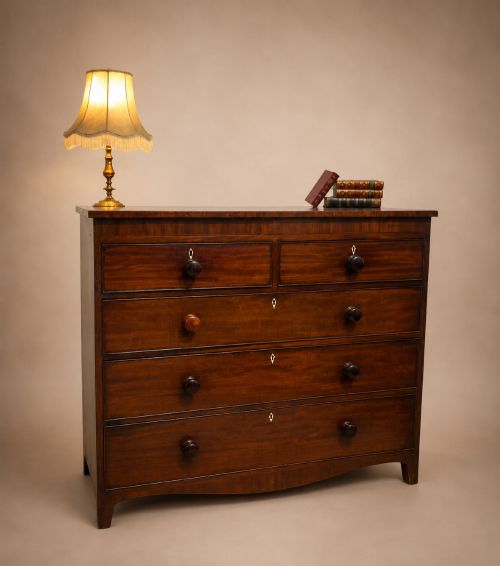
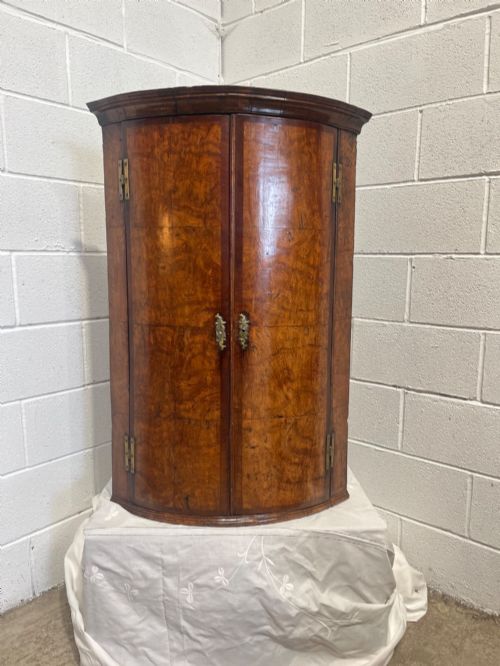
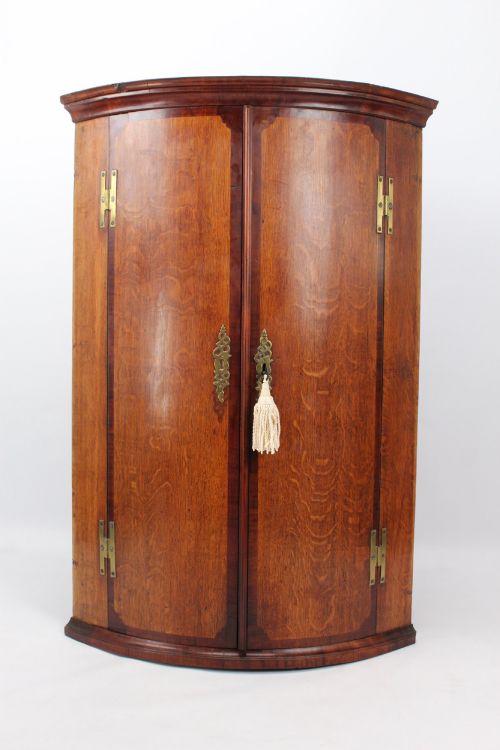
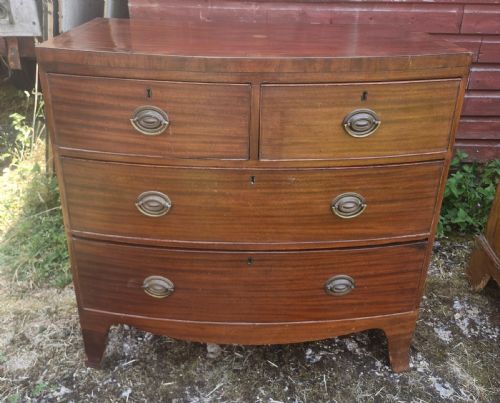
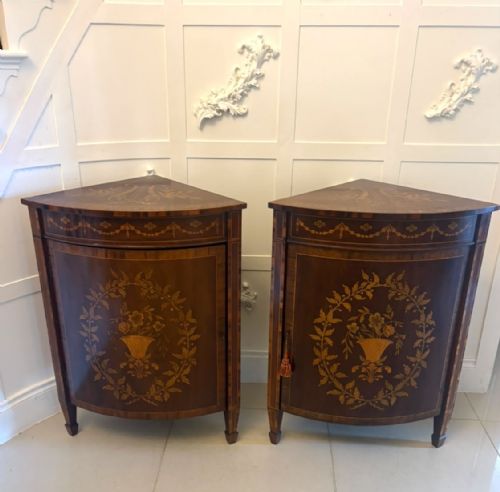
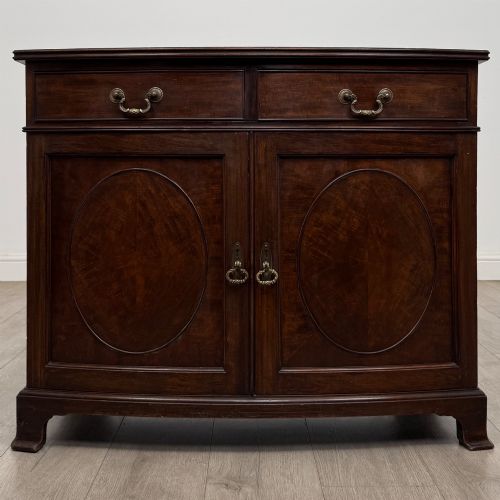
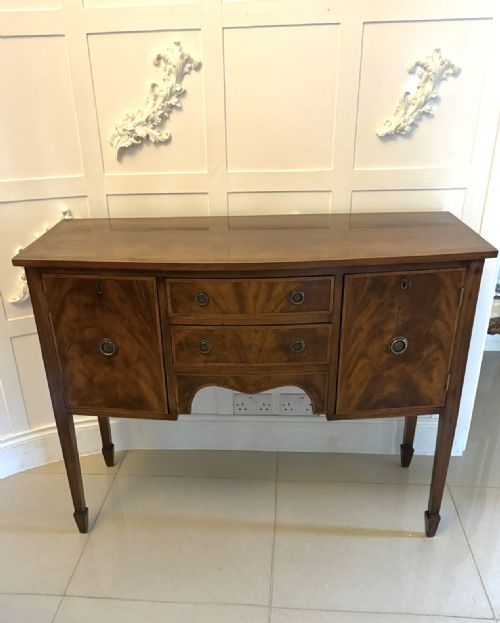
The selection on this page relies heavily on mahogany, oak, and burr walnut, shaped into chests of drawers, corner cupboards, sideboards, and linen presses. Sideboards and chests of drawers predominate, alongside hanging and standing corner cabinets.
Origins trace through centuries of British craftsmanship, encompassing Georgian simplicity, Regency restraint, and later revival styles such as Sheraton and Queen Anne. The unifying characteristic remains the convex curve of the front elevation, which softens the geometry of an interior.
How they were made
Cabinet makers constructed these curved forms primarily using solid timbers and selected veneers such as flame mahogany, satinwood, and burr walnut over supportive secondary woods. Achieving the characteristic bow required careful steaming, bending, or segmenting of timber to maintain structural integrity along the curved perimeter.
Surface decoration frequently involved marquetry inlay, brass hardware, or ormolu mounts, depending on the period and stylistic influence. Joinery relied on traditional dovetailing for drawer construction and pegged mortise and tenon frames for larger carcases, ensuring longevity.
Curved drawers demand immense patience from the woodworker, who must ensure each rounded pull glides smoothly without catching its neighbour.
What varies in quality
The standard of a bowfront storage cabinet rests upon the selection of timber figures and the precision of the curved joinery. Superior examples display book-matched flame mahogany or burr walnut veneers that flow seamlessly across the rounded drawers and doors.
Refinement in secondary details, such as hand-cut dovetails, original brass handles, and delicate stringing or marquetry inlay, elevates an item above standard production. The integrity of the carcase and the smooth operation of curved drawers indicate the maker's original skill.
Maurice Adams·Heal's
The Bowfront Storage Cabinet Glossary
- Bowfront
- A convex, outward-curving front elevation typical of certain chests of drawers, sideboards, and cabinets. This curved profile softens the corners of furniture and enhances the play of light across wood grain.
- Flame mahogany
- A veneer cut from the fork of a mahogany tree where the branches join the trunk. It produces a distinctive feather-like pattern that makers utilised for decorative drawer fronts.
- Linen press
- A tall storage piece comprising upper cupboard doors enclosing sliding trays, placed above a base of deeper drawers. Originally designed for storing household linens flat.
- Marquetry
- Decorative patterns formed by fitting together thin veneers of different coloured woods, ivory, or shell. This technique adorns the surfaces of cabinets and sideboards.
- Credenza
- A long, low sideboard or cabinet, often mounted with ormolu and featuring enclosed shelving. Victorian versions frequently served dining rooms or principal reception spaces.
Bowfront Storage Cabinet: Frequently Asked Questions
What rooms suit a bowfront storage cabinet?
These items fit well in dining rooms, living spaces, and hallways where a softer profile helps maintain circulation space.
The curved front reduces sharp corners while offering substantial internal storage for tableware, linens, or everyday items.
How do I identify a Georgian bowfront piece?
Georgian examples typically display hand-cut dovetailing, solid mahogany or oak drawer linings, and understated brass pull handles.
Proportions remain balanced, and decorative elements rely on subtle crossbanding rather than heavy applied ornamentation.
What is the difference between a sideboard and a chest?
Sideboards are generally longer and lower, built for dining room service with cupboards and cutlery drawers.
Chests of drawers feature stacked horizontal drawers intended for clothing storage in bedrooms or private chambers.
How should I care for antique veneer?
Keep wooden surfaces away from direct sunlight and steady heat sources to prevent the veneer from drying or cracking.
Apply a traditional beeswax polish occasionally and buff gently with a soft cloth to maintain the finish.