

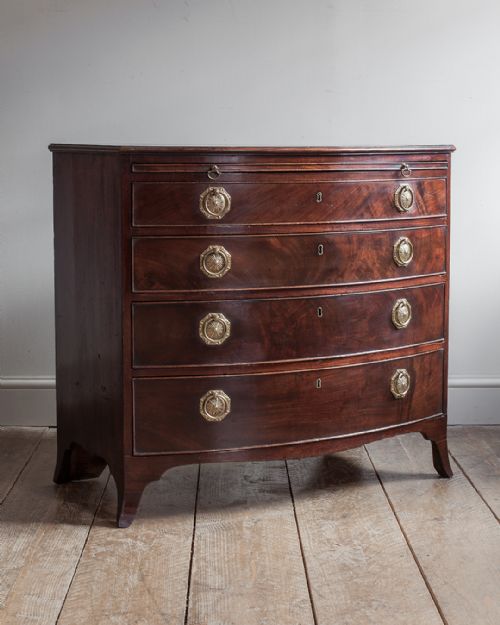
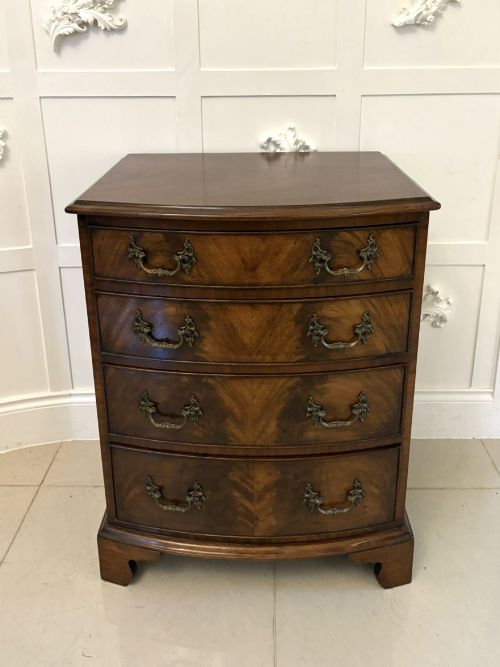
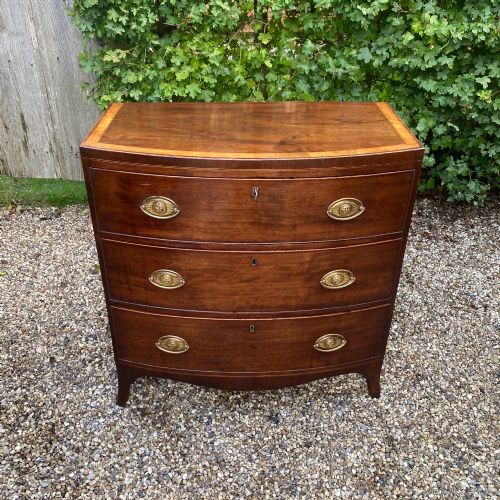
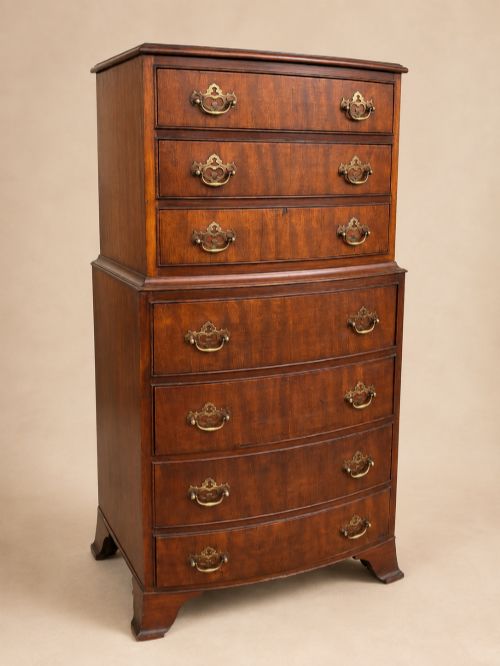
Bowfront Mahogany Storage Drawers
Bowfront mahogany storage drawers combine curved fronts with rich timber, offering practical capacity and traditional elegance.
Bowfront Mahogany Storage Drawers
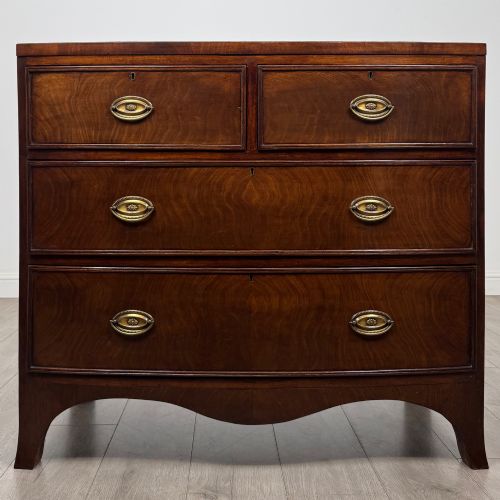
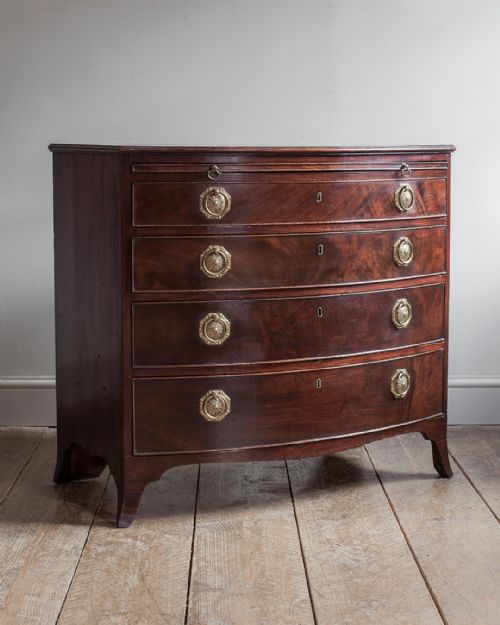
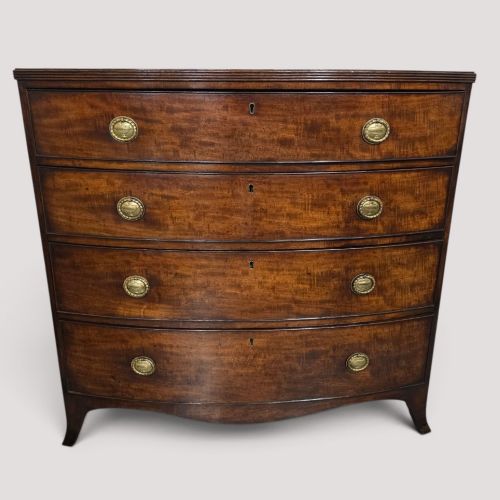
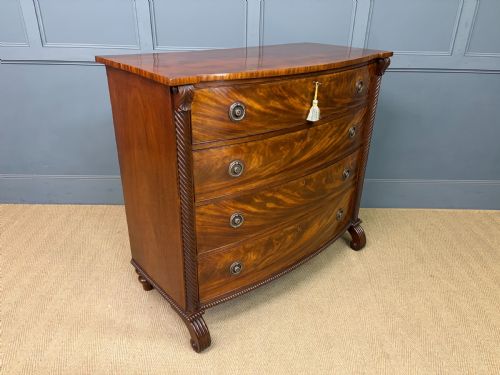
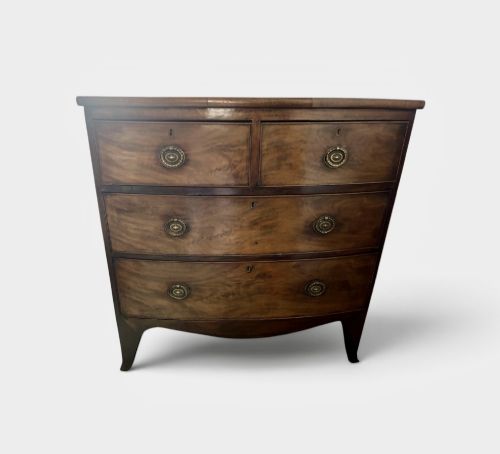
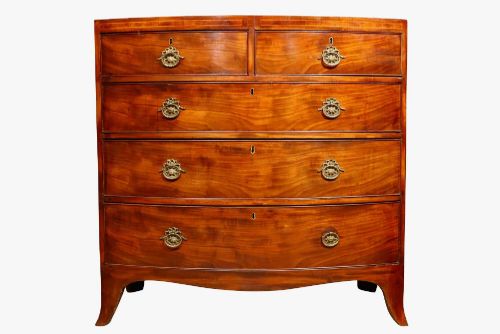
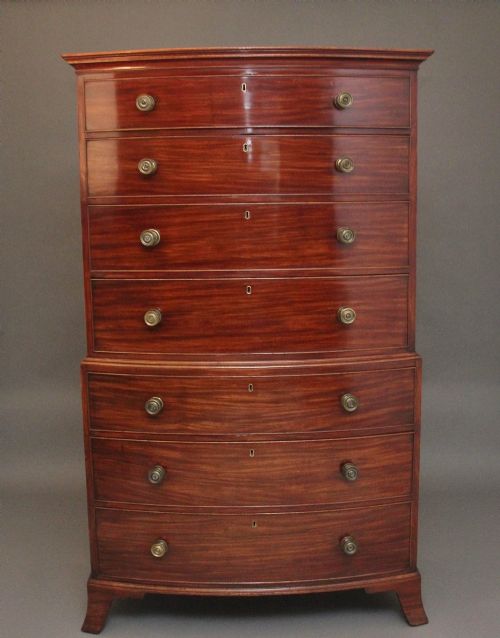
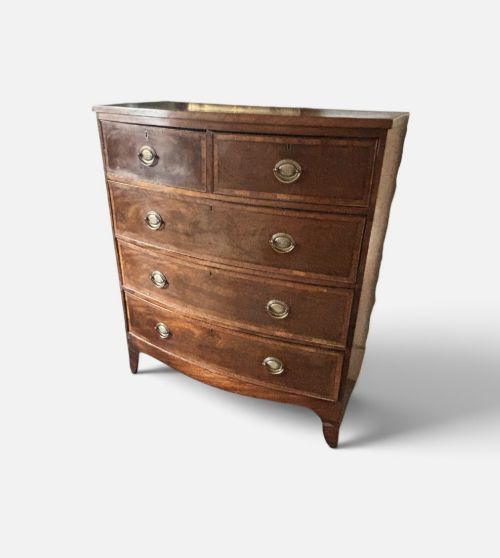
Bowfront mahogany storage drawers present a curved projecting front that softens the silhouette of traditional case furniture. These pieces appear most frequently in Georgian, Regency, and Victorian formats, including standard chests of drawers, tallboys, and sideboard variants.
The construction typically utilises solid timber frames combined with figured veneers. Examples span from the eighteenth century through to the early twentieth century, reflecting shifting tastes in domestic storage.
Buyers encounter numerous regional and period interpretations, ranging from compact Scottish and Welsh formats to grand George III and Regency designs. Each piece provides deep drawer storage while maintaining a distinctive curved facade.
Materials and construction methods
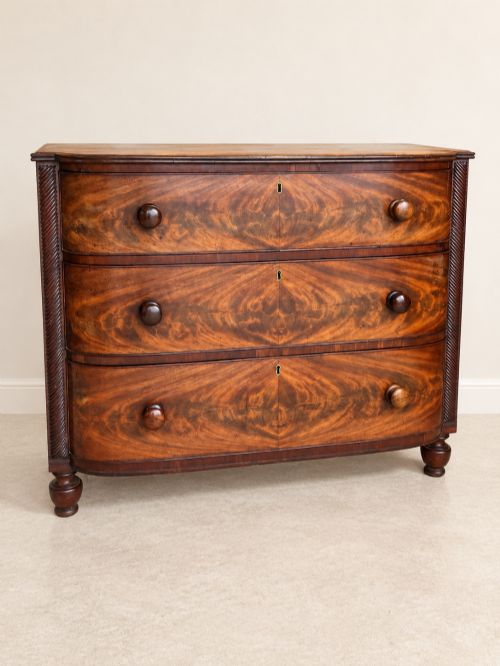
Cabinetmakers built these pieces using primary timbers of solid mahogany, frequently applying flame mahogany veneer or satinwood banding across the drawer fronts to create figured grain patterns. Secondary structural elements commonly include pine and oak for internal framing and drawer linings.
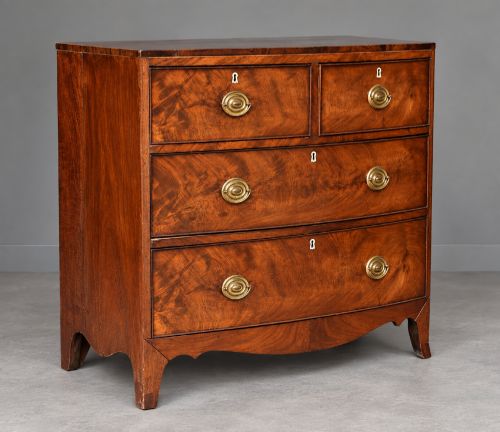
Makers shaped the convex fronts using steam-bent wood or built-up laminates fixed to sturdy carcases. Brass hardware, including drop handles and escutcheons, completed the assembly on period examples.
Several chests cleverly conceal secret compartments tucked neatly beneath the top moulding.
Distinctions in quality and execution
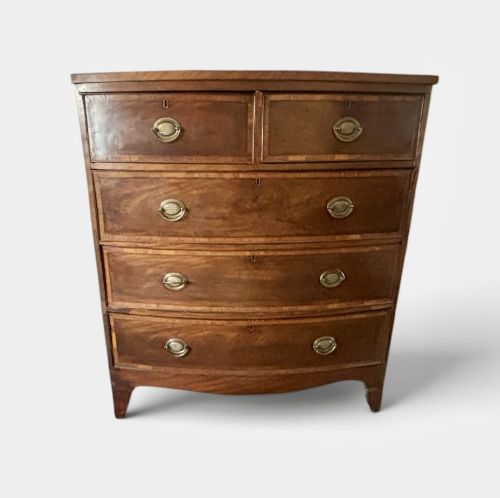
Quality reveals itself in the selection of timber veneers and the precision of the curved joinery. Superior examples display carefully matched flame mahogany or contrasting satinwood crossbanding that wraps cleanly around the bow.
Internal construction, such as hand-cut dovetailing on the drawer boxes and the retention of original brass fittings, separates finer workshop productions from simpler utilitarian items.
The Bowfront Mahogany Storage Drawers Glossary
- Bowfront
- A convex, curved front elevation typical of certain Georgian and Regency case furniture. This shape softens the room presence of standard rectangular chests.
- Flame mahogany
- A highly figured timber veneer showing a distinctive flame-like pattern caused by the intersection of branch growth with the main trunk. Cabinetmakers selected these veneers for principal drawer fronts.
- Crossbanding
- A strip of veneer applied perpendicularly to the grain of the main surface to form a contrasting border. It frequently frames the edges of drawer fronts on Regency and Georgian pieces.
- Tallboy
- A tall chest of drawers made in two stacked sections, providing elevated vertical storage. These pieces combine deep capacity with a compact footprint.
- Caddy top
- A tabletop style featuring a raised, moulded edge reminiscent of a tea caddy lid. This detail appears on select 19th-century chests.
Bowfront Mahogany Storage Drawers: Frequently Asked Questions
How do I date a bowfront chest?
Dating relies on assessing the timber choice, construction methods, and overall hardware style. Georgian and Regency pieces typically show hand-cut dovetails and specific bracket or feet designs.
Later Victorian and Edwardian examples often incorporate different internal secondary woods and machine-cut elements. Comparing the carcass proportions helps confirm the manufacturing era.
What is flame mahogany?
Flame mahogany is a decorative veneer cut from specific sections of the tree where the grain twists and creates a fiery, dappled pattern. Cabinetmakers placed these striking sheets centrally on drawer fronts.
This timber treatment elevates the visual appeal of the furniture without altering its core storage function.
Where were these chests placed?
These storage pieces served primarily in bedrooms and hallways for linen and clothing. Their curved design allowed them to sit smoothly against walls without sharp corner projections.
Sideboard variants functioned in dining rooms for storing servingware and table accessories.
How do I maintain the wood?
Maintenance involves keeping the timber away from direct heat sources and sudden humidity shifts to protect the veneer. Regular dusting with a dry cloth preserves the polished surface.
A light application of traditional wax helps nourish the mahogany and maintain its natural lustre over time.