

Bow Fronted Storage Cabinet
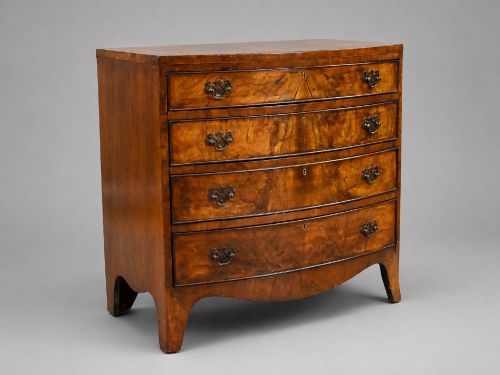
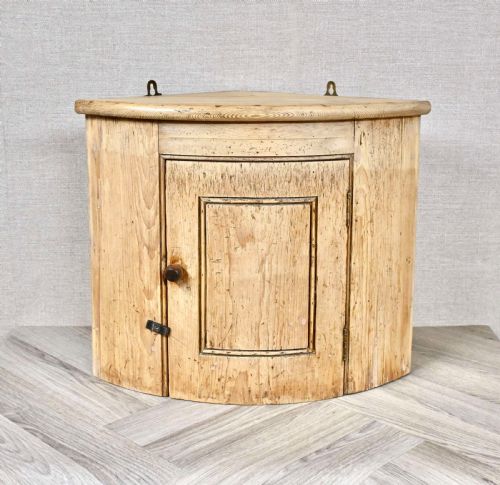
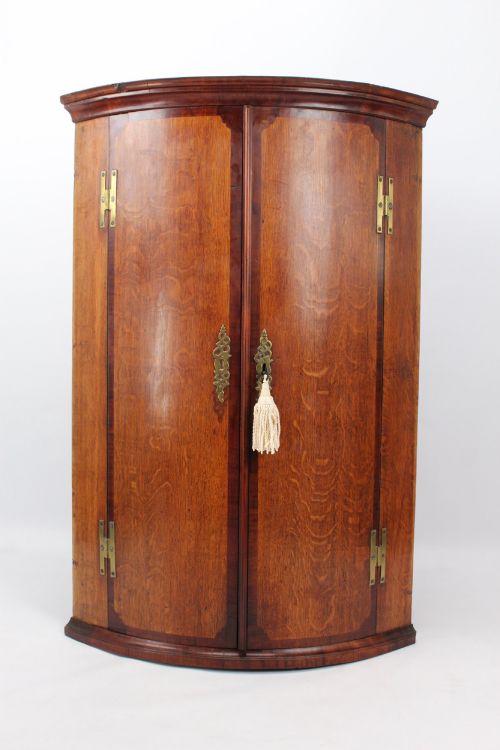
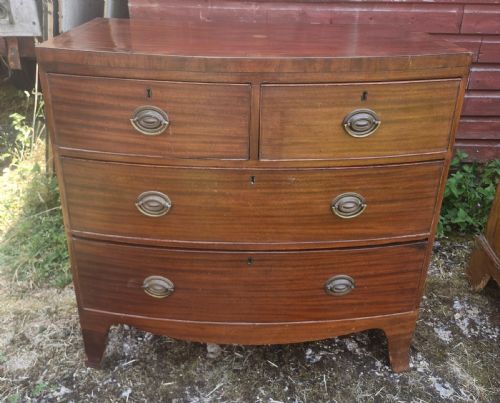
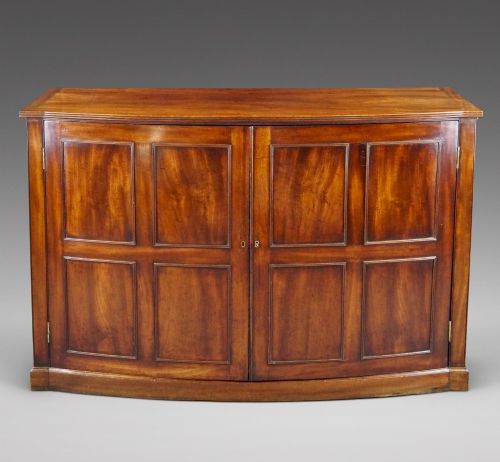
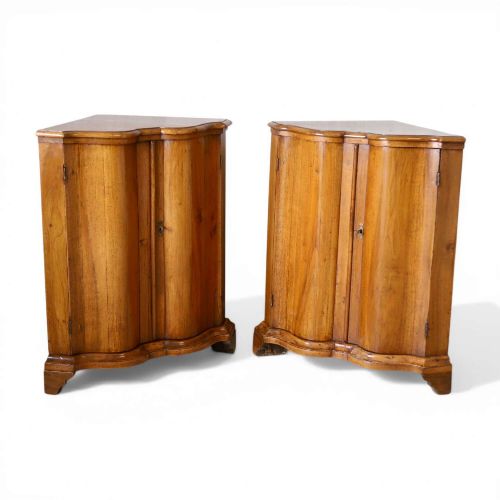
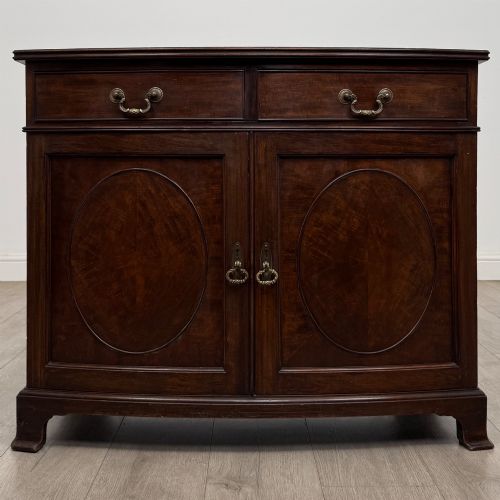
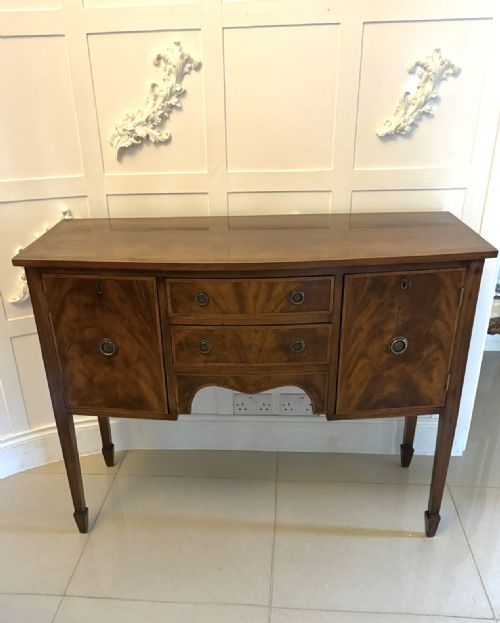
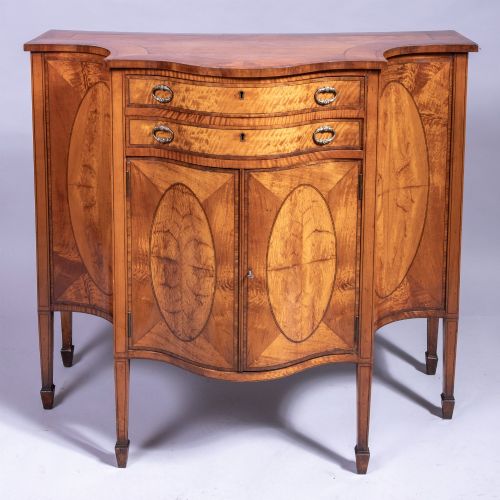
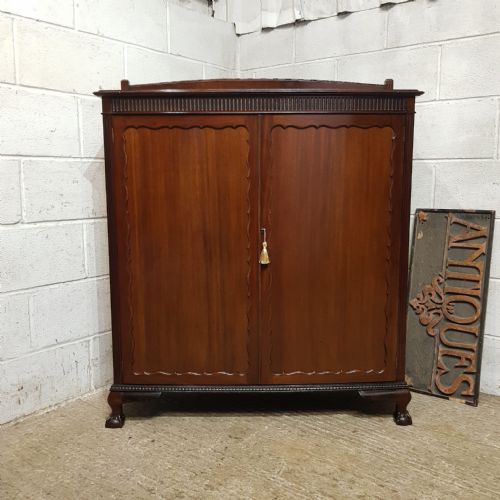
A bow fronted storage cabinet brings subtle curved lines to interiors, offering practical storage through classic chest, cupboard and sideboard forms.
Bow Fronted Storage Cabinet
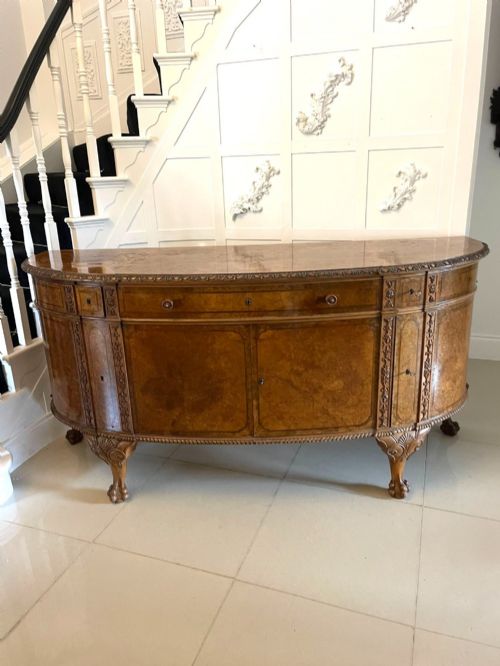
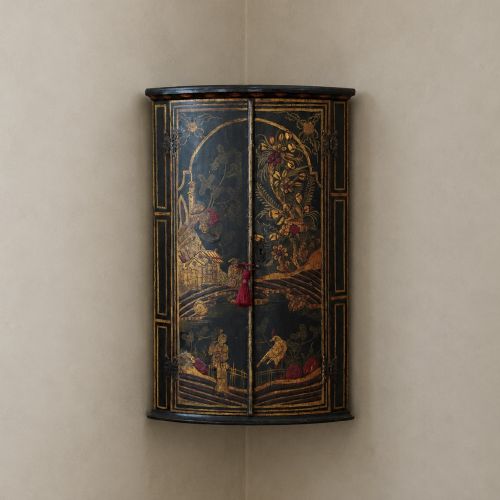
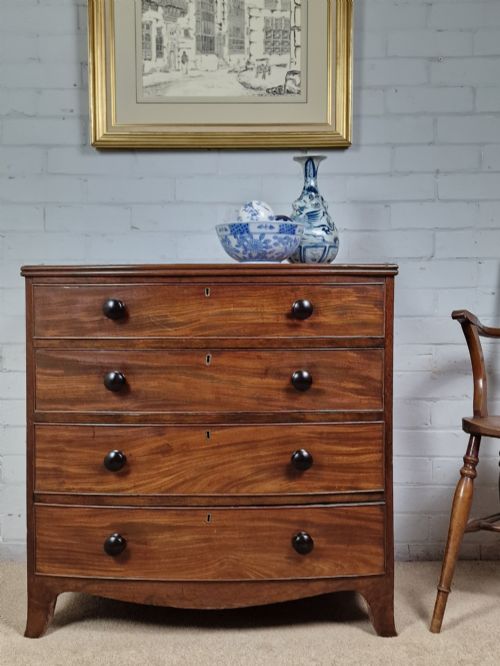
The selection includes Georgian and Regency examples alongside Victorian, Edwardian, and early twentieth-century pieces. Common regional variations and stylistic revivals, such as Sheraton Revival and Chinoiserie, appear frequently in the available forms.
What varies in quality
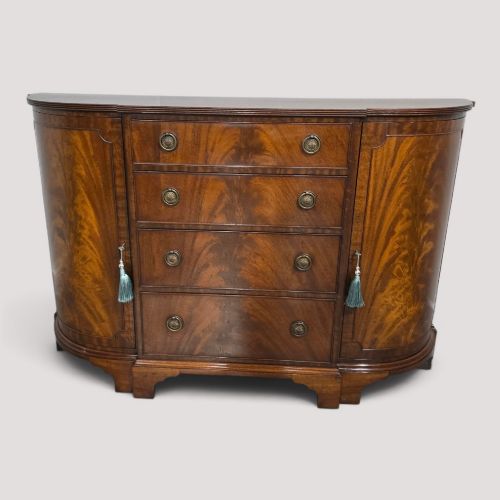
The standard of timber selection and veneer matching defines the visual impact, particularly on the prominent curved drawer fronts and doors. Superior pieces display continuous grain patterns across the bow and meticulous attention to inlay work.
Construction methods such as drawer linings, original brass handles, and the integrity of the curved framework distinguish finer workshops from simpler regional production.
The inventory spans corner cupboards, chests of drawers, sideboards, and display cabinets across eight distinct periods.
Maple and Co·Edwards and Roberts
The Bow Fronted Storage Cabinet Glossary
- Bow front
- A convex curved furniture front that projects outward from the centre. This profile softens room layouts and maximises internal capacity.
- Flame mahogany
- A distinct timber veneer figuring resembling flickering flames. It is sliced from mahogany logs where the grain intersects branches.
- Chinoiserie
- European imitation of traditional Chinese artistic motifs and techniques. Artisans applied hand-painted lacquer scenes to cabinet surfaces.
- Demi lune
- A half-moon shape used for table and cabinet tops. These pieces fit flush against walls while maintaining curved profiles.
- Linen press
- A tall storage piece featuring upper cupboard doors and lower drawers. Interiors typically contain sliding trays for textiles.
Bow Fronted Storage Cabinet: Frequently Asked Questions
Where should I place a corner cupboard?
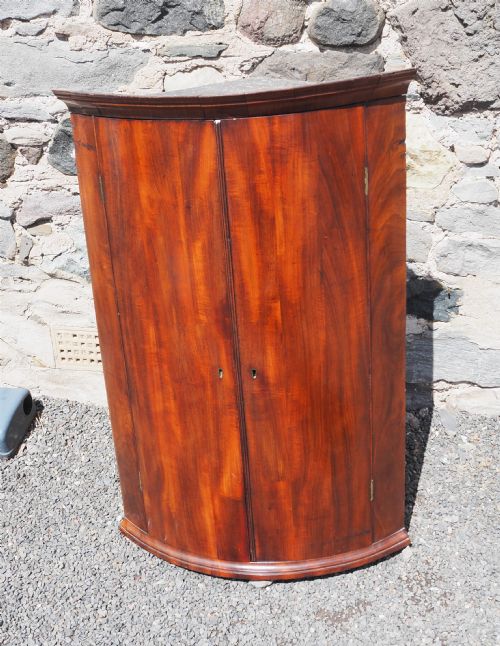
Hanging and floor-standing corner cupboards utilise neglected room junctions effectively. They fit snugly into ninety-degree angles, turning empty space into display or storage areas.
These pieces work well in dining rooms, hallways, and studies where floor space is limited. Wall-mounted versions require secure fixing to support the weight of timber construction.
How do I distinguish Georgian from Edwardian pieces?
Georgian pieces date from the eighteenth and early nineteenth centuries, displaying hand-cut dovetails and solid timber construction. Edwardian items date from the early twentieth century and often utilise machine-sawn elements alongside revival styles.
Examine the drawer linings, backboards, and handles for clues regarding manufacturing techniques. Period finishes and secondary woods also help indicate the correct era.
What is the difference between a sideboard and a chest?
Sideboards incorporate cupboards and drawers designed for dining room service and tableware storage. Chests of drawers feature stacked horizontal drawers intended primarily for clothing.
Both forms utilise the curved bow front profile, but their internal layouts and room placements differ. Sideboards generally stand longer and lower than bedroom chest forms.
How do I care for antique veneer?
Keep wooden cabinets away from direct heat sources and strong sunlight to prevent veneer from drying and lifting. Maintain stable indoor humidity levels in the room.
Apply traditional wax polish sparingly and buff with a soft cloth to nourish the timber. Avoid modern silicone sprays that can penetrate damaged finishes.