

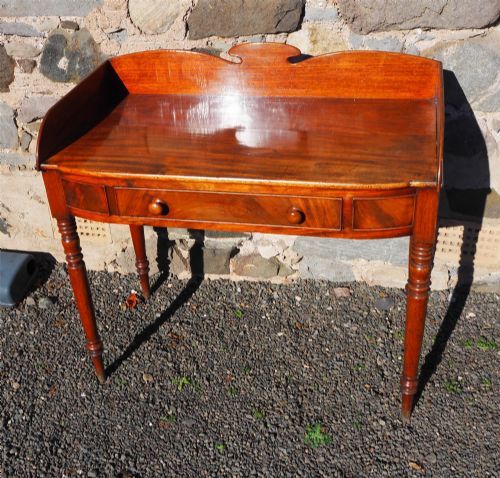
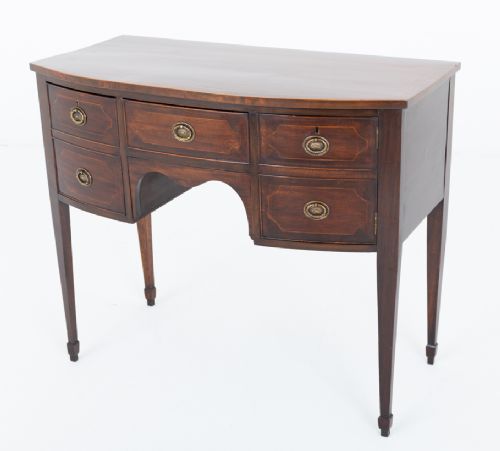
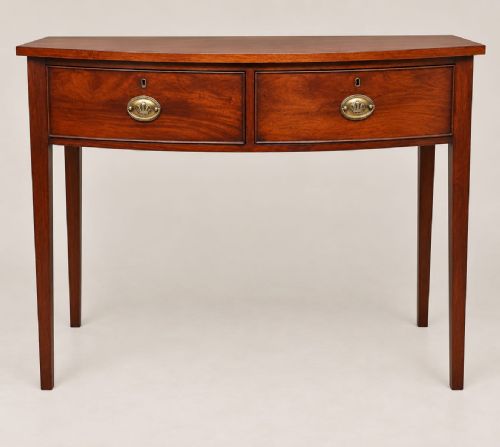
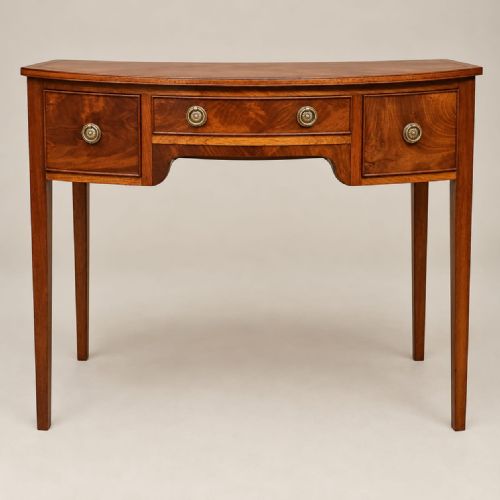
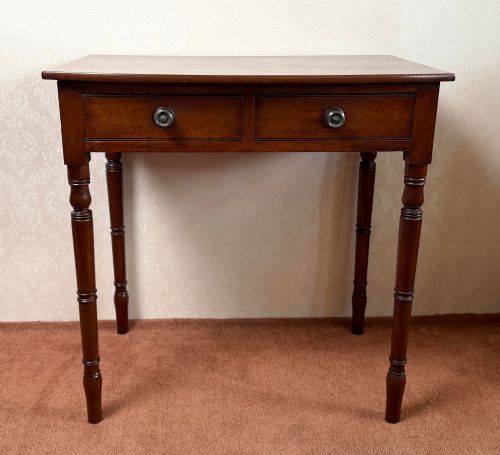
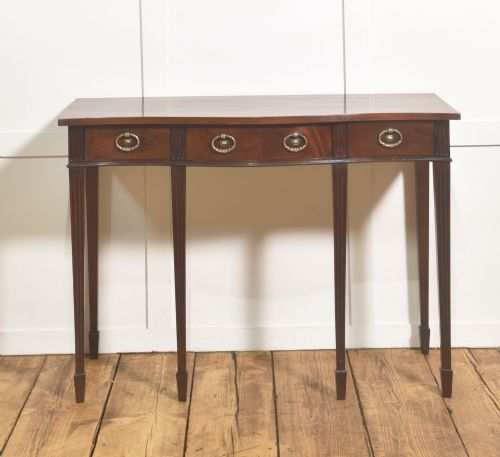
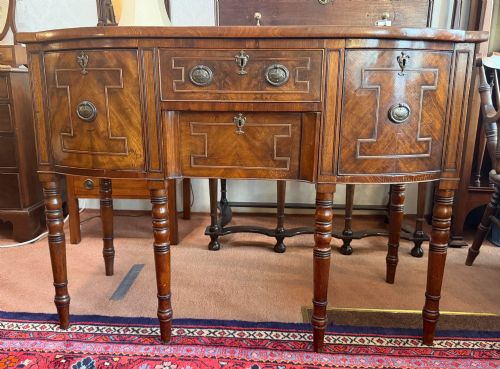
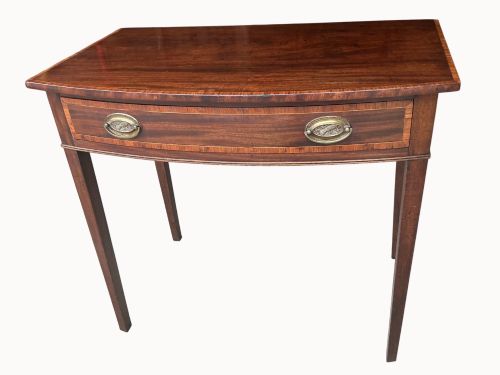
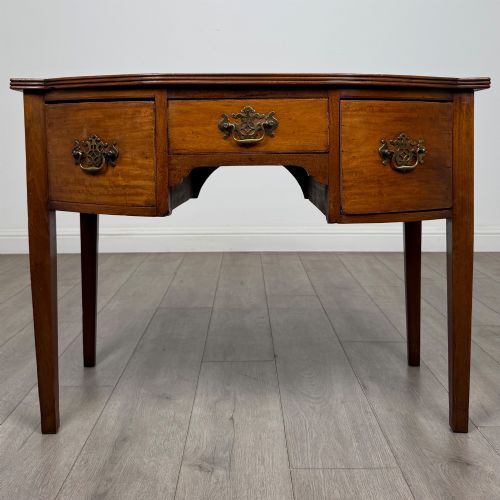
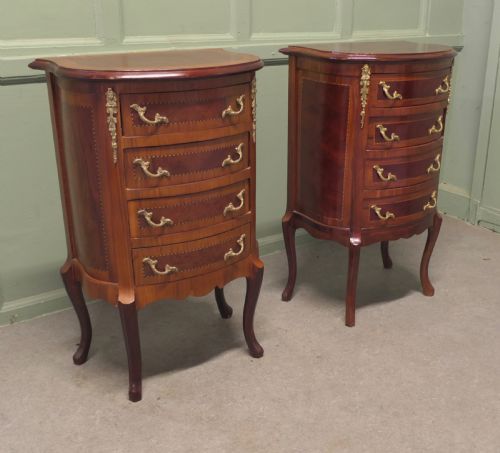
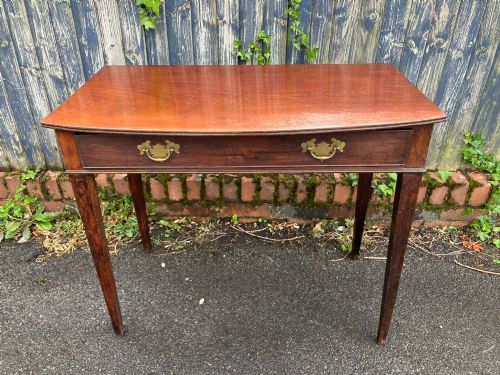
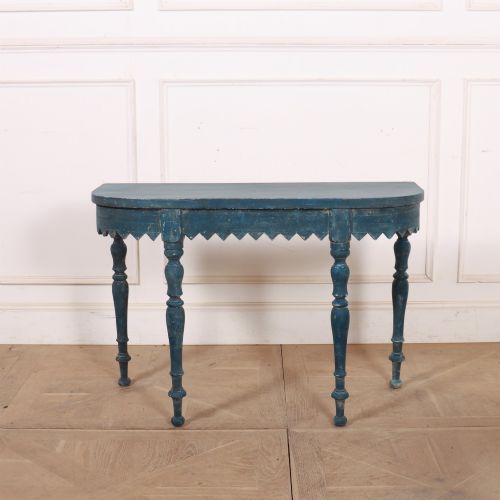
Bow Fronted Side Table
A bow fronted side table offers a curved silhouette that softens room corners while providing surface space in hallways and parlours.
Bow Fronted Side Table
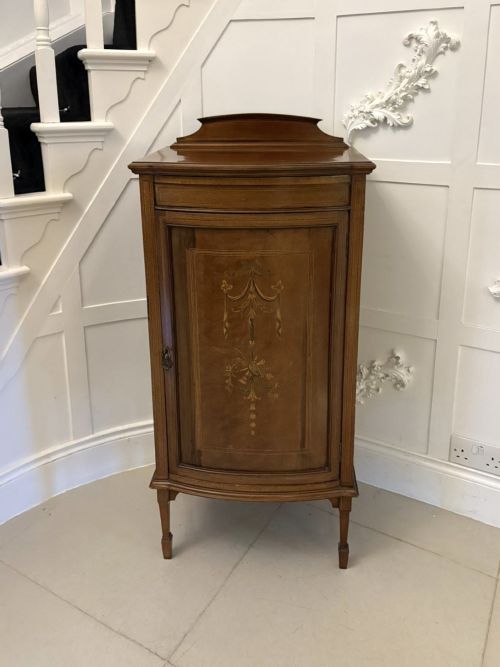
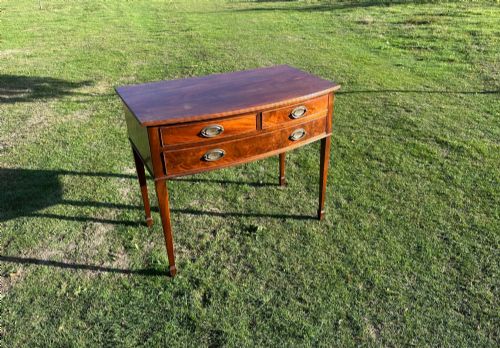
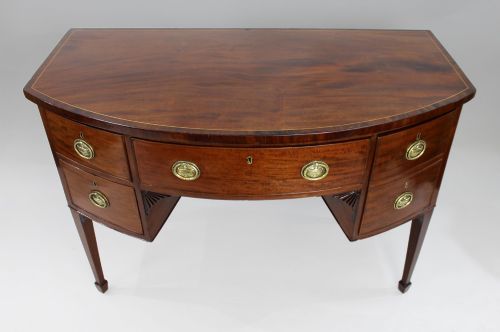
A bow fronted side table is a case or table form defined by its convex projecting front, designed to sit against a wall in domestic interiors. The examples met most frequently on this page date from the Georgian and Regency periods through the nineteenth century, constructed primarily in mahogany.
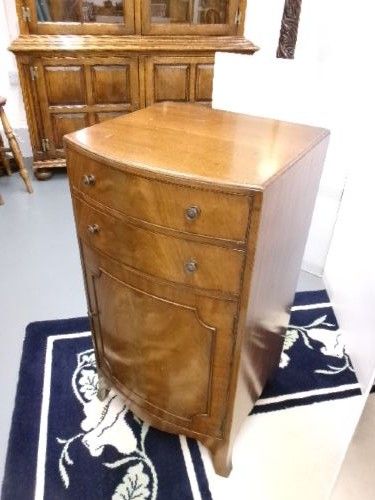
Beyond standard side tables, the form extends into related pieces such as dressing tables, writing tables, and compact bedside cabinets. Makers adapted the curved front to numerous functions, ranging from narrow console tables to larger serving pieces and sideboards.
Origins span English workshops of the eighteenth and nineteenth centuries, alongside later Edwardian interpretations and twentieth-century revivals. Buyers encounter variations incorporating single drawers, multiple small drawers, or open console designs.
Materials and Construction
Construction relies heavily on solid mahogany and mahogany veneers, often enhanced with contrasting stringing in boxwood or satinwood. Selected pieces utilise burr walnut for figured surfaces, paired with secondary softwoods for internal drawer linings.
The characteristic curved front requires specialised joinery, utilising steam-bent timber or built-up solid blocking shaped to a uniform radius. Drawers are traditionally hand-dovetailed to follow the convex contour of the frame, fitted with brass pull handles or knobs.
Bow Fronted Side Table Retail Price Guide 2026
Typical asking prices for bow fronted side table among the pieces listed under this phrase on Sellingantiques today, from the lower quarter to the upper quarter. They describe what is for sale here now, not the wider market.
Some small bedside cabinets hide surprising curves in tight spaces.
Execution and Detail
Quality rests in the handling of the curved facade, where superior examples maintain smooth, continuous grain alignment across the drawer fronts and frame. Finer pieces demonstrate restraint and precision in crossbanding, stringing, and inlay work.
Proportion and structural integrity distinguish finer workshops from simpler commercial output, visible in the taper of the legs and the tight fit of drawer joints. The choice of timber figure, particularly in burr walnut and figured mahogany surfaces, elevates the visual presence of the piece.
Maples
The Bow Fronted Side Table Glossary
- Bow front
- A convex, outwardly curving furniture front that softens linear room arrangements. This profile gained widespread popularity during the late eighteenth century.
- Stringing
- Thin inlaid lines of contrasting wood used to outline drawer edges and tabletops. Boxwood and satinwood are common choices for this decorative banding.
- Crossbanding
- A border veneer applied around the primary surface grain running in a perpendicular direction. It frames the central timber panel on tabletops and drawer fronts.
- Dovetail
- A traditional interlocking joint used in drawer construction. Hand-cut variations indicate earlier periods of manufacture.
- Console table
- A wall-mounted or freestanding table designed to stand against a vertical surface. These often feature slender legs and decorative front aprons.
Bow Fronted Side Table: Frequently Asked Questions
Where should I place a bow fronted side table?
These tables suit hallways, landings, and reception rooms where a curved front prevents sharp corners from obstructing walkways. Their shallow depth allows them to function against walls without dominating the floor space.
Pair them with a mirror or lighting to create a focal point in an entryway or living area. They also serve effectively as dressing or writing surfaces in bedrooms.
How do I distinguish a Georgian piece from a later revival?
Georgian examples display construction methods such as hand-cut dovetails and native timber secondary woods like oak or pine. Their proportions reflect the aesthetic standards of the eighteenth and early nineteenth centuries.
Revival pieces from later eras often utilise machine-cut elements and standardised fittings. Examining the interior drawer construction and timber ageing helps clarify the period of manufacture.
What is the difference between a side table and a console table?
Traditional side tables are fully freestanding furniture pieces designed to stand independently against a wall. They usually feature four legs and finished backs.
Console tables historically relied on wall fixings for stability, though many antique examples evolved into freestanding console forms. Both share similar proportions and serve comparable decorative functions.
How do I care for mahogany and walnut surfaces?
Maintain the finish by dusting regularly with a soft, dry cloth to prevent particulate buildup. Avoid placing wooden furniture in direct sunlight or near heat sources to prevent timber splitting.
Apply traditional beeswax periodically to nourish the wood and preserve the lustre of the polish. Avoid silicone-based sprays, which can degrade antique finishes over time.