
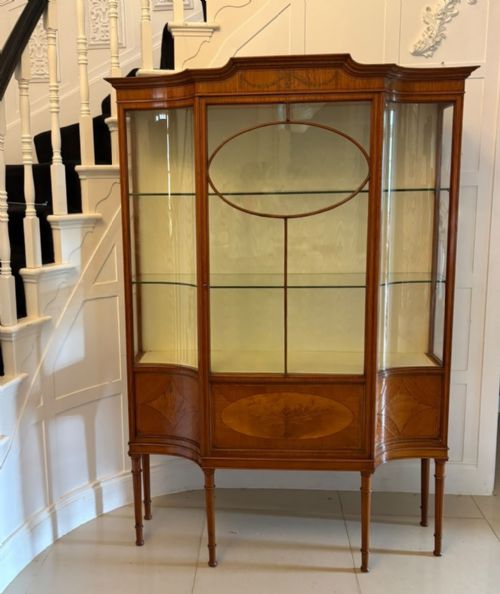
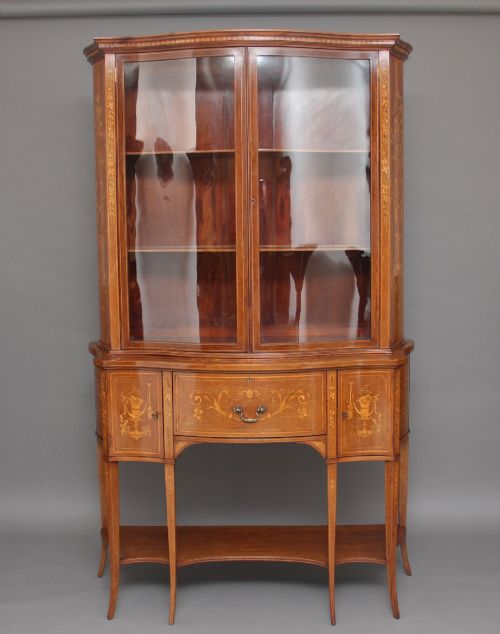
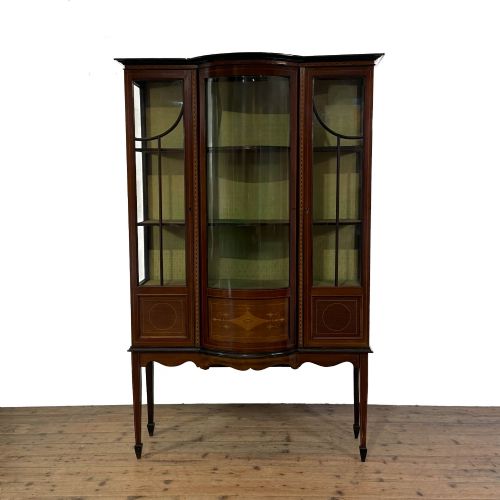
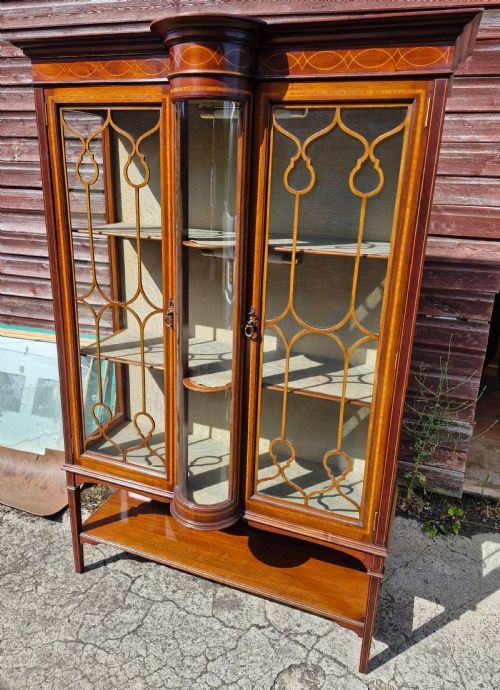



Bow Front Vitrine Cabinet
A bow front vitrine cabinet offers curved glass and polished wood to showcase small treasures in any room.
Bow Front Vitrine Cabinet
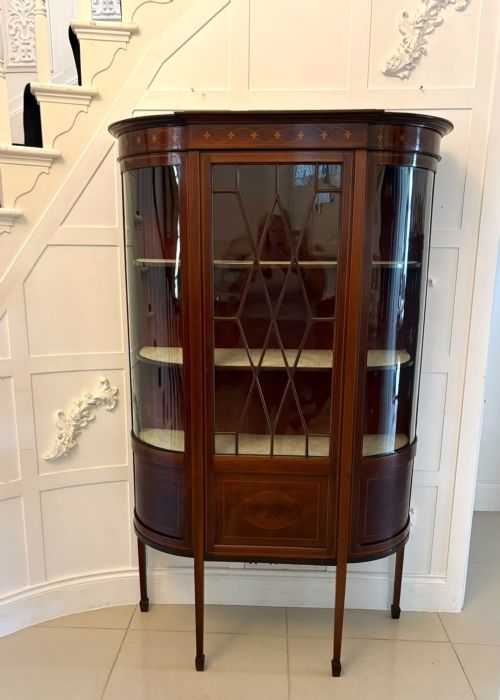
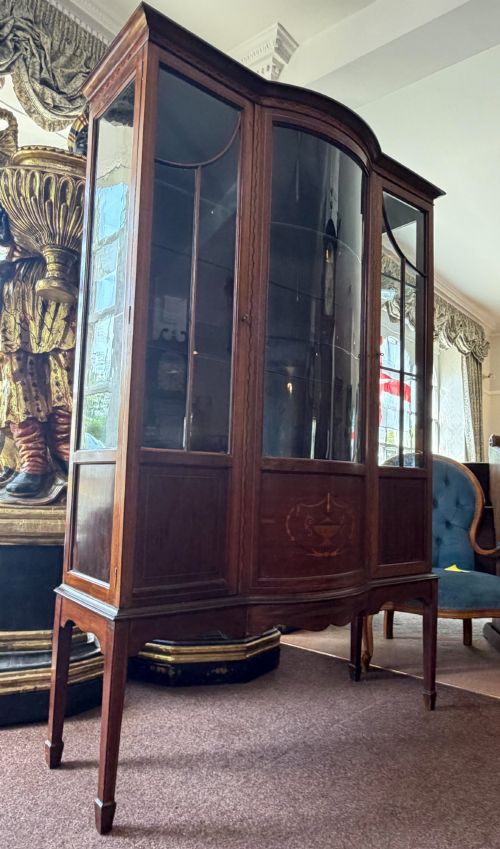
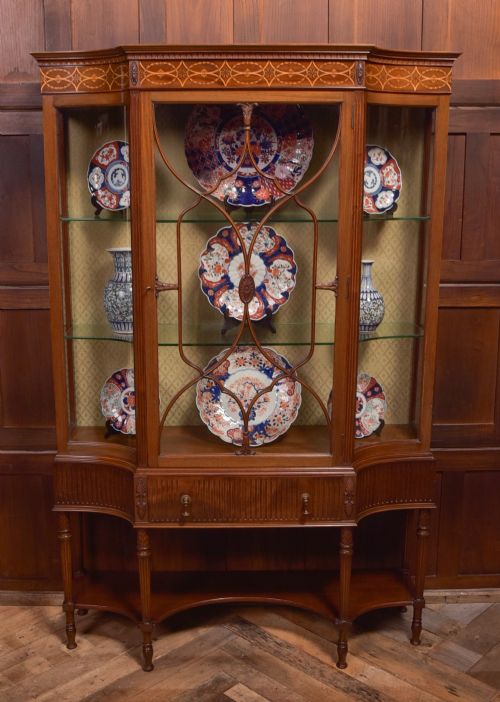
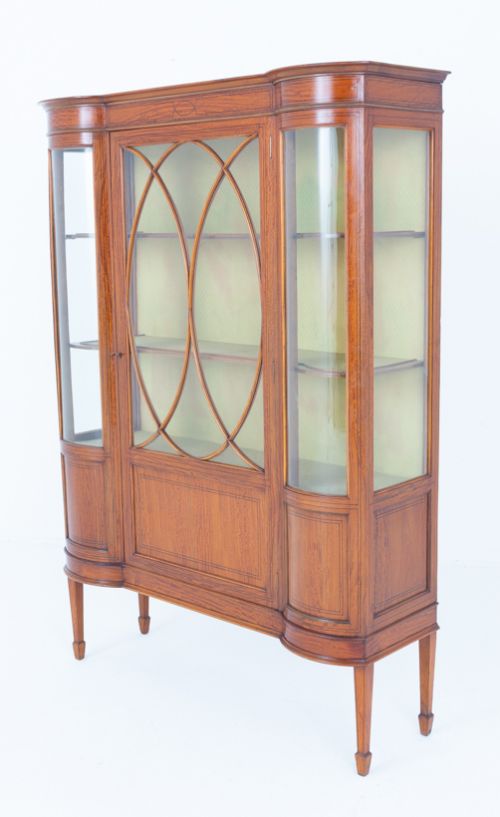
A bow front vitrine cabinet serves as a dedicated display piece, designed with a curved glazed door or panels to exhibit china, glassware, and decorative objects. The pieces found here span the late Victorian and Edwardian eras, reaching into the early twentieth century.
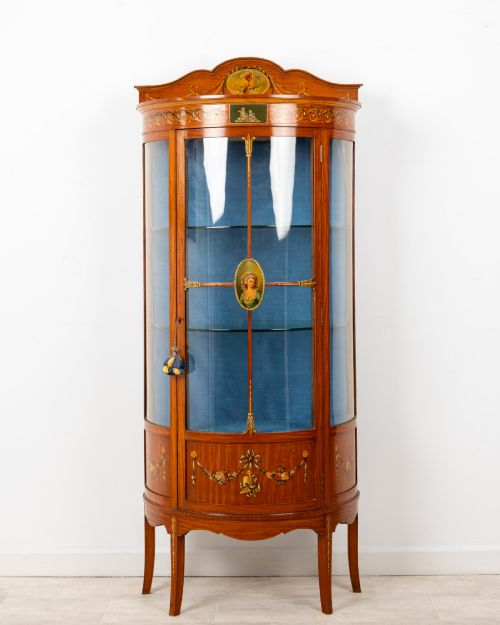
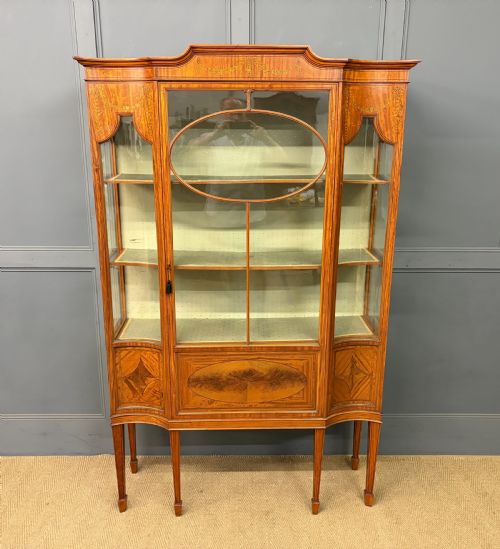
Most examples rely on mahogany or satinwood as the primary timber, frequently finished with delicate contrasting inlay or painted decoration. Makers drew heavily on Sheraton Revival motifs and occasional Art Nouveau or French Provincial influences to shape the silhouette.
Materials and construction
Cabinet makers utilised solid timbers and fine veneers over secondary woods, bending glass and framing timber to create the signature curved front. Satinwood, mahogany, and burr walnut provide the carcass, often accented by fruitwood inlay and brass mounts.
Interior shelving typically consists of wood or glass, supported within glazed compartments designed to protect delicate items from dust. Glazing ranges from flat side panels meeting a curved central door to entirely bowed glass fronts.
One surviving cabinet bears later sign-written perfume brand names from its working life in an Edwardian shop.
Judging the workmanship
Quality rests on the crispness of the timber inlay, the grain selection in woods like burr walnut or satinwood, and the integration of the curved glass. Finer pieces demonstrate precise hand-cut joinery and balanced proportions across the bowed facade.
The sophistication of the painted details or fruitwood marquetry distinguishes standard production from superior examples. Hardware integrity and the smooth operation of the curved doors also signal higher workshop standards.
Maple and Co
The Bow Front Vitrine Cabinet Glossary
- Vitrine
- A glass-fronted cabinet or display case specifically designed for exhibiting fine objects or curiosities. The term derives from the French word for glass.
- Bow front
- A convex curved cabinet facade that projects outward in a rounded sweep. This shape softens the room and widens the interior display space.
- Inlay
- A technique where contrasting woods, shells, or metals are inserted into recesses in the primary surface to create decorative patterns. Sheraton Revival examples often employ delicate floral or geometric motifs.
- Satinwood
- A luminous, fine-grained tropical timber with a yellowish colour and a natural sheen. It was heavily utilised during the late nineteenth and early twentieth centuries for high-status display furniture.
- Sheraton Revival
- A late nineteenth-century design movement inspired by the neoclassical furniture of George Sheraton. These pieces favour light timbers, classical urn motifs, and refined proportions.
Bow Front Vitrine Cabinet: Frequently Asked Questions
What fits inside a bow front vitrine cabinet?
These cabinets suit porcelain figures, glassware, small silver items, and curated collections. The enclosed glass space keeps dust away while maintaining visibility from multiple angles.
Adjustable shelves in certain models accommodate taller items like decanters or porcelain vases without crowding the display.
How do I date a bow front vitrine cabinet?
Dating relies on timber choice, inlay style, and structural hardware. Edwardian and late Victorian pieces frequently combine mahogany or satinwood with refined fruitwood stringing.
Heavier proportions and darker finishes typically point toward nineteenth-century origins, while lighter painted satinwood aligns with turn-of-the-century Sheraton Revival revivals.
Are the glass doors original on these cabinets?
Many surviving cabinets retain their original curved or flat glass panels, which may show minor bubbles or historic surface irregularities. Curved glass requires specialised production techniques typical of period manufacturing.
Examining the putty and rebate helps confirm whether the glazing matches the age of the surrounding timber frame.
Where should I place a corner vitrine?
Corner variants make efficient use of dead space in dining rooms, drawing rooms, or hallways. Their angled backs fit squarely into room junctions while projecting a curved glazed front outward.
Positioning them away from direct sunlight protects both the polished wood surfaces and the displayed contents from fading.