
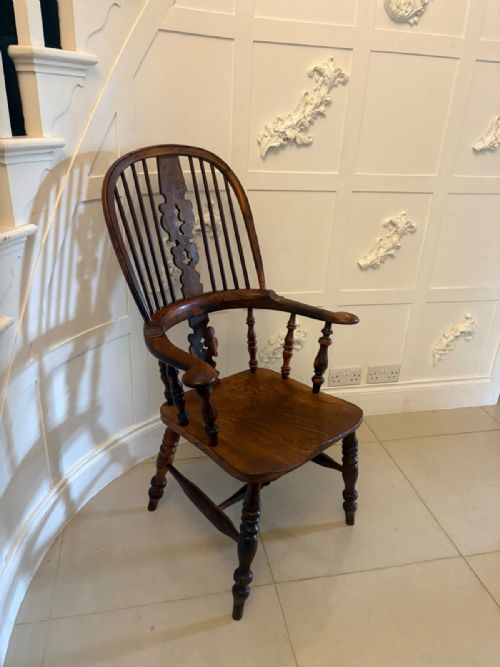
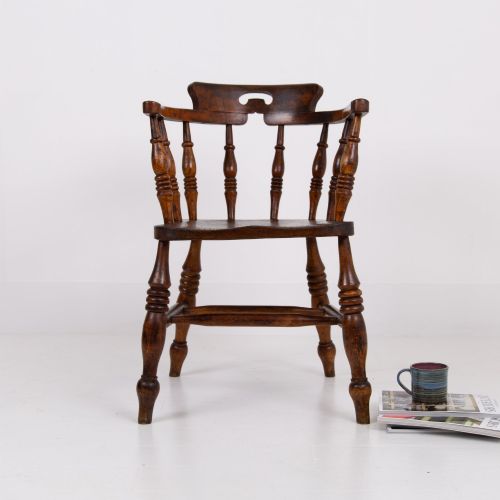
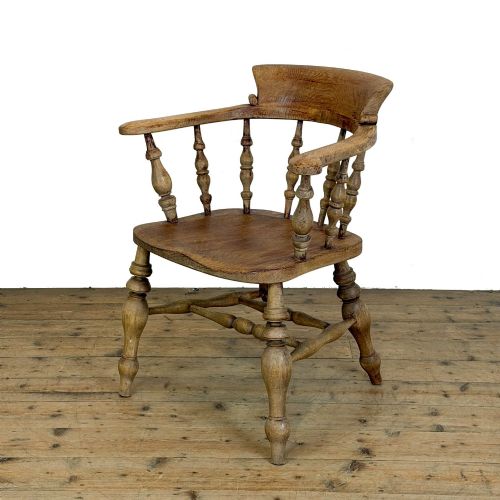
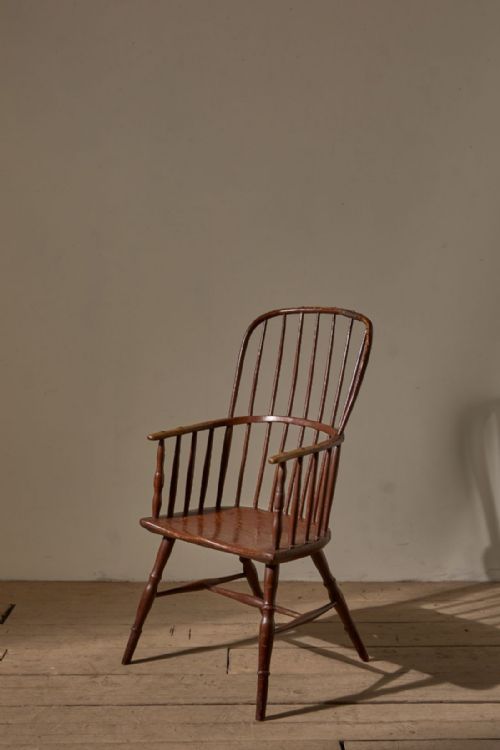
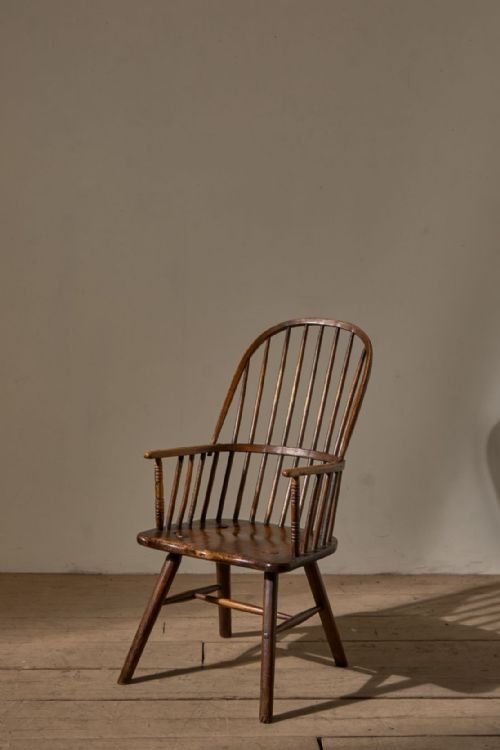
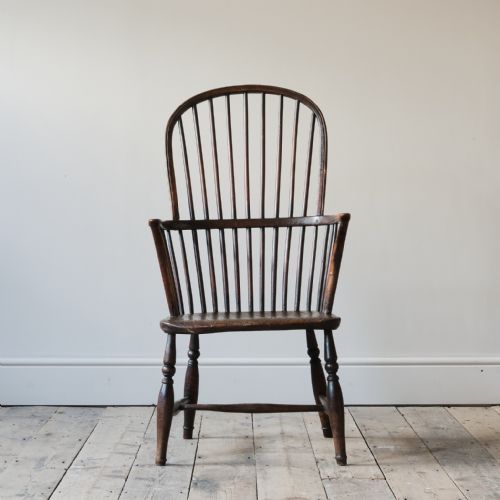

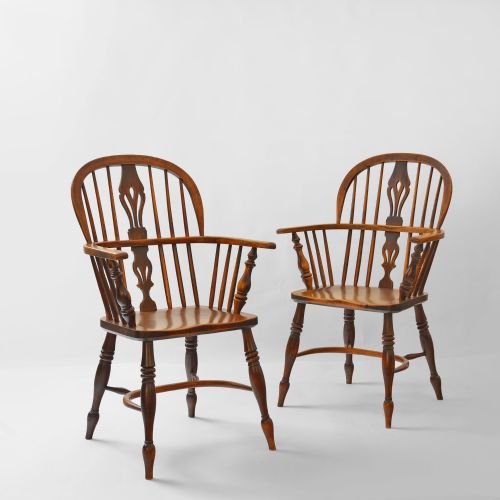
Bow Back Windsor Armchair
When you handle a bow back windsor armchair, you hold a piece of vernacular joinery shaped by generations of provincial makers.
Bow Back Windsor Armchair
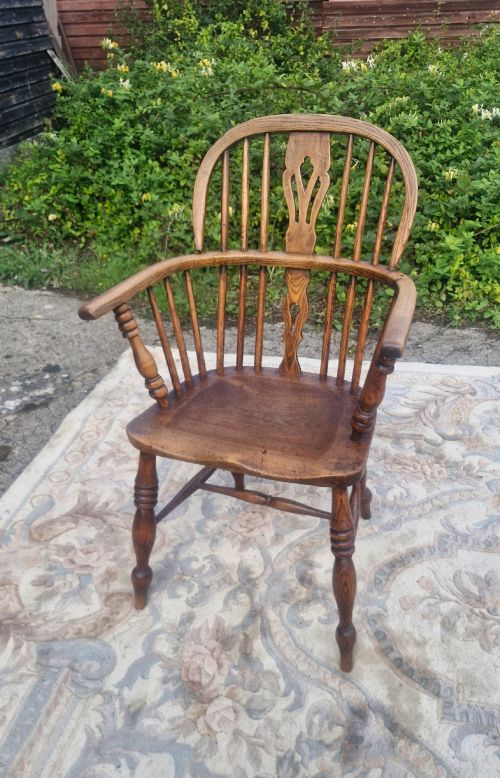
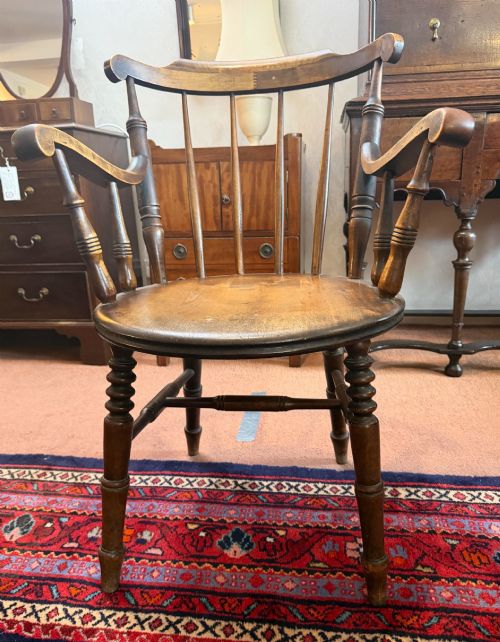
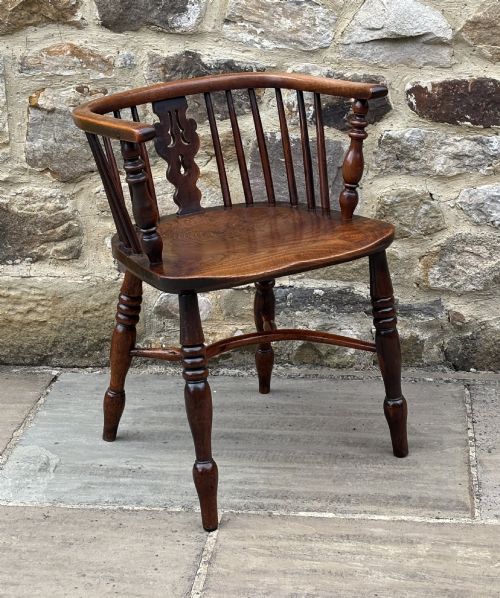
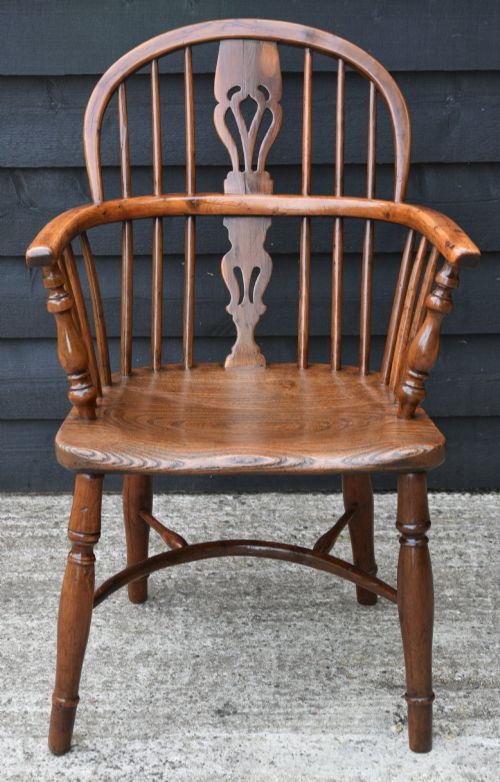
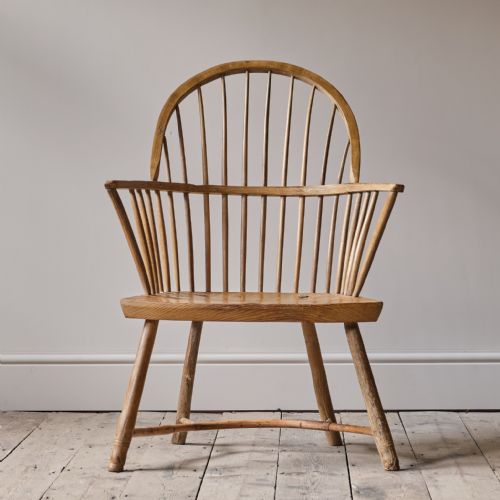
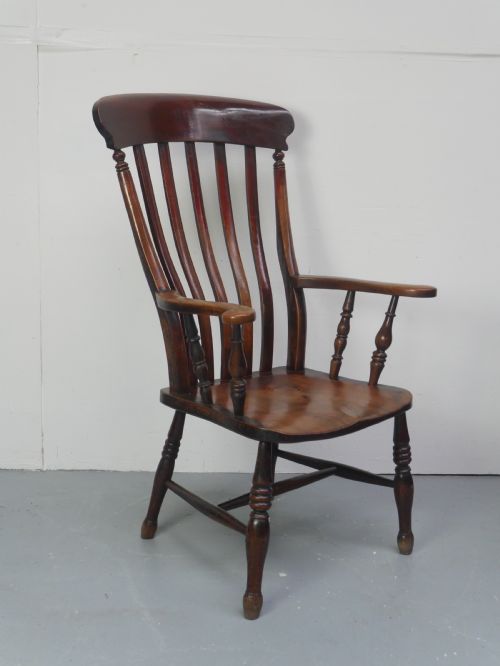
A bow back windsor armchair is a traditional form of seating defined by a bentwood upper bow that forms the back and armrests, secured directly into a solid wooden seat. These pieces emerge from English provincial workshops and country houses, spanning periods from the eighteenth century through the Victorian era.
How they were made
The construction relies on a combination of timbers chosen for specific structural properties, utilising elm for solid, split-resistant seats paired with ash, beech, or yew for spindles, legs, and bent bows. Cabinetmakers and chair bodgers shaped these woods using traditional turning lathes and steam-bending techniques to create rigid yet resilient frames.
Joinery is typically achieved through wedged tenons and through-dovetails, allowing the individual components to lock tightly together without excessive metal fastenings. Surfaces often show traces of early paint, original dark polish, or untreated grain developed through decades of domestic use.
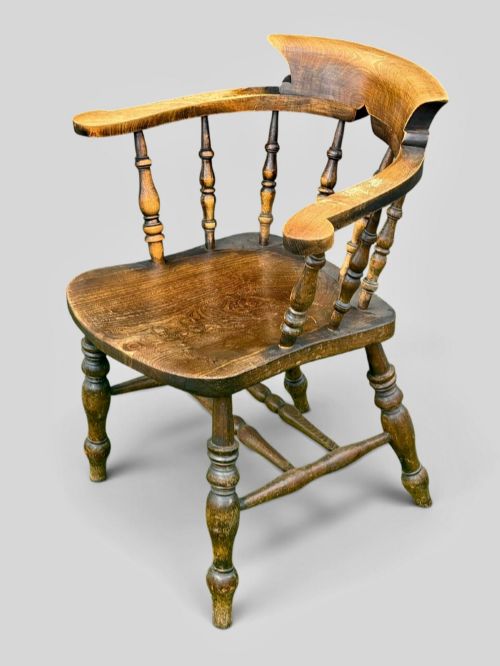
Some nineteenth-century examples accommodate smokers with wide, sweeping arm rails designed specifically to support relaxed elbows.
What varies in quality
Quality rests in the elegance of the wood selection and the harmony of the turning work, where crisp spindle profiles and richly figured yew or elm grain distinguish superior examples from plain utility furniture. The handling of the bentwood bow, particularly clean steam-bending without distortion, marks the skill of the original maker.
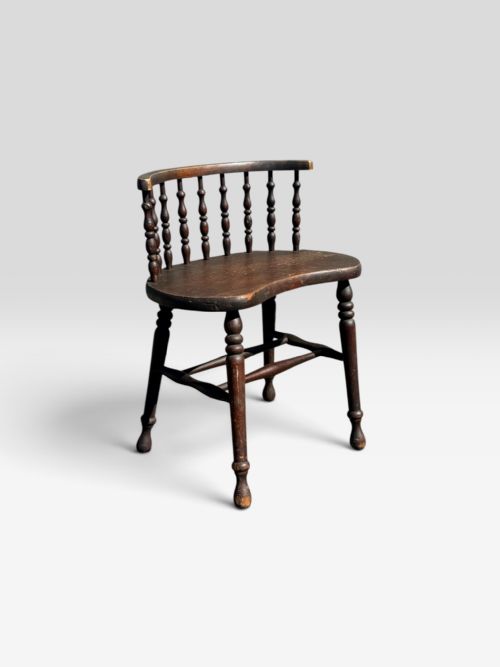
Proportion and stance dictate the visual success of the piece, with finer armchairs exhibiting well-splayed legs and balanced arm bows that offer both grace and stability. The depth of the saddle seat and the integration of the back spindles reveal the care invested in the construction.
John Brand of Sleaford
The Bow Back Windsor Armchair Glossary
- Bow back
- A continuous steam-bent piece of timber forming the upper back and armrests of a chair. This technique provides structural strength while maintaining a curved profile.
- Saddle seat
- A thick wooden seat base sculpted with hollows for comfort. It is traditionally carved from a single piece of elm.
- Smokers bow
- A low-backed Windsor armchair with a rounded arms rail, popular in domestic and tavern settings during the Victorian period.
- Spindle
- A slender turned wooden upright supporting the back or arms. Spindles are tenoned directly into the seat and top rail.
Bow Back Windsor Armchair: Frequently Asked Questions
What is a bow back windsor armchair?
A bow back windsor armchair is a traditional wooden seat featuring a steam-bent rail that sweeps around to form the arms, mounted onto a solid carved timber seat.
These chairs rely on distinct stick-back or spindle construction rather than a traditional framed upholstered structure, reflecting regional English country craftsmanship.
How do I date a windsor armchair?
Dating relies on observing the turning styles of the legs, the thickness of the seat board, and the wood species used in the construction.
Earlier eighteenth-century variants often display deep saddle seats and heavier ash framing, while late Victorian examples introduce slender turned components and beech timbers.
Where were windsor armchairs used?
These armchairs served primarily in provincial contexts, including farmhouses, country kitchens, country houses, and local inns.
Their robust construction made them suitable for daily domestic tasks, functioning as desk chairs, fireside seating, and smoking chairs.
What woods are used in windsor chairs?
The construction typically combines multiple timbers, utilising elm for the heavy saddle seat because it resists splitting under pressure.
Ash, beech, and yew are standard for the turned legs, spindles, and bent bows, selected for their tensile strength and flexibility.