


Botanical Fruit Oil Painting
Botanical fruit oil painting works bring rich harvests of grapes, peaches and berries to canvas in enduring oil paint.
Botanical Fruit Oil Painting
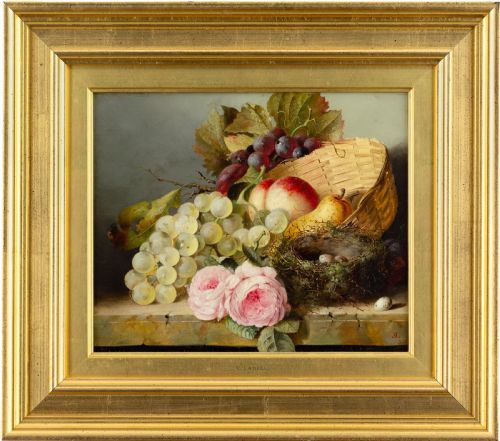
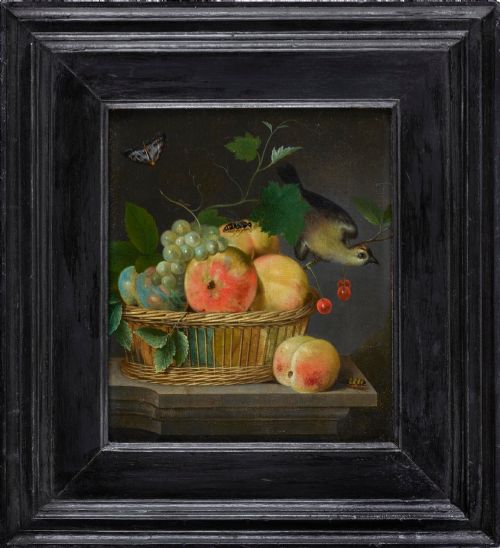
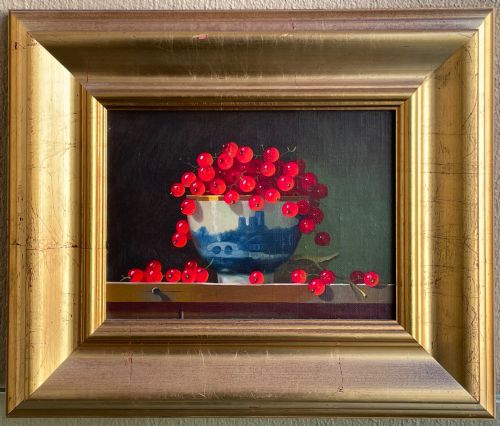
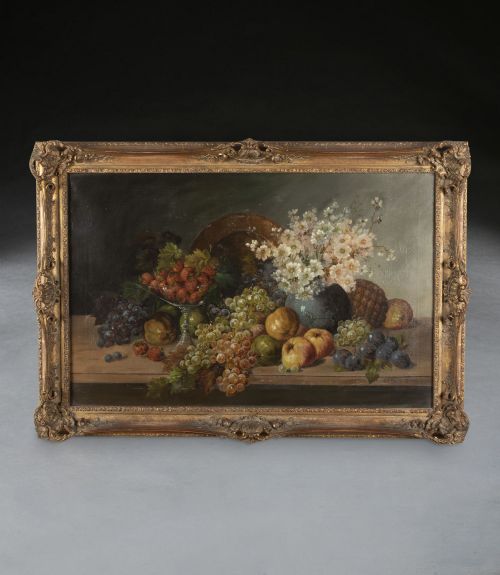
A botanical fruit oil painting captures detailed studies of natural produce, often arranged alongside flowers, wicker baskets and occasional birds or parrots. These works range from seventeenth-century Flemish baroque compositions to nineteenth-century Victorian realism and twentieth-century interpretations.
The most common examples on this page are nineteenth-century pieces featuring traditional groupings of grapes, apples and peaches on canvas or wood panels. Buyers encounter both single canvases and matched pairs depicting lush tabletop harvests.
Originating from British, European and traditional schools, these oil paintings span georgian, victorian, edwardian and mid-century periods. Their subjects focus heavily on edible harvests rendered with careful attention to natural texture and light.
Variations in Quality
Quality rests in the precision of brushwork and the natural rendering of light upon fruit surfaces and foliage. Superior works display convincing depth in shadowed basket weaves and realistic translucency in grapes and berries.
The execution of secondary elements, such as feathers on a parrot or the weave of a wicker basket, separates master compositions from standard decorative workshop pieces. Frame craftsmanship also indicates the original investment placed in the artwork.
Several botanical fruit oil painting compositions feature unexpected avian observers, including a white-fronted Amazon parrot inspecting the peaches and grapes.
Edward Ladell·Gaspar Peeter Verbruggen·Ian Parker·William Duffield·Vincent Clare·William Rayworth·William Jones of Bath·Oliver Clare·George Lance·James and William Ward
The Botanical Fruit Oil Painting Glossary
- Oil on Canvas
- A traditional painting medium where pigment suspended in drying oil is applied to a woven fabric support. This combination provides flexibility and enduring richness of colour.
- Giltwood
- Timber carved and coated with gold leaf or gold paint. Frames of this material frequently accompany traditional paintings.
- Baroque
- An artistic style originating in the seventeenth century characterised by dramatic lighting and exuberant detail. Baroque fruit paintings emphasise lush abundance and strong contrast.
- Still Life
- A work of art depicting mostly inanimate subject matter, typically commonplace objects which may be either natural or man-made. In this context, the focus remains strictly on fruit, flowers and natural items.
Botanical Fruit Oil Painting: Frequently Asked Questions
What periods do these paintings cover?
The selection spans from the seventeenth century through to the mid-twentieth century, encompassing baroque, victorian and mid-century movements.
Nineteenth-century Victorian realism forms a particularly strong presence among the available artworks.
What surfaces were used for these artworks?
Artists painted primarily on stretched canvas and wooden panels, with occasional examples appearing on porcelain panels.
Heavier wood and gilt frames frequently house these traditional supports.
How should I display a heavy gilt frame?
These substantial frames require secure wall fixings capable of supporting both the canvas and the decorated wooden moulding.
Placement away from direct heat sources helps protect the integrity of both the oil paint and the underlying wood.
Are pairs commonly found in this category?
Matched pairs of fruit and floral compositions appear across eighteenth and nineteenth-century listings.
Such pairs were often created to hang symmetrically in dining spaces or formal rooms.