

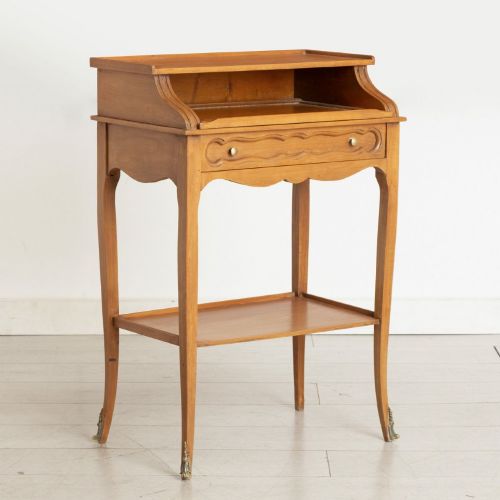


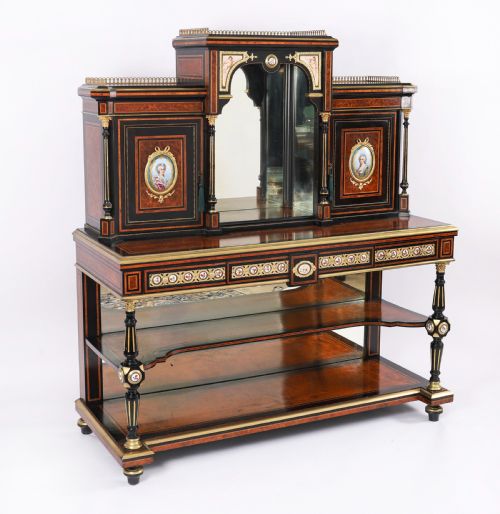


Bonheur Du Jour Cabinet
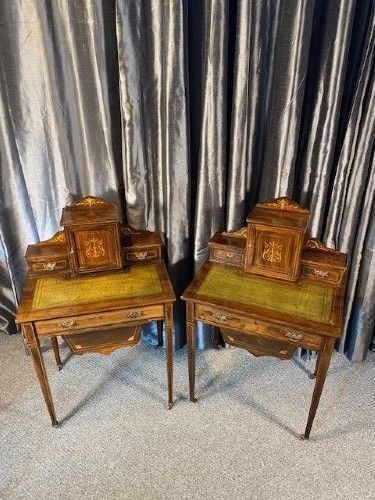
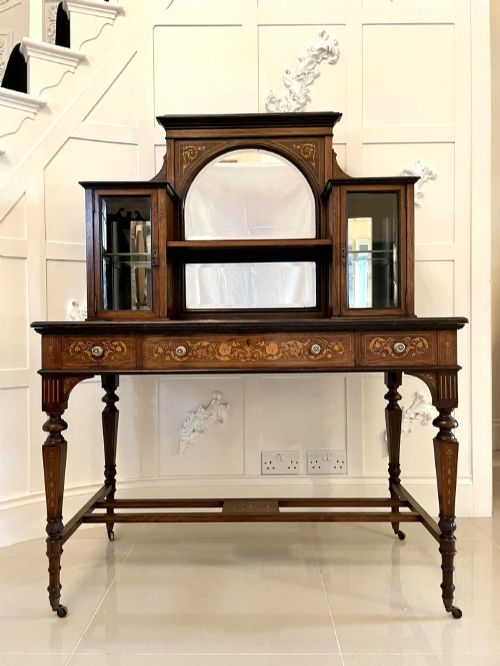
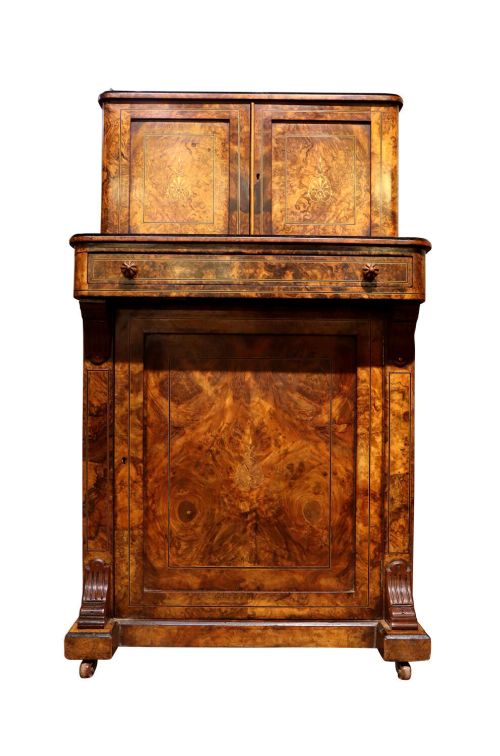
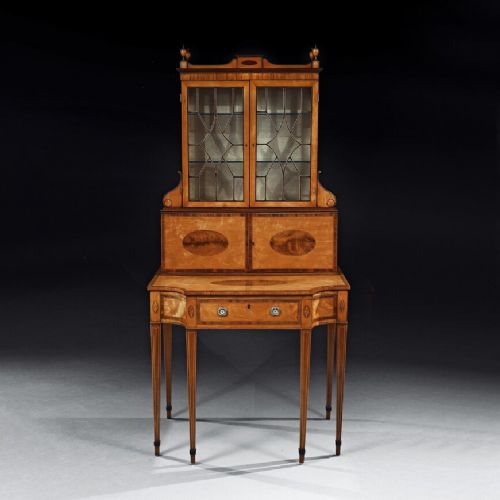
A bonheur du jour cabinet combines a refined writing desk with compartmentalised superstructure for letters, offering an elegant workspace originating in eighteenth-century France.
Bonheur Du Jour Cabinet
A bonheur du jour cabinet is a small ladies' writing desk featuring a tiered upper section with shelves, drawers, or pigeonholes above a fitted writing surface. These pieces span periods from the eighteenth-century George III and Sheraton eras through to nineteenth-century Victorian and Edwardian revivals.
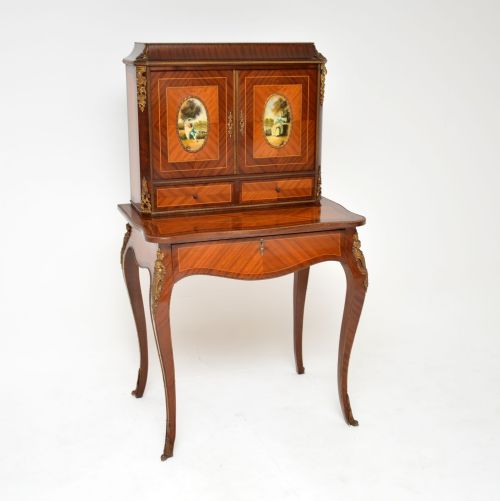
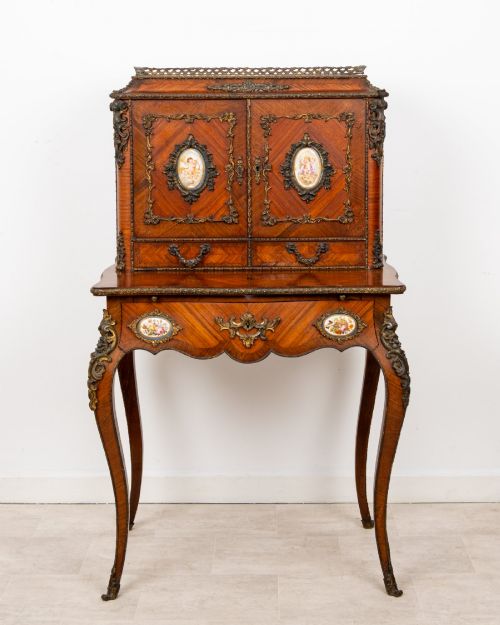
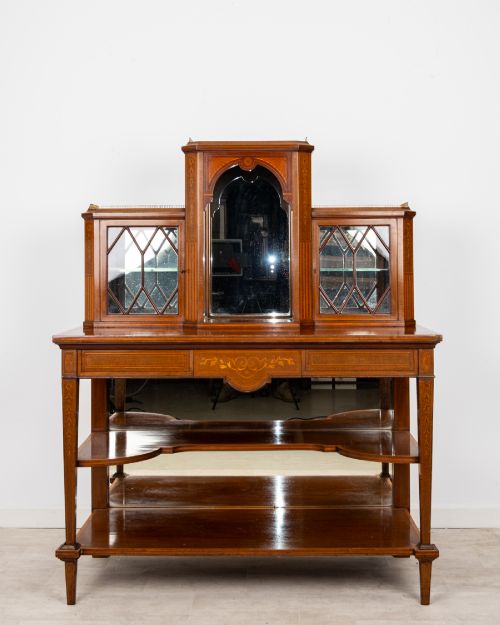
French interpretations frequently display Louis XV or Louis XVI styling, often incorporating intricate marquetry or porcelain plaques. English versions from the Georgian and later periods tend to favour figured timbers like satinwood, mahogany, or burr walnut.
Most examples encountered on this page belong to the nineteenth century, reflecting the Victorian enthusiasm for French taste and refined domestic writing furniture.
Materials and construction
Cabinetmakers constructed these writing desks using a carcase of native or exotic timbers, applying veneers such as kingwood, rosewood, amboyna, and satinwood to create decorative grain patterns. Marquetry inlay in contrasting woods frequently delineates geometric motifs or floral sprays across the writing flap and drawers.
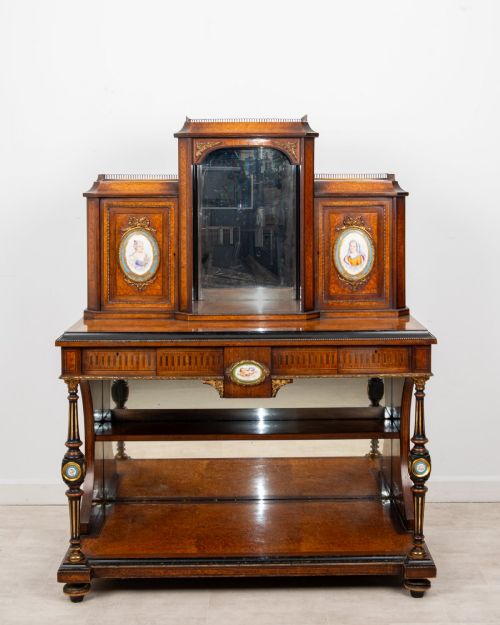
Metal mounts in brass and ormolu edge the surfaces, frame porcelain plaques, and protect delicate corners. Vernis Martin painted panels and marble tops appear on select French specimens, adding colour and texture to the framework.
Hidden secret drawers protect past secrets behind tiny, cunningly disguised wooden panels.
Distinctions in quality
The refinement of a bonheur du jour cabinet rests in the selection of timber veneers and the precision of the marquetry cutting. Dense, highly figured grain patterns and crisp, symmetrical floral inlays separate superior pieces from simpler utilitarian items.
Edwards and Roberts·Shoolbred of London·Adriano Brambilla·Linke
The Bonheur Du Jour Cabinet Glossary
- Bonheur du jour
- A small ladies' writing desk with a raised cabinet superstructure. The French term translates directly to day's delight.
- Ormolu
- Gilded bronze used for decorative mounts and edgings on furniture. The technique involves applying a mercury-gold amalgam to cast bronze before firing.
- Marquetry
- The art of applying veneer pieces in varied woods to form decorative patterns. Craftsmen cut contrasting veneers together to ensure tight, seamless joints.
- Vernis Martin
- A simulated Japanese lacquer developed in eighteenth-century France. The technique uses multiple resin layers to achieve a translucent, polished finish.
- Bureau de dame
- A lady's writing desk. This term often describes French writing furniture analogous to the bonheur du jour.
Bonheur Du Jour Cabinet: Frequently Asked Questions
What is a bonheur du jour cabinet?
A bonheur du jour is a small, light writing desk featuring a tiered superstructure with small drawers, pigeonholes, or a cupboard above the writing surface. These pieces were designed for gentle correspondence and kept in private withdrawing rooms.
First appearing in France during the mid-eighteenth century, the form quickly spread across Europe and remained popular through the Victorian and Edwardian eras.
How were these desks used?
Owners used these compact desks for morning correspondence, writing letters, and storing precious stationery or personal items within the upper compartments. The elevated tier kept writing materials organised while preserving a slender footprint in domestic interiors.
Unlike heavy partner desks, these pieces were easily moved around reception rooms as fashion or lighting required.
How do I identify a Victorian copy?
Nineteenth-century revival pieces often employ machine-cut veneers, softer secondary timbers like deal or pine inside drawers, and brighter, more uniform brass ormolu casting than their eighteenth-century predecessors. Stylistic cues such as heavy ebonised finishes and applied porcelain plaques point directly to Victorian interpretation.
Examining the construction methods inside the drawer carcases and the ageing of the timber helps distinguish nineteenth-century production from earlier periods.
Where should I place one at home?
These compact writing desks suit reception rooms, studies, or bedrooms where a large partner desk would overwhelm the space. Placing the piece against a wall allows the upper cabinet and decorative back panel to be fully appreciated.
Avoid positioning antique wood and porcelain mounts in direct sunlight to protect the fragile veneers and gilded finishes from fading.