







Bombe Glass Cabinet
These bombe glass cabinet pieces combine swelling serpentine curves with glazed display space, offering collectors a dramatic focal point for interiors.
Bombe Glass Cabinet
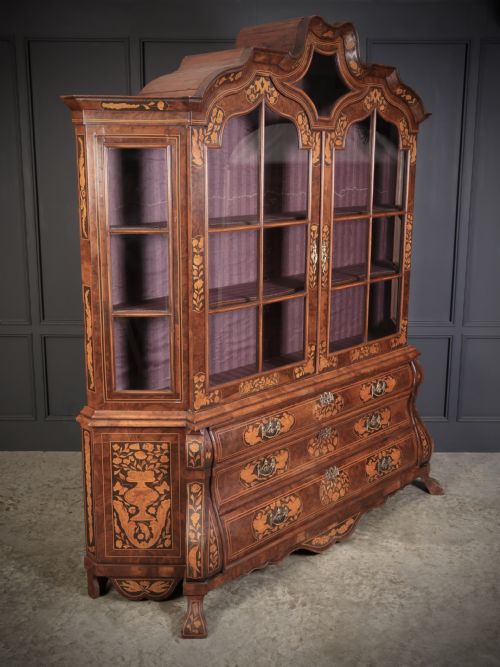
When you search for a bombe glass cabinet, you encounter substantial display furniture defined by prominent bulging profiles and glazed doors. These pieces emerge primarily from 18th century origins through to later 19th century revival movements.
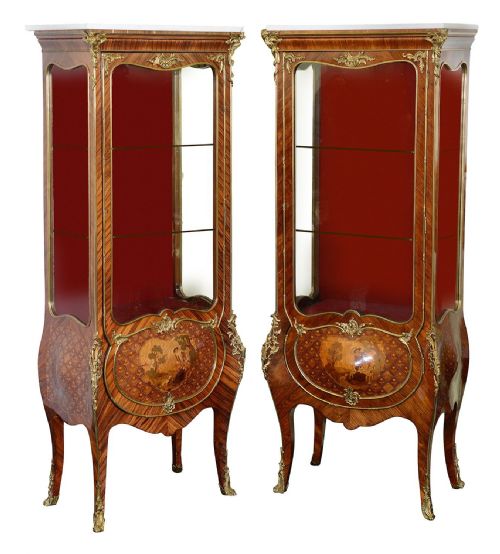
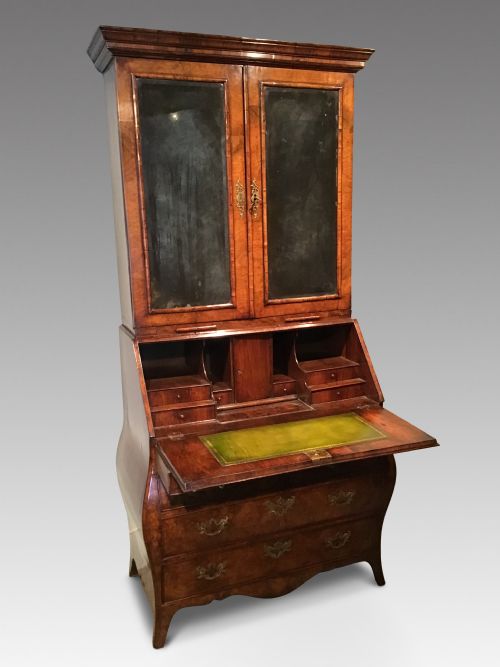
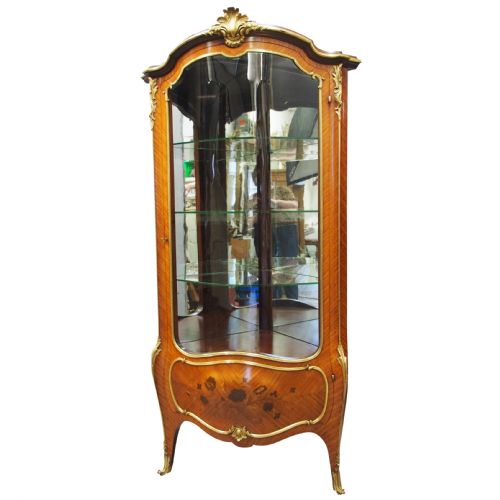
The versions most frequently met on this page span Dutch marquetry interpretations and French vitrines executed in kingwood or walnut. Forms range from corner cabinets and bureau bookcases to grand freestanding display cabinets.
Cabinet makers designed these vessels to showcase porcelain and curiosities while demonstrating the highest levels of cabinet-making ambition. The characteristic swelling fronts demand precise joinery to maintain structural integrity alongside ornate visual appeal.
What varies in quality
The quality of a bombe glass cabinet rests upon the depth and precision of its marquetry and the fluidity of its swelling carcass lines. Superior examples display harmonious proportions where the convex curves remain balanced from every viewing angle.
Choice of timber grain and the complexity of floral inlay separate standard production from master workshops. Finer pieces incorporate heavy, chased ormolu mounts that fit seamlessly against the timber contours rather than appearing generic.
The integrity of the curved glass panels and the execution of Vernis Martin lacquer work dictate the upper tier of craftsmanship. Original fittings, locks, and keys further distinguish pieces that retain their authentic character.
These cabinets bulge so dramatically in the middle that dust settled on them for centuries with absolute impunity.
The Bombe Glass Cabinet Glossary
- Bombe
- A French term describing furniture with a bulging, convex front and sides that swell outwards. This shape requires advanced woodworking skills to achieve proper structural balance.
- Marquetry
- The art of applying decorative pieces of veneer to a structure to form intricate floral or pictorial patterns. Craftsmen use various tinted woods and fruitwoods to create naturalistic contrast.
- Vitrine
- A glass-fronted cabinet specifically designed for displaying fine porcelain, silver, or curiosities. These pieces emphasise visibility through expansive glass panels and mirrored or lined interiors.
- Ormolu
- Gilded bronze ornamentation applied to the mounts, feet, and corners of 18th and 19th century furniture. The metal is cast, chased, and finished with gold leaf or mercury gilding.
- Vernis Martin
- A simulated Japanese lacquer technique developed in France, known for its translucent varnish and painted scenes. It provides a glossy, durable finish often found on fine vitrines.
Bombe Glass Cabinet: Frequently Asked Questions
How do I clean the glass panels?
Use a soft microfiber cloth and a mild glass cleaning solution applied directly to the cloth rather than the wood. This prevents moisture from damaging sensitive antique veneers and surrounding ormolu mounts.
Take care near marquetry inlay and lacquer panels to avoid chemical contact that could degrade historic finishes over time.
Where should I place a cabinet?
Position your cabinet away from direct sunlight and strong heat sources to protect delicate wood veneers and historic lacquers from fading or warping. Stable indoor environments preserve the structural timber.
Ensure the floor is level so the heavy bowed frame rests evenly, preventing stress on the glazed doors and internal hinges.
How do I date a marquetry cabinet?
Examine the timber species, the style of the floral inlay, and the construction methods visible inside the carcass. Earlier pieces from the 18th century often display hand-cut dovetails and distinct native fruitwood choices.
Revival pieces from the 19th century typically incorporate industrial Sawn veneers and machine-made elements alongside historical revival motifs.
Are the shelves adjustable?
Most period display cabinets feature fixed wooden or glass shelving supported by traditional wooden bearers built into the interior walls. Altering these original configurations is uncommon.
When loading shelves with heavy porcelain, distribute the weight evenly to protect the historic interior structure and glass panes.