

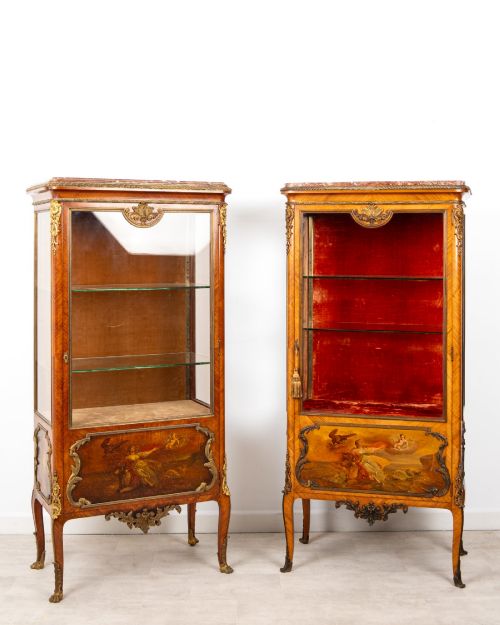


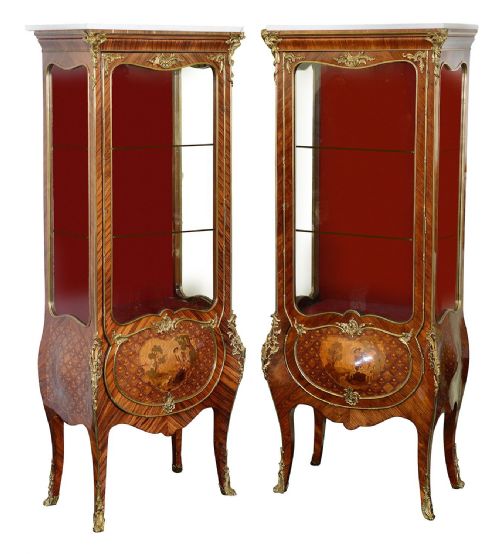


Pair French Display Cases
Pair french display cases bring sophisticated continental elegance into a room, offering matched symmetry and glazed surfaces to showcase treasured collections.
Pair French Display Cases
When you search for pair french display cases, you encounter matched sets of vitrines, pier cabinets, and wall-mounted storage pieces originating from the nineteenth century. These items combine timber construction with glazed panels and decorative mounts, designed specifically to exhibit prized objects.
The versions most frequently met on this page span the Victorian era and the late nineteenth century, often reflecting Napoleon III, Louis XV Revival, and Louis XVI styles. They appear in configurations ranging from floor-standing pier cabinets to hanging wall alternatives.
Makers and designers working in this tradition utilised diverse ornamental vocabularies, from elaborate Boulle marquetry to simpler burr walnut and mahogany surfaces. Each pair provides symmetrical visual weight, balancing a room while protecting delicate items behind glass doors.
How they were made
Cabinetmakers constructed these frames using hardwoods such as kingwood, walnut, mahogany, and ebonised wood, frequently applying intricate veneers like tortoiseshell and burr maple. Boulle inlay work incorporated brass and tortoiseshell patterns set directly into the timber surfaces.
Mounts and decorative accents were cast in ormolu and brass, highlighting structural corners, door borders, and aprons. Marble tops frequently finished the upper surfaces of nineteenth-century pier cabinets, adding weight and refined texture.
Glazing techniques secured glass panels within timber doors to allow maximum light penetration into the interior shelving. Vernis Martin painted panels occasionally decorated the lower sections, introducing pastoral scenes or floral motifs.
Pair French Display Cases Retail Price Guide 2026
Typical asking prices for pair french display cases among the pieces listed under this phrase on Sellingantiques today, from the lower quarter to the upper quarter. They describe what is for sale here now, not the wider market.
Listings feature nineteenth-century items utilising kingwood, walnut, ebonised wood, and ormolu mounts across pier cabinets and vitrines.
What varies in quality
The refinement of the ormolu mounts determines much of the visual distinction between examples, with finely chased bronze work showing crisp detail and depth. Inferior pieces often display cast metal that is flat, poorly defined, and lacking hand-finished chiselling.
The complexity and execution of the timber work and marquetry set individual pieces apart. Finely cut Boulle inlay aligns with precision across the doors and carcass, whereas lower-quality variants exhibit simpler veneers with less intricate brass detailing.
The integration of materials such as genuine marble tops and original glass panes contributes significantly to the overall integrity of the piece. Matched pairs that retain their original synchronous finish and balanced proportions demonstrate superior workshop execution.
Paul Somani·Town and Emanuel
The Pair French Display Cases Glossary
- Ormolu
- Gilded bronze applied as ornamental mounts on furniture and decorative objects. This technique creates metallic highlights that contrast with dark timber surfaces.
- Boulle
- A form of marquetry utilising brass and tortoiseshell inlaid in contrasting patterns. Named after the royal cabinetmaker André-Charles Boulle, it defines opulent nineteenth-century seating and cabinetry.
- Vitrine
- A glass-fronted cabinet designed for displaying porcelain, curiosities, and small objects of art. These enclosures protect fragile items while offering all-round visibility.
- Vernis Martin
- A type of simulated Japanese lacquer developed by the Martin brothers in eighteenth-century France. It employs translucent varnishes over painted decorations to achieve a brilliant, glossy finish.
- Pier Cabinet
- A low cabinet designed specifically to fit against the wall space between windows. These nineteenth-century forms frequently incorporate marble tops and mirrored backs.
Pair French Display Cases: Frequently Asked Questions
Where should I place a pair?
These cabinets work best in formal reception rooms or hallways where symmetrical placement creates a balanced focal point. Positioning them on either side of a fireplace or doorway enhances their architectural presence.
Ensure the surrounding floor space allows the glazed doors to open fully without obstruction. Adequate ambient lighting helps illuminate the interior shelves and the objects displayed within them.
How do I identify nineteenth-century styles?
Nineteenth-century pieces often draw inspiration from earlier monarchical periods, incorporating Louis XV curves or more restrained Louis XVI neoclassical lines. Look at the curvature of the cabriole legs and the symmetry of the ormolu mounts to distinguish between revival aesthetics.
Napoleon III and Victorian interpretations frequently combine diverse materials like ebonised wood and Boulle inlay. Examining the interior construction and timber ageing provides further clues regarding the actual period of manufacture.
What items look best inside?
Glass shelves and mirrored backs accommodate collections of porcelain, antique glassware, small bronzes, and decorative ceramics. The enclosed shelving protects delicate items from dust while keeping them fully visible.
Grouping objects by material or colour creates a coherent display within the glazed compartments. Avoid overcrowding the shelves so that the intricate woodwork and mount details remain prominent.
How do I care for the timber?
Keep wooden surfaces away from direct sunlight and excessive heat sources to prevent the veneers and tortoiseshell inlay from warping or cracking. Dust the carved mounts and polished wood regularly with a soft, dry cloth.
Avoid applying harsh chemical polishes that can degrade nineteenth-century varnish or lacquer. Occasional gentle waxing helps maintain the natural lustre of kingwood and walnut surfaces.