







Bokhara Tribal Rug
When choosing a bokhara tribal rug, you select a piece of Central Asian heritage defined by deep red tones and repeating geometric motifs.
Bokhara Tribal Rug
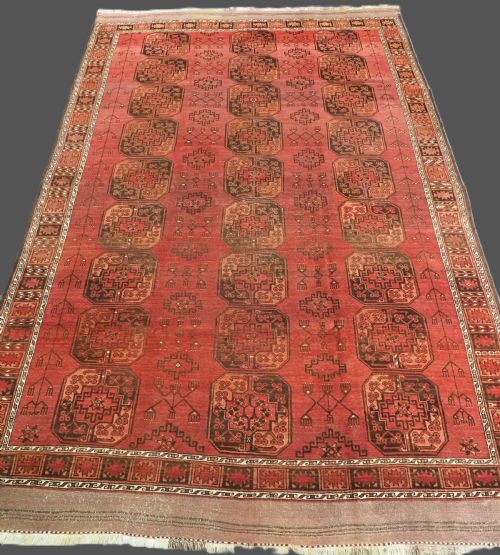
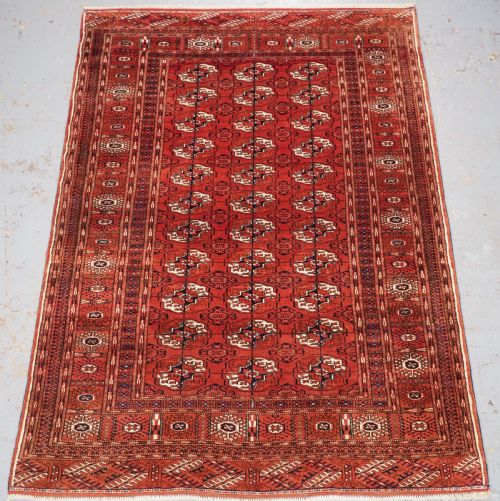
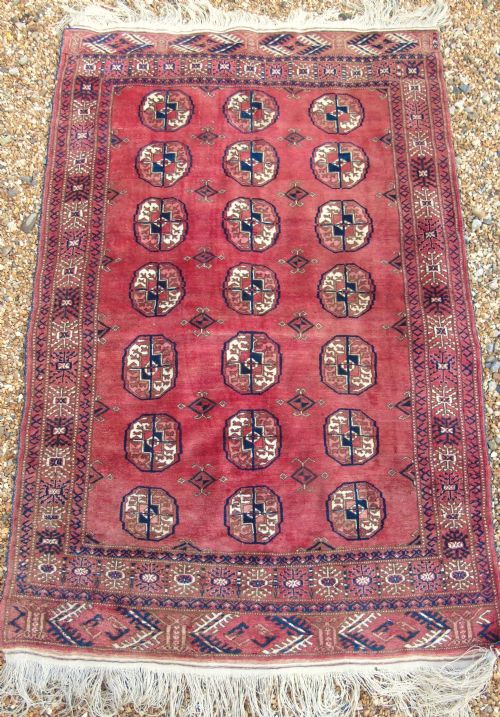
A bokhara tribal rug represents the weaving traditions of Central Asian groups, most notably the Tekke, Ersari, and Salor tribes. These pieces span from the mid-nineteenth century into the early twentieth century, taking the form of main carpets, smaller dowry rugs, and wedding tent hangings.
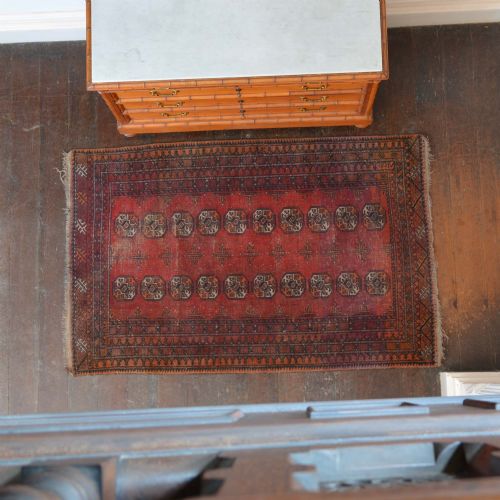
The most common examples encountered in these listings are Tekke Turkmen main carpets and dowry rugs, frequently identified by their characteristic gul octagons. Buyers also encounter Afghan village carpets carrying traditional Ersari tribal designs in warm red colour palettes.
Formats range from square dowry pieces and smaller runners to expansive main carpets measuring over three metres in length. The nomenclature often bridges nineteenth-century tribal attribution with the historic trading designation of Bukhara.
Materials and Construction
The foundation of these textiles relies principally on wool, utilised for both the pile and the underlying structure. Cotton appears in select foundational elements or structural details, while silk highlights occasionally enrich specific motifs within finer dowry pieces.
Weavers achieved the dense pile and fine weave characteristic of nineteenth-century examples through meticulous hand-knotting. Natural dye traditions yielded the warm red, burgundy, and cochineal shades that dominate the palette of these Central Asian carpets.
Bokhara Tribal Rug Retail Price Guide 2026
Typical asking prices for bokhara tribal rug among the pieces listed under this phrase on Sellingantiques today, from the lower quarter to the upper quarter. They describe what is for sale here now, not the wider market.
Several rugs arrive with unexpected border variations and cochineal highlights, proving that nineteenth-century weavers enjoyed surprising their clients.
Assessing Quality and Execution
Quality in these textiles rests upon the density of the weave and the precision of the geometric layout. Finer examples, such as specific dowry pieces and torba fragments, display exceptionally tight knotting and intricate secondary border details.
The depth and nuance of the wool pile directly influence visual impact, with superior pieces retaining vibrant cochineal highlights and soft, saturated red hues. Proportions within the repeating gul patterns and the crispness of execution distinguish standard village weaving from master tribal production.
The Bokhara Tribal Rug Glossary
- Gul
- A repeating octagonal medallion motif central to Turkmen and Afghan carpet design. Each tribe utilised distinct variations of this primary geometric emblem.
- Dowry rug
- A smaller textile woven specifically for a bride's trousseau. These pieces frequently exhibit finer knotting and thoughtful integration of silk highlights.
- Main carpet
- A large-format floor covering produced for domestic use or communal spaces. They typically measure significantly larger than bedside rugs or runners.
- Torba
- A small wall-hanging bag or storage sack produced by tribal groups. Surviving examples often appear as fragments preserving the upper field and gul design.
- Cochineal
- A natural organic red dye derived from scale insects. It produces distinctive crimson and magenta highlights within the wool pile.
Bokhara Tribal Rug: Frequently Asked Questions
What is a gul?
A gul is the repeating octagonal medallion motif that forms the primary pattern across Turkmen and Afghan carpets.
Different tribes, such as the Tekke and Ersari, developed their own specific geometric variations of these motifs to signal cultural identity.
How old are these rugs?
The pieces available date primarily from the mid-nineteenth century through to the early decades of the twentieth century.
Production methods remained grounded in traditional tribal weaving techniques throughout this entire period.
Are these rugs made from wool?
Wool serves as the primary material for both the soft surface pile and the underlying structural foundation.
Selected pieces incorporate cotton foundations or utilise occasional silk highlights to accentuate specific geometric details.
How do I care for an antique rug?
Protect the textile by placing it in areas with moderate foot traffic and avoiding direct, harsh sunlight.
Gentle surface cleaning and appropriate rug underlays help preserve the integrity of the wool pile over time.