



Bohemian Glass Bottle
Discover the craftsmanship behind every vintage bohemian glass bottle, uniting centuries of European design from delicate scent vials to grand decanters.
Bohemian Glass Bottle
A bohemian glass bottle encompasses a wide range of functional vessels, including small scent bottles, perfume atomisers, carafes, and larger serving decanters. These pieces frequently emerge from historical periods spanning the eighteenth century, the Victorian era, and the Art Deco movement.
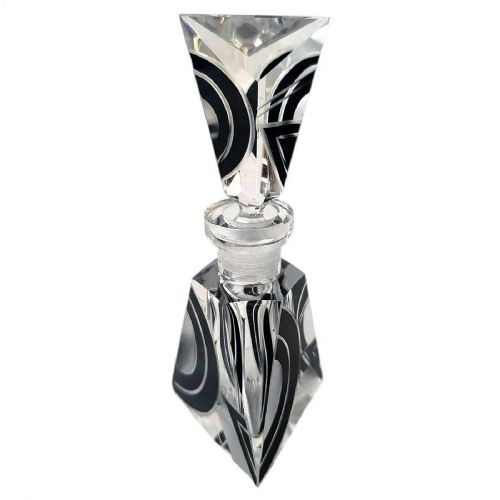
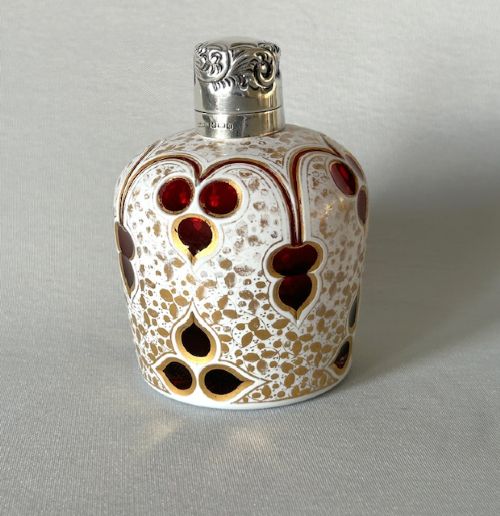
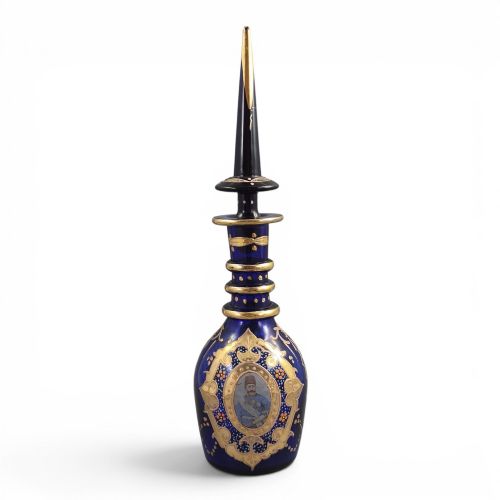
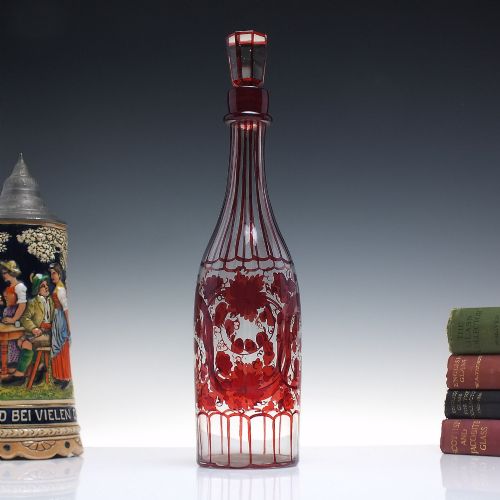
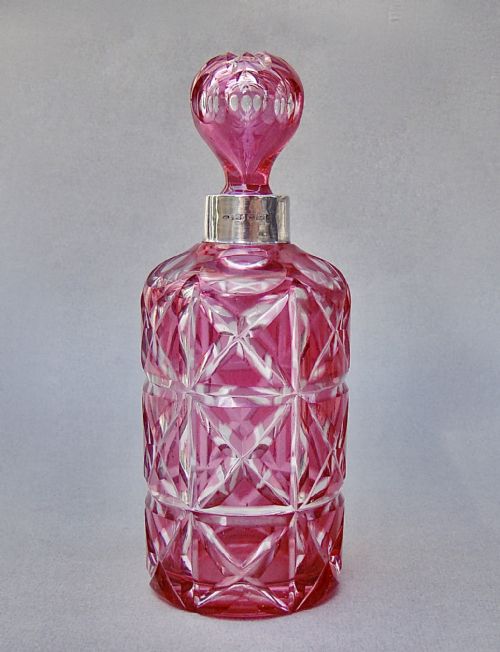
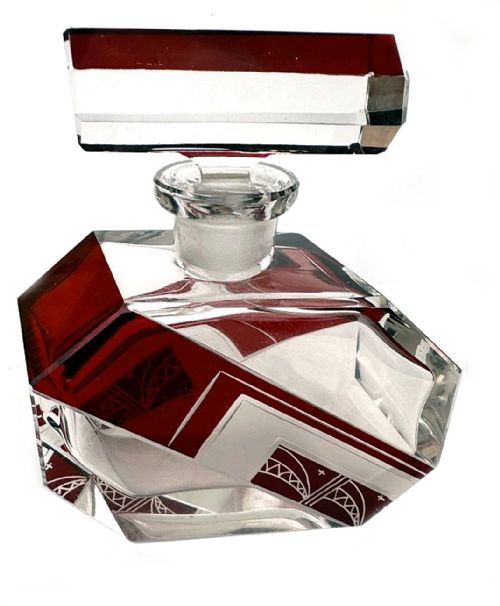
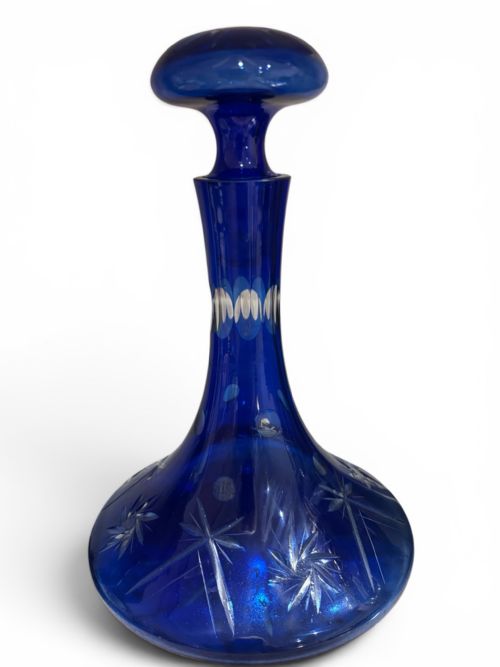
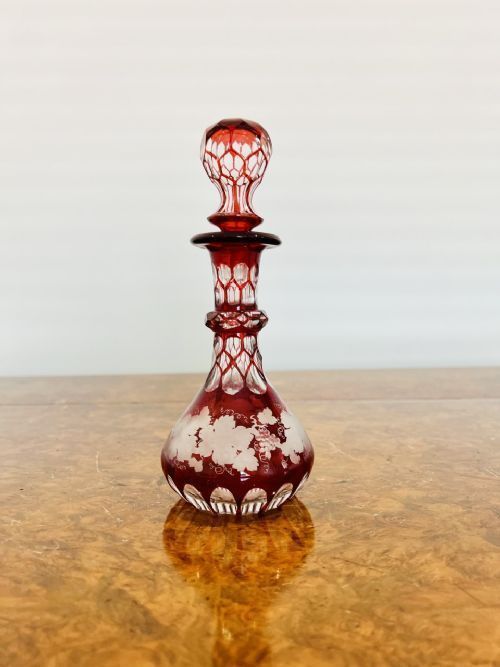
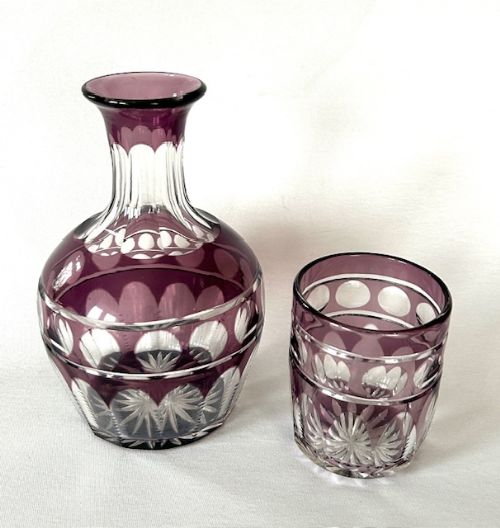
Victorian examples commonly feature rich overlay colours such as cranberry, ruby, amethyst, and cobalt blue, often paired with decorative silver mounts. Meanwhile, Art Deco iterations lean towards geometric cutting, vibrant enamelling, and modernist Czech designs.
Collectors encounter everything from simple folk art pieces to elaborate export items destined for specific international markets. Each vessel demonstrates the shifting artistic priorities of Central European glassmakers across different eras.
How They Were Made
The primary technique relied on free-blowing or mould-blowing clear and coloured glass, frequently building up multiple layers in cased or overlay pieces. Craftsmen then cut away outer layers to reveal contrasting background colours beneath.
Decoration involved meticulous hand painting, enamelling, and the application of genuine gold leaf. Many Victorian and Edwardian scent bottles were subsequently finished with hallmarked sterling silver collars, caps, or hinged lids supplied by silversmiths.
Listings feature items spanning from the eighteenth-century Georgian era through Victorian revival styles up to Art Deco Czech glass.
What Varies in Quality
Quality depends heavily on the precision of the glass cutting and the clarity of the coloured overlay layers. Superior examples exhibit deep, even coloration and crisp facet work that catches the light cleanly.
The integration of metalwork also dictates value, where fully intact, high-grade silver mounts bearing clear assay marks elevate the overall standard of the piece. Hand-painted enamel details demonstrate varying degrees of fine brushwork and durability.
Harold Bushell Co·Karl Palda·Rudolf Hlousek·Hermanova·The Boots Company·Mousley Brothers·Charles May·Sampson Mordan·George Brace
The Bohemian Glass Bottle Glossary
- Overlay glass
- A technique involving layers of different coloured glass fused together, where sections are cut away to expose the base colour.
- Cased glass
- Glass formed of multiple distinct layers, often combining clear and coloured strata to create depth.
- Peachblow
- A nineteenth-century shaded art glass that transitions subtly from one delicate tone to another.
- Atomiser
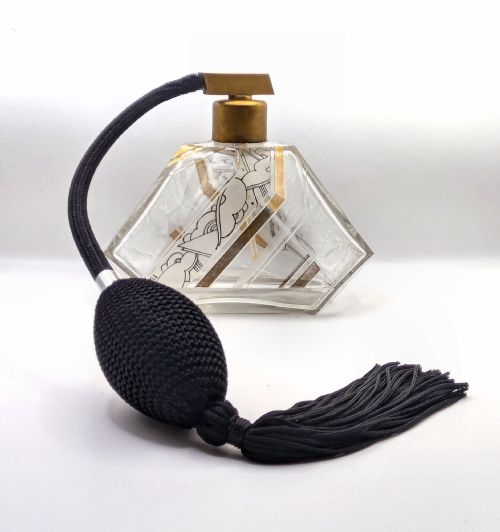
- A perfume bottle fitted with a spray mechanism and bulb, popular during the twentieth century.
- Ewer
- A large jug-shaped vessel featuring an elongated spout and a looped handle, utilised for serving liquids.
Bohemian Glass Bottle: Frequently Asked Questions
How do I identify a Victorian piece?
Victorian examples frequently utilise rich coloured overlays in cranberry, blue, or amethyst combined with heavy silver mounts and intricate hand gilding.
Examining the base wear and the style of the silver hallmarks helps confirm the nineteenth-century production period.
How should I clean my antique bottle?
Gentle dusting with a dry microfibre cloth protects delicate enamel details, gold leaf, and painted surfaces from accidental damage.
Avoid submerging silver-mounted pieces in harsh chemical dips to preserve the integrity of both the metal and the glass.
What distinguishes Art Deco designs?
Art Deco pieces from the nineteen-thirties favour sharp geometric cutting, minimalist silhouettes, and striking enamel patterns rather than ornate Victorian overlay.
These later Czech works often include functional perfume atomisers alongside matching globe bottles.