




Bohemian Cranberry Glass
Bohemian cranberry glass brings rich crimson warmth to a room, offering deep tones shaped by skilled 19th century hands.
Bohemian Cranberry Glass
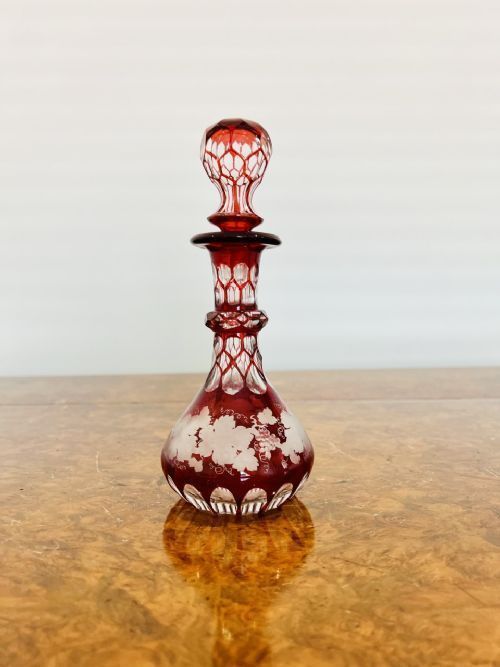
When you search for bohemian cranberry glass, you encounter rich decorative objects rooted primarily in the nineteenth century. The selection ranges from tall vases and scent bottles to decanters, salts, and chandelier components.
Vases and scent bottles dominate the pieces you meet on this page. Many incorporate overlay techniques, frosted panels, or delicate painted scenes.
Origins trace directly to Bohemian glassworks operating through the Victorian and Edwardian eras. These items served both utilitarian and decorative purposes in period interiors.
Materials and Working Methods
Makers achieved the distinct red and pink hues by adding gold chloride to the molten glass batch. Artisans then formed the vessels using traditional blowing and moulding techniques.
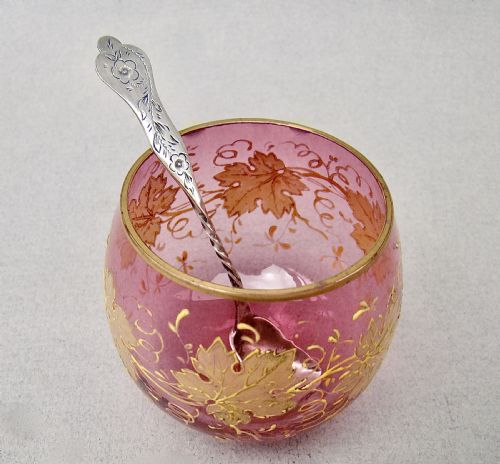
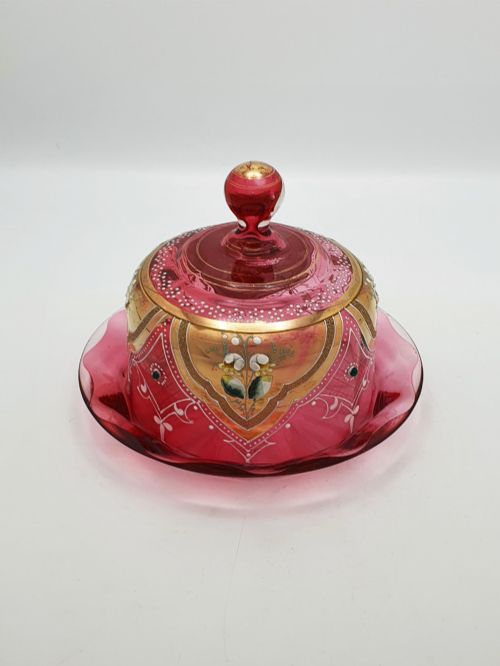
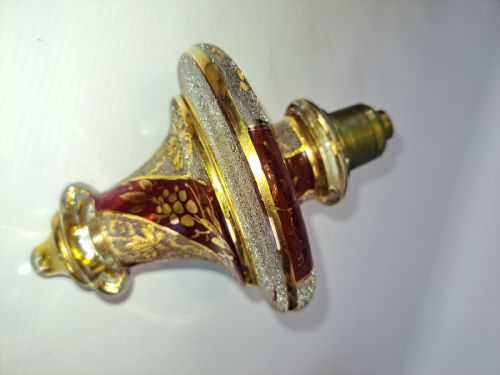
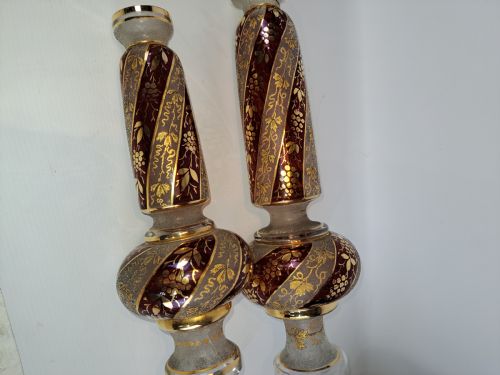
Surface decoration involved cutting, etching, engraving, and applying gold leaf or enamel. Silver mounts and brass fittings were frequently added by silversmiths to scent bottles and salts.
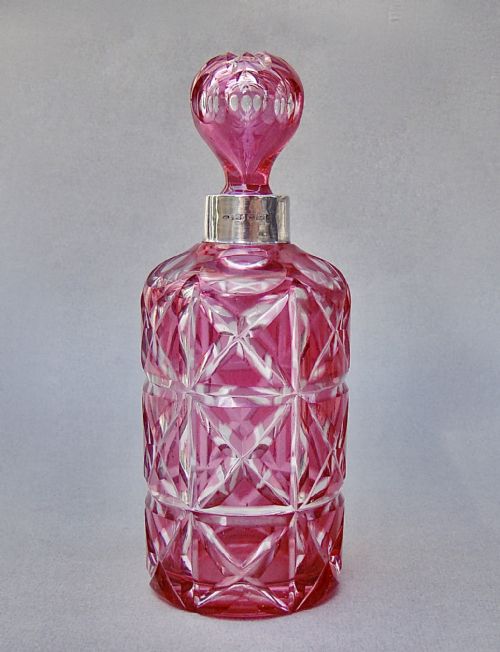
Victorian dressing tables gained lively character from these glowing red scent bottles and salt cellars.
Distinctions in Quality
The standard of execution separates simpler items from superior works. Crisp wheel-cutting and precise overlay panels indicate higher skill than plain moulded surfaces.
Gilding and enamel work reveal the hand of trained artists rather than hurried production. Weight, clarity of the glass, and integrated metal mounts elevate the standing of a piece.
Harold Bushell and Co·Thomas Hart Stone·Mousley Brothers·George Brace·Egermann
The Bohemian Cranberry Glass Glossary
- Cranberry glass
- A transparent pink-to-red glass coloured with gold chloride. It forms the foundation of the items found in this category.
- Overlay glass
- A technique where a layer of coloured glass is fused over a clear or contrasting glass body. Subsequent cutting exposes the lower layer.
- Mary Gregory
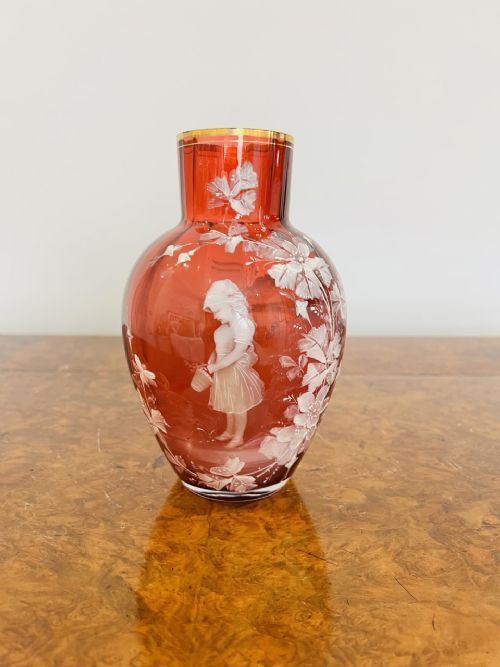
- A style of white enamel painting depicting silhouetted children playing amidst foliage. It appears frequently on Victorian pieces.
- Tazza
- A small shallow cup or bowl elevated on a stem and foot. They served as ornamental or display vessels in the nineteenth century.
- Lustre
- A mantel ornament hung with long glass prisms. These pieces reflect ambient light and colour.
Bohemian Cranberry Glass: Frequently Asked Questions
How do I identify cranberry glass?
Cranberry glass is recognised by its distinctive translucent pink or deep red colour, derived from gold content in the glass mixture.
Pieces often date from the nineteenth century and may feature cut panels, gilt accents, or enamel decoration.
What is overlay glass?
Overlay glass consists of a base layer of glass covered by one or more outer layers in contrasting colours.
Craftsmen cut through the top layer using wheels to reveal the underlying colour, creating patterned panels.
Who was Mary Gregory?
Mary Gregory was an artist associated with enamel decoration depicting Victorian children in landscape settings.
While her name defines this specific style of white silhouette painting, many workshops produced similar enamel work.
How were scent bottles used?
Scent bottles held liquid perfumes and were carried in purses or displayed on dressing tables.
Many examples feature hinged silver caps, stoppers, and decorative overlay glass bodies.