





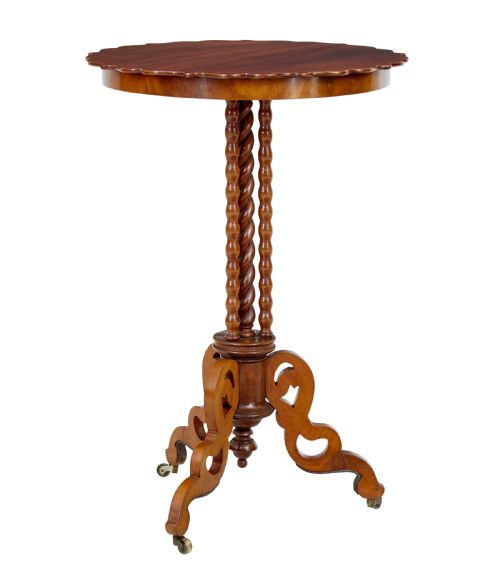


Bobbin Turned Tea Table
A bobbin turned tea table brings tactile spool-moulded framing to compact surface forms, making it a distinct choice for period interiors.
Bobbin Turned Tea Table
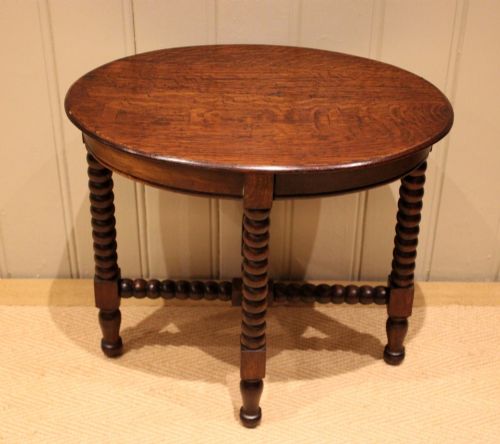
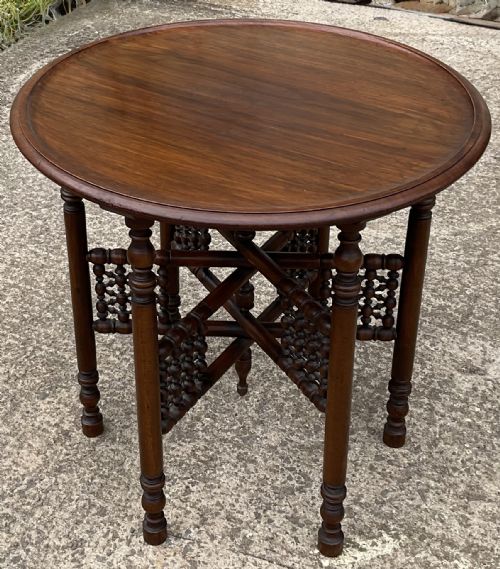
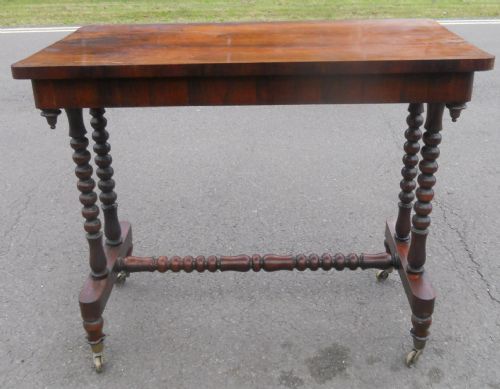
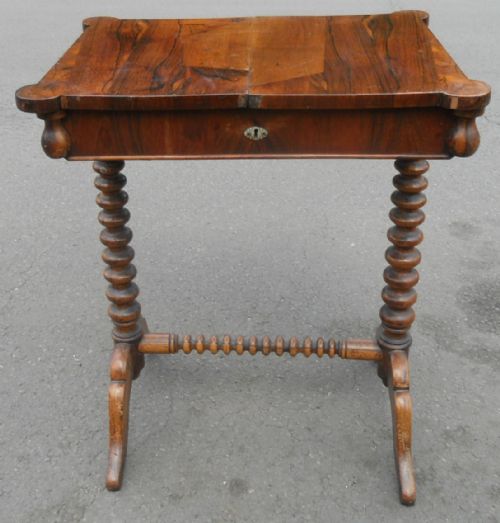
When you search for a bobbin turned tea table, you encounter compact occasional, side, and centre tables that utilise distinctive spool-moulded uprights or legs. The selection spans periods from Regency and Victorian eras through to the early decades of the twentieth century, capturing Jacobean revival sensibilities alongside rustic farmhouse and exotic influences.
Materials and construction
The construction relies on solid hardwoods such as oak, walnut, mahogany, and rosewood, shaped by lathe-turning to create the characteristic series of rounded bobbin or spool shapes. Joinery techniques reflect the prevailing cabinet-making standards of the nineteenth and early twentieth centuries, ensuring structural stability across smaller surface formats.
Secondary elements involve brass fittings and pine carcasses, while decorative flourishes range from marquetry inlay to hand-painted tops. The turning requires precise lathe work to maintain uniform spool dimensions down the length of each leg or stretcher.
Bobbin Turned Tea Table Retail Price Guide 2026
Typical asking prices for bobbin turned tea table among the pieces listed under this phrase on Sellingantiques today, from the lower quarter to the upper quarter. They describe what is for sale here now, not the wider market.
Current listings span the Regency period through the 1930s, featuring oak, walnut, mahogany, rosewood, and pine.
Assessing quality and craftsmanship
Quality reveals itself in the crispness of the lathe work and the selection of timber veneers, where burr walnut or figured mahogany shows superior grain selection. The harmony between the turned legs and the supporting top dictates the visual balance of the piece.
Finer examples demonstrate tighter joinery and more ambitious secondary decoration, such as marquetry or hand-painted surfaces, distinguishing them from simpler utilitarian pine or oak formats.
The Bobbin Turned Tea Table Glossary
- Bobbin turning
- A form of woodturning that creates a series of rounded, spool-like shapes along the length of a leg or stretcher. It gained popularity during the seventeenth century and saw revivals in later periods.
- Occasional table
- A small, movable table designed for light, specific uses rather than permanent placement. These pieces function easily beside seating areas.
- Centre table
- A freestanding table intended to be viewed from all sides, traditionally placed in the middle of a room. They often feature finished undersides and symmetrical leg arrangements.
- Marquetry inlay
- The art of applying decorative pieces of veneer to a structural surface to form intricate designs. This technique adds pictorial or geometric richness to table tops.
- Burr walnut
- A wood harvested from the warted growths on walnut trees, prized for its swirling, highly figured grain pattern. It provides a decorative finish on table tops.
Bobbin Turned Tea Table: Frequently Asked Questions
What is a bobbin turned tea table?
A bobbin turned tea table is an occasional or centre table featuring legs or supports shaped with repetitive rounded spool turnings. These pieces draw on revival styles and traditional cabinet-making.
They offer compact surfaces suited for display or everyday placement within period rooms.
How were these tables used?
These tables served as movable surfaces for afternoon tea, holding lamps, or displaying decorative objects in reception rooms. Their modest scale allowed them to be repositioned easily.
Today, they function well as accent tables beside armchairs or sofas.
How do I date a bobbin turned table?
Dating relies on identifying timber choices, secondary woods, and construction methods characteristic of periods from the Regency era through to the 1930s. Revival pieces often emulate seventeenth-century turning techniques using later nineteenth-century joinery.
Examining the underside and drawer construction, if present, helps confirm the era of manufacture.
What woods were commonly used?
Makers utilised a range of hardwoods including oak, walnut, mahogany, and rosewood, supplemented by pine for secondary framing. Burr walnut and marquetry were selected for more decorative top surfaces.
Brass hardware occasionally appears on related tables of the same periods.