

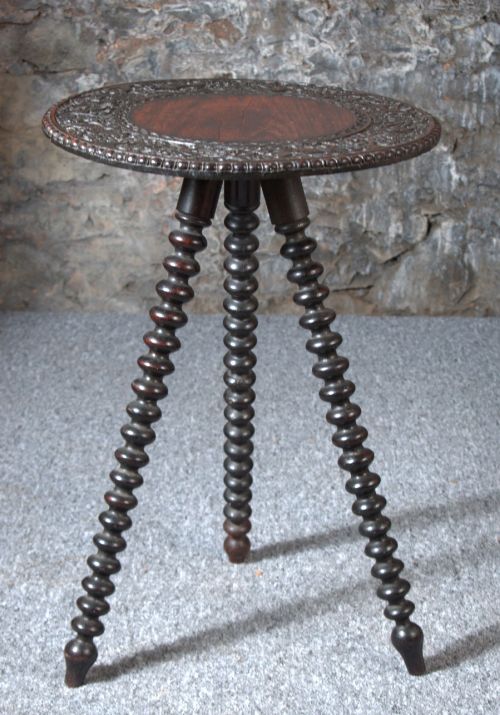


Bobbin Leg Accent Table
A bobbin leg accent table brings the tactile warmth of turned wood and centuries of English craft straight into a modern room.
Bobbin Leg Accent Table
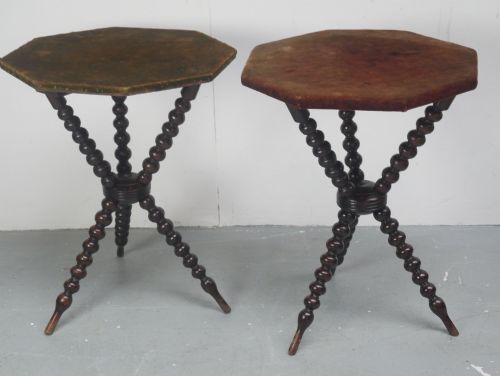
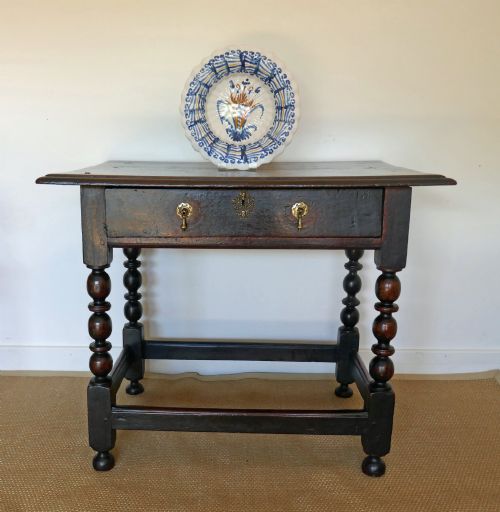
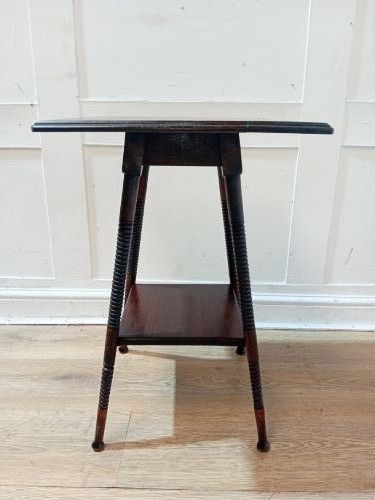
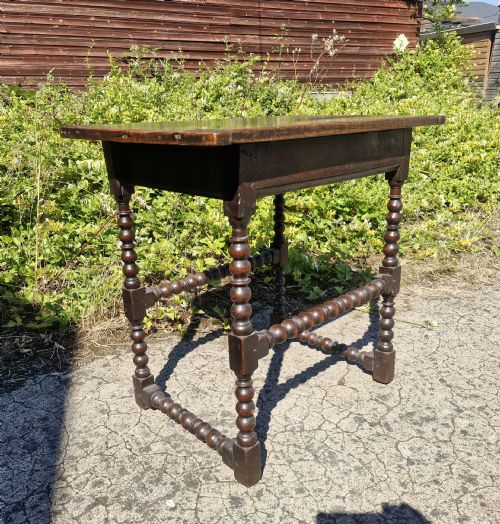
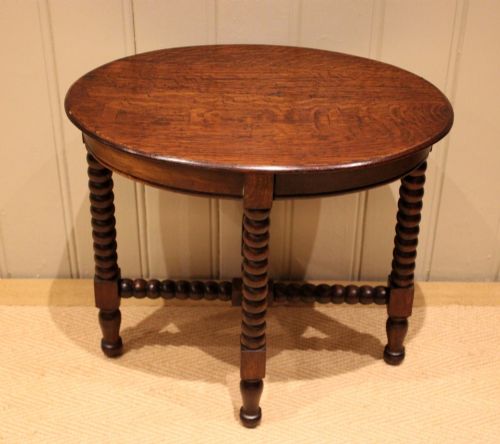
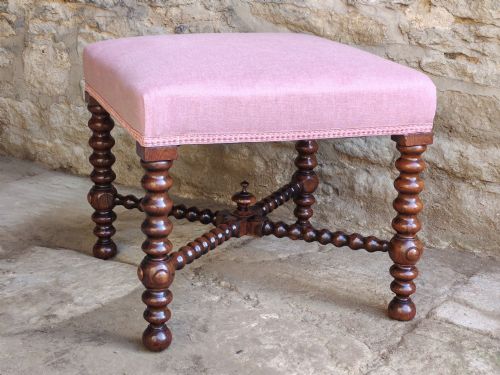
When you search for a bobbin leg accent table, you encounter a focused selection of compact occasional pieces, side tables, and small lamp tables defined by distinctive spool-turned supports. These tables draw on centuries of design tradition, appearing in forms ranging from seventeenth-century oak gateleg tables to nineteenth-century walnut and mahogany examples.
The material palette spans native timbers like oak, yew, elm, and walnut alongside occasional exotic hardwoods such as padouk, often complemented by small drop leaves, drawers, or fabric tops. You will frequently find pieces rooted in specific revivals, including Jacobean, Arts and Crafts, and Victorian interpretations of earlier turning techniques.
Materials and construction methods
Cabinetmakers shaped the characteristic bobbin legs using a lathe to carve repeating spool or disc profiles out of solid hardwood stocks like oak, walnut, and mahogany. These turned components were then joined to sturdy timber tops - frequently constructed from oak, yew, or elm - using traditional mortise and tenon joinery.
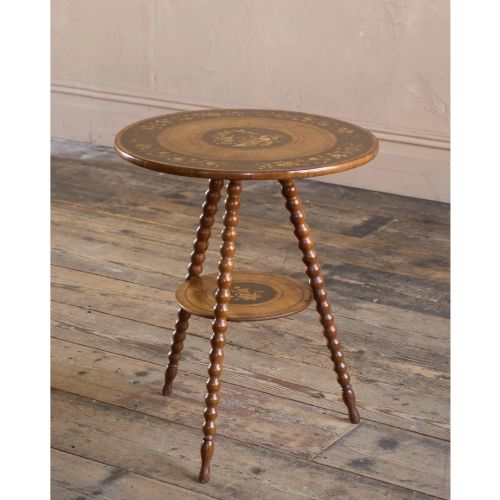
Surface treatments varied widely according to period and taste, ranging from plain waxed finishes that highlighted the natural grain to ebonising, gilding, marquetry inlay, and hand-painted decorations seen on later gypsy tables.
Listings feature timbers including oak, walnut, mahogany, yew, and burr walnut across periods from the seventeenth century to the twentieth century.
Judging quality and character
The distinction between standard and superior pieces rests on the crispness of the lathe turning and the harmonious proportion of the turned spindles to the top. Tighter, more deeply carved spool work requires greater skill and yields a stronger visual rhythm than flat or repetitive turning.
Material selection also defines the tier of a piece, with solid timbers displaying rich figure and original surface patination holding more presence than heavily restored or later constructed examples.
William Birch·Liberty of London
The Bobbin Leg Accent Table Glossary
- Bobbin turning
- A form of woodturning on a lathe that produces a series of rounded, spool-like shapes resembling bobbins of thread. This technique gained prominence during the seventeenth century and saw revivals in the Victorian and Arts and Crafts periods.
- Gateleg table
- A drop-leaf table with hinged legs that swing outward to support the raised leaves. This form allows the table to fold compactly when not in use.
- Gypsy table
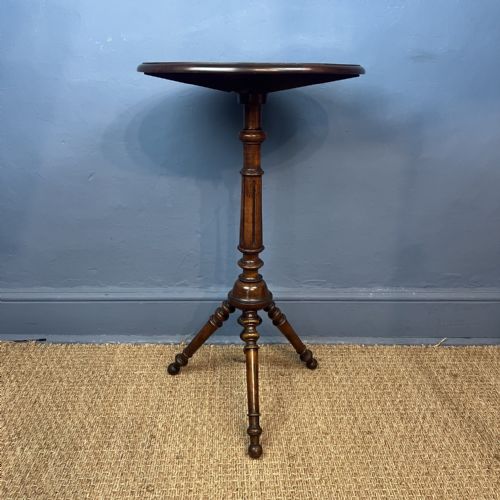
- A lightweight occasional table featuring three turned legs, popular during the late nineteenth century. These tables frequently carried fabric draping or painted surfaces.
- Sutherland table
- A narrow drop-leaf table with exceptionally slim drop leaves and a central gateleg support. The design maximises surface area while occupying minimal floor space when folded.
Bobbin Leg Accent Table: Frequently Asked Questions
What periods do these tables come from?
The selection spans from the seventeenth century through the Victorian era and into the early twentieth century. Many pieces date from revival periods that reinterpreted earlier seventeenth-century turning styles.
Earlier examples tend to feature solid oak construction, while later nineteenth-century pieces embrace walnut, mahogany, and ebonised finishes.
How were bobbin legs originally made?
Craftspeople used a woodturning lathe to shape solid lengths of timber into repeating spool or disc formations. Each bobbin was cut by hand to ensure balanced proportions.
This labor-intensive turning created the tactile, rhythmic silhouette that defines the style.
Where should I place an accent table?
These compact tables suit living rooms as lamp tables, beside armchairs as occasional surfaces, or in hallways as small side stands. Their modest scale allows them to fit easily into tight spaces.
Drop-leaf versions offer flexibility when you need to adjust surface area for different uses.
How do I care for antique wood surfaces?
Maintain the timber by dusting with a soft, dry cloth and applying traditional beeswax periodically to nourish the grain. Avoid placing antique tables in direct sunlight or near heat sources to prevent timber splitting.
Preserving the original surface patination maintains both the character and the integrity of the piece.