
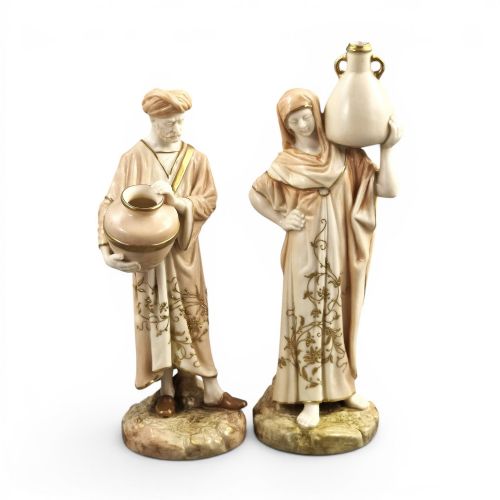


Blush Ivory Ceramic Ornament
These blush ivory ceramic ornament pieces bring Victorian and Edwardian figures home to the mantelpiece.
Blush Ivory Ceramic Ornament
When searching for a blush ivory ceramic ornament, a buyer encounters Victorian and Edwardian figures, statuettes, and jardinieres. These pieces depict water carriers, musicians, and maidens in classical or orientalist styles.
The most common version on this page is the Royal Worcester figurine, frequently modelled by James Hadley across the late nineteenth and early twentieth centuries. These decorative porcelain pieces capture detailed human forms mounted on rustic or circular bases.
The aesthetic bridges the nineteenth and twentieth centuries, incorporating periods from the Victorian era through to the nineteen thirties. Collectors find these figures in various sizes, from cabinet statuettes to large exhibition pieces.
How they were made
Enamel and gold leaf highlights were added to robes, accessories, and bases to create contrast against the pale body. Gilding and gilded enamel accentuate the relief modelling on figures and jardinieres alike.
Listings feature porcelain figures and jardinieres decorated with gold leaf, enamel, and blush ivory glaze across Victorian and Edwardian periods.
What varies in quality
The distinction between standard production and the finest work lies in the delicacy of the modelling and the precision of the hand painting. Sculptures modelled by named artists like James Hadley display superior anatomical detail and expressive poses.
The application of gold leaf and enamels determines the visual depth of the piece. Subtle shading in the blush ivory glaze and crisp execution of intricate drapery separate exceptional examples from simpler decorative wares.
Royal Worcester·James Hadley·Royal Dux
The Blush Ivory Ceramic Ornament Glossary
- Blush ivory glaze
- A soft, creamy ceramic finish developed in the late nineteenth century to mimic the warmth of human skin. It forms the pale background for hand painted details.
- Jardiniere
- A large ornamental pot or planter designed for flowers or plants. These pieces often feature figurative or rustic relief modelling.
- Orientalism
- An artistic style incorporating themes and subjects from Middle Eastern and Asian cultures. It appears in nineteenth century figures depicting musicians and water carriers.
- Gilding
- The application of gold leaf or gold paint to ceramic surfaces. It highlights decorative borders, garments, and architectural elements.
Blush Ivory Ceramic Ornament: Frequently Asked Questions
Are blush ivory ornaments fragile?
These porcelain figures possess delicate extremities and applied details that require careful handling during placement and cleaning.
Owners should keep them away from busy household traffic to prevent accidental damage to protruding fingers, staffs, or musical instruments.
Where should I display large figures?
Large jardinieres and figures require sturdy furniture such as sideboards, heavy mantelpieces, or dedicated display pedestals. Their physical weight demands stable support.
Placing them away from direct sunlight preserves the hand painted enamel and gilt highlights on the glaze.
What periods do these ornaments cover?
The selection spans from the late Victorian era through the Edwardian period and into the nineteen thirties. Victorian examples often showcase classical revival and orientalist themes.
Later pieces from the twentieth century maintain the traditional blush ivory palette while shifting towards simpler modernist lines.