





Blue Woven Area Rug
A blue woven area rug brings depth and heritage to a floor through traditional geometric patterns and dyed wool.
Blue Woven Area Rug
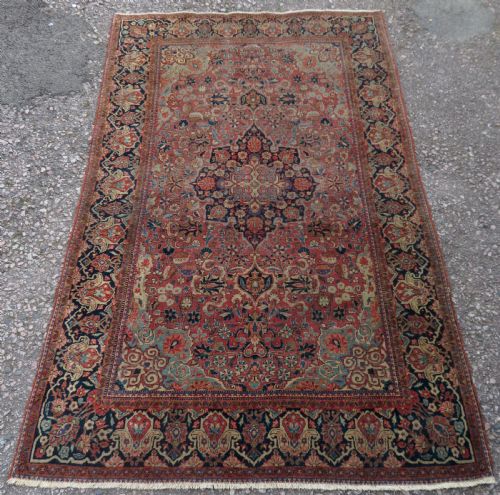
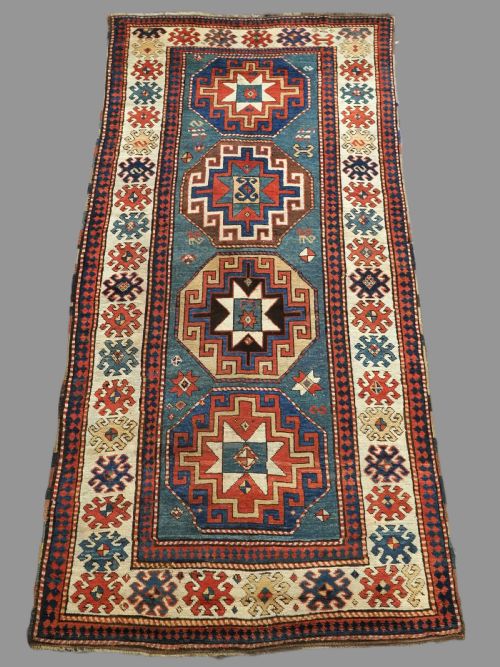
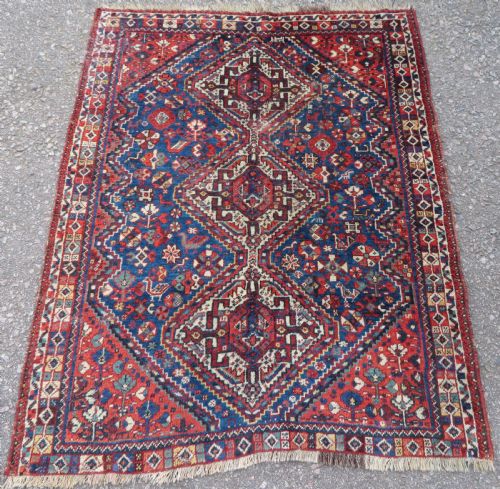
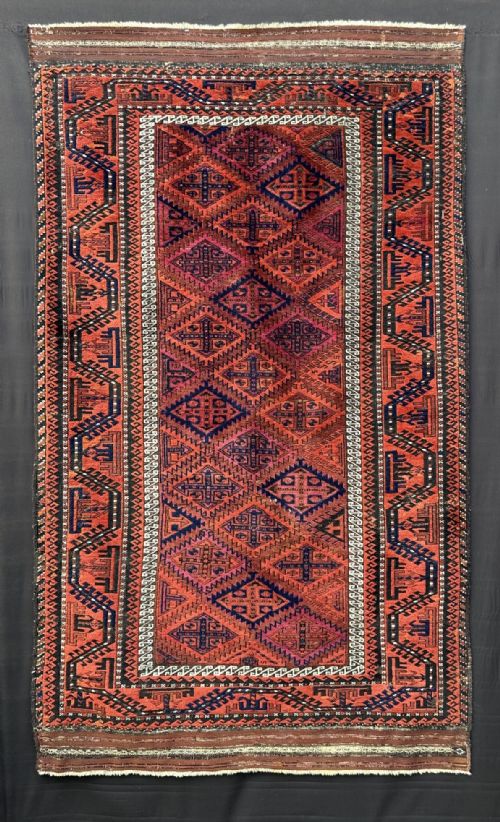
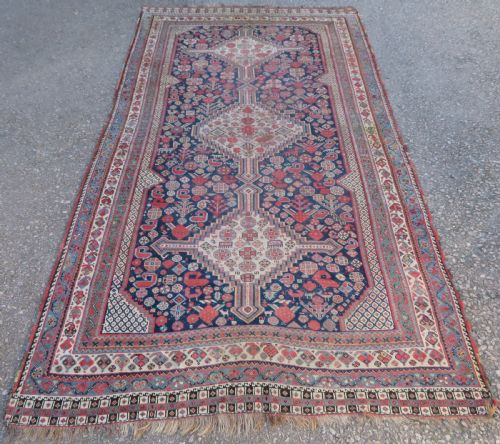
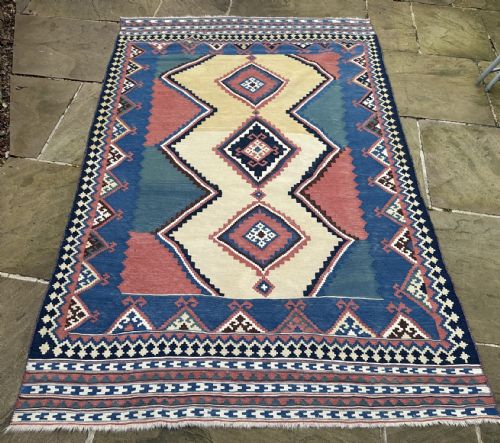
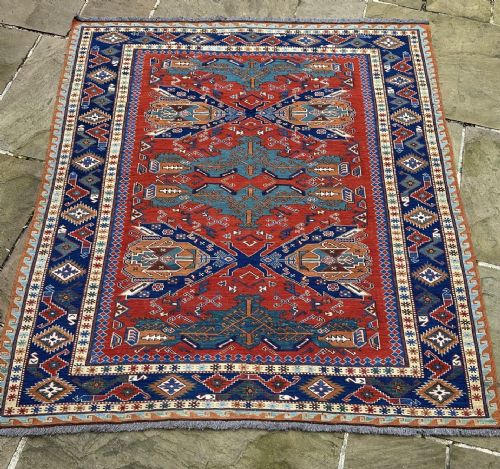
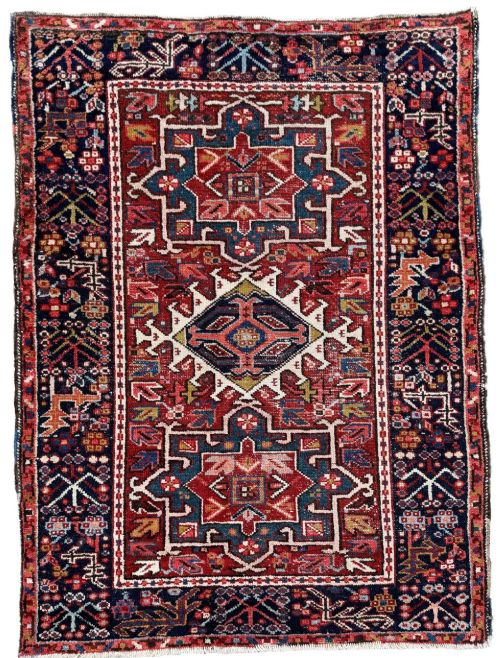
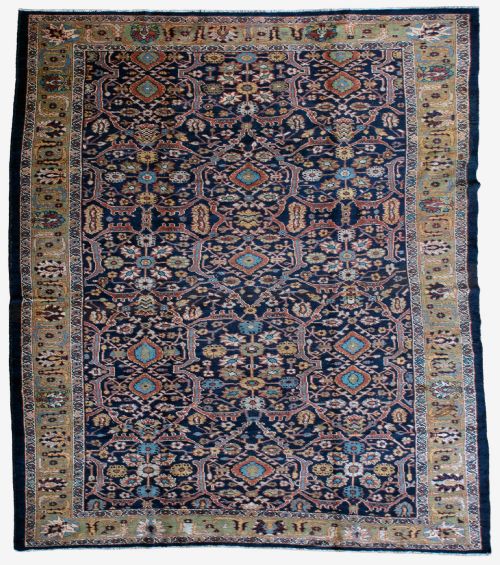
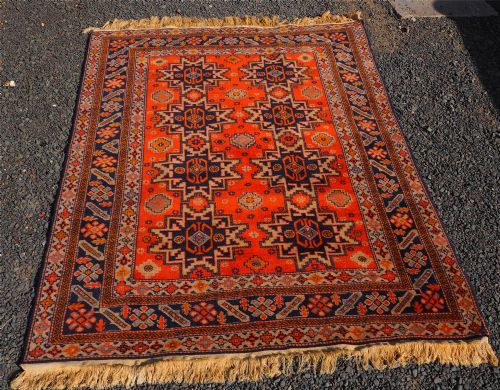
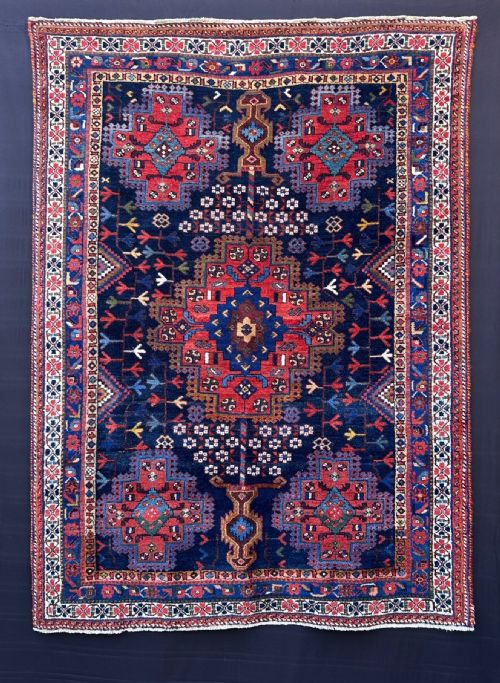
A blue woven area rug is primarily represented here by Persian, Caucasian, and Anatolian tribal and village carpets dating from the nineteenth and early twentieth centuries. These floor coverings range from small scatter sizes to large room-sized carpets displaying regional motifs such as medallions, tribal symbols, and floral arrangements.
Buyers encountering this selection will find examples originating from specific weaving traditions, including Khamseh, Heriz, Kazak, Afshar, and Bakhtiar workshops. Each piece reflects the distinct knotting techniques and cultural designs of the weavers who produced them across Persia, the Caucasus, and beyond.
How they were made
These textiles are constructed primarily from wool, cotton, and occasionally silk highlights, utilising hand-spun fibres that absorb dyes unevenly to create subtle variations in tone. Many pieces rely on natural dyes derived from plants and minerals, resulting in rich hues that mature gracefully over time.
The construction involves hand-knotting or hand-weaving techniques executed on vertical or horizontal looms. Artisans tied individual knots onto cotton or wool warp and weft foundations, producing dense piles designed to withstand generations of daily use.
Listings feature wool, cotton, and silk materials spanning the nineteenth and early twentieth centuries.
What varies in quality
Quality in these floor coverings lies in the fineness of the knot count and the precision of the geometric or floral draughtsmanship. Tighter knots allow for sharper delineation of motifs and greater structural resilience underfoot.
The depth and complexity of the dye palette further distinguish finer examples. The use of varied natural dye batches createsabrash, an appealing tonal variation that adds visual texture across the field of the weave.
The Blue Woven Area Rug Glossary
- Abrash
- A subtle variation in colour within the same dye field, caused by changes in wool batches or dye lots. This characteristic is often prized by collectors as a mark of genuine hand-dyeing.
- Medallion
- A central ornamental motif positioned in the middle of the rug field. It typically takes a geometric or floral form in traditional oriental carpet design.
- Warp
- The vertical foundation threads stretched lengthwise on the loom before knotting begins. The fringe of a finished rug is formed by the cut ends of these structural threads.
- Weft
- The horizontal threads passed alternately over and under the warp threads to bind the knots in place. Together with the warp, it forms the foundational grid of the textile.
Blue Woven Area Rug: Frequently Asked Questions
Where were these rugs made?
The pieces originate primarily from regions spanning Persia, the Caucasus, and Anatolia. Historical weaving centres and tribal confederations such as the Khamseh, Afshar, and Kazak produced these distinct floor coverings.
Production methods varied by geography, with nomadic and village weavers utilising local materials and traditional motifs passed down through generations.
How do I care for an antique rug?
Regular gentle vacuuming without a beater bar prevents dust accumulation in the wool pile. Professional cleaning specifically suited for antique textiles preserves the integrity of natural dyes and fibres.
Placing the rug in moderate foot traffic away from direct, harsh sunlight protects the wool and maintains the longevity of the natural colours.
What materials were used?
The primary material is wool, frequently hand-spun and dyed using natural colourants derived from local plants and minerals. Cotton foundations provide structural stability for the pile.
Some examples incorporate silk highlights to accentuate specific details within the central design or border patterns.
How are different regional styles identified?
Regional styles are distinguished by specific colour palettes, border arrangements, and characteristic geometric or floral motifs. Kazak weavings often feature bold geometric medallions, whereas Heriz carpets display large-scale architectural designs.
Examining the knotting structure, fringe construction, and wool quality helps pinpoint the likely origin of an unknown piece.