
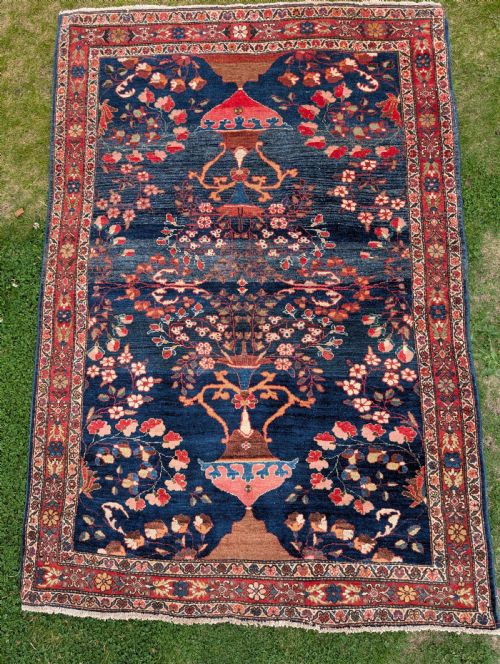
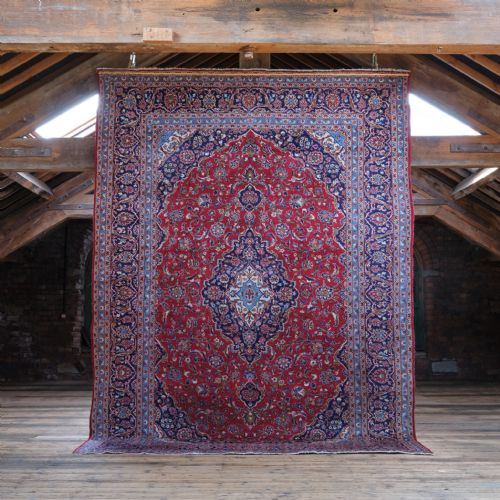

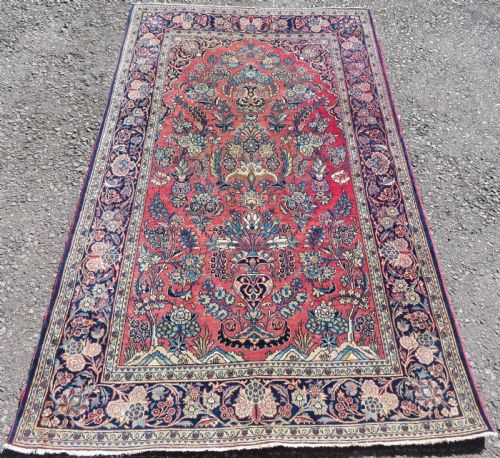


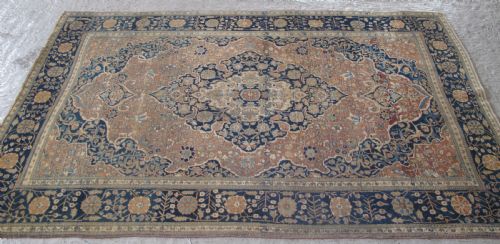
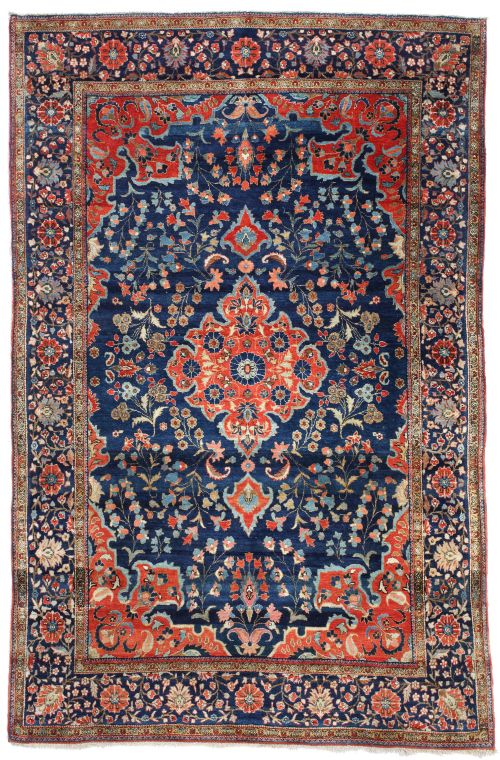
Blue Wool Kashan Rug
These blue wool kashan rug pieces bring traditional Persian artistry into a room, offering deep tones and intricate patterns.
Blue Wool Kashan Rug
A blue wool kashan rug represents a distinct tradition of weaving originating from central Persia, characterised by intricate floral motifs, vases, and prayer designs. When searching for a blue wool kashan rug, buyers encounter pieces spanning from the nineteenth century through the Edwardian era up to the 1940s.
The selections available here range from standard area rugs to large carpets, alongside specific formats such as prayer rugs and pairs. Most examples originate from Persia, though regional variations include Indo-Persian pieces influenced by traditional Persian styles.
How they were made
Makers constructed each blue wool kashan rug using hand-knotted techniques upon a foundational structure of cotton. The pile consists of wool, frequently incorporating fine and soft kork wool or kurk wool to achieve a dense and durable surface.
Weavers utilised traditional Persian methods to execute detailed floral and vase patterns, often working within workshops associated with master weavers. The combination of cotton foundations and quality wool pile allowed these rugs to maintain their structural integrity across generations.
One exceptional rug preserves the likeness of Ahmad Shah Qajar woven right into the wool.
What varies in quality
The density of the hand-knotted pile largely determines the refinement of a blue wool kashan rug, with finer knotting allowing for sharper definition in floral and vase motifs. Material selection also plays a role, as pieces utilising soft kork wool or kurk wool offer a different tactile experience compared to standard wool.
Attribution to notable workshops or makers such as Mohtasham or Mokhtashem influences the standing of a piece within the broader category of traditional Persian weaving. Age and scale introduce further distinctions, particularly when comparing room-sized carpets from the nineteenth century to smaller area rugs from the twentieth century.
Mohtasham Kashan·Mokhtashem Keshan
The Blue Wool Kashan Rug Glossary
- Kashan
- A city in central Persia renowned for producing high-quality hand-knotted rugs and carpets. It serves as the primary geographical origin for this style of weaving.
- Kork wool
- A fine, soft wool harvested from the neck and shoulders of sheep, frequently utilised in superior Persian rugs. This material yields a dense and lustrous pile.
- Prayer rug
- A smaller format rug featuring a mihrab or arch design traditionally utilised for individual prayer. These pieces often display specific symbolic floral motifs.
- Hand-knotted
- A manufacturing method where individual strands of wool are tied by hand onto a cotton warp and weft foundation. This technique requires considerable labour and skill.
- Qajar
- A historical Persian dynasty spanning the nineteenth and early twentieth centuries. Rugs from this period sometimes depict rulers or incorporate specific dynastic motifs.
Blue Wool Kashan Rug: Frequently Asked Questions
How do I identify a genuine blue wool kashan rug?
Examine the reverse of the rug to check the hand-knotted structure and cotton foundation, which should show consistent knot density. Look for traditional Persian floral or vase motifs characteristic of central Persian weaving traditions.
Consider the materials used in the pile, paying attention to whether standard wool or soft kork wool is present. Reviewing the period characteristics helps distinguish nineteenth-century examples from later twentieth-century pieces.
Where were these rugs made?
These rugs originated primarily in Kashan, located in north-west central Persia. The region established a lasting reputation for producing finely knotted carpets and area rugs.
Some variations in the listings include Indo-Persian pieces, which reflect traditional Persian designs adapted by weavers outside Persia proper.
How do I care for a vintage wool rug?
Protect the cotton foundation and wool pile by vacuuming gently without a rotating brush bar to prevent fibre damage. Address spills promptly by blotting rather than rubbing the affected area of the rug.
Keep the rug away from prolonged direct sunlight to preserve the blue wool tones. Professional cleaning tailored for antique textiles ensures the longevity of the hand-knotted structure.
What is the difference between a rug and a carpet?
The distinction typically lies in the physical scale and intended placement of the textile within a room. Smaller formats are categorized as area rugs or prayer rugs, suitable for specific floor spaces.
Larger formats, such as nineteenth-century examples measuring over five metres, are classified as carpets designed to anchor entire rooms.