
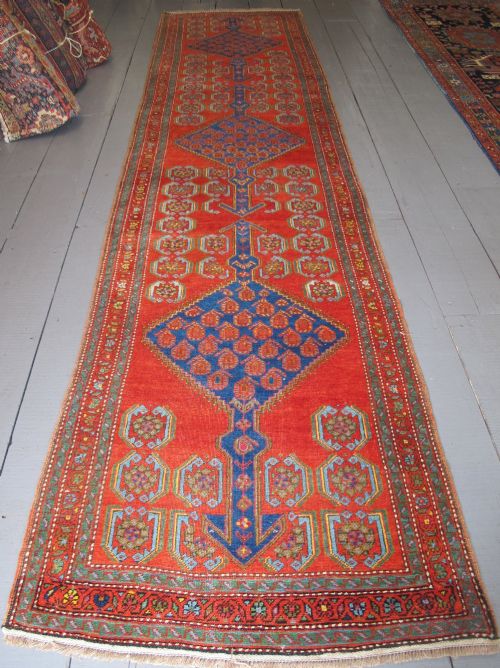


Blue Wool Hall Runner
A blue wool hall runner brings warmth and history to a narrow corridor through traditional patterns woven in Persia, Anatolia, and the Caucasus.
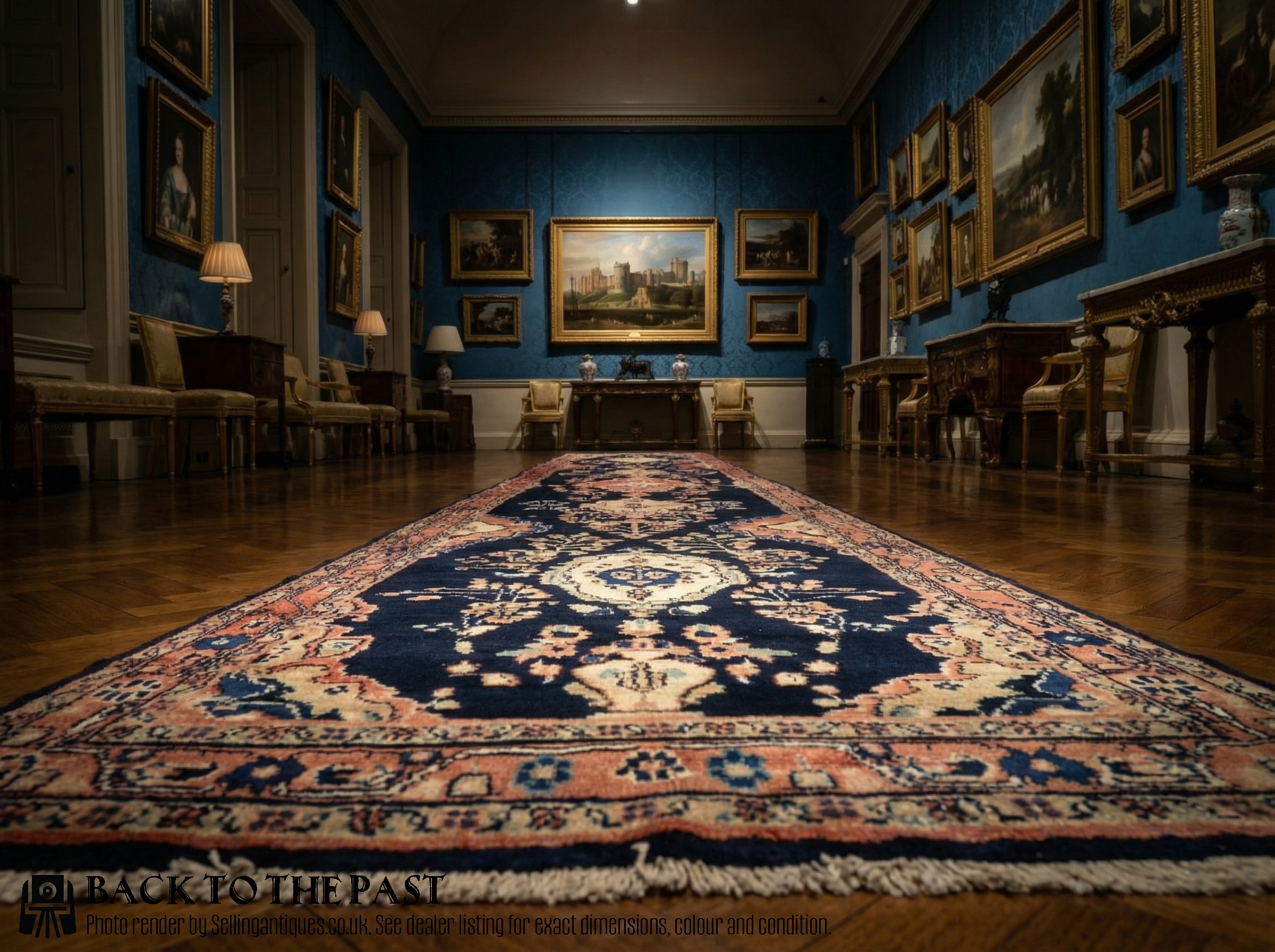
Blue Wool Hall Runner
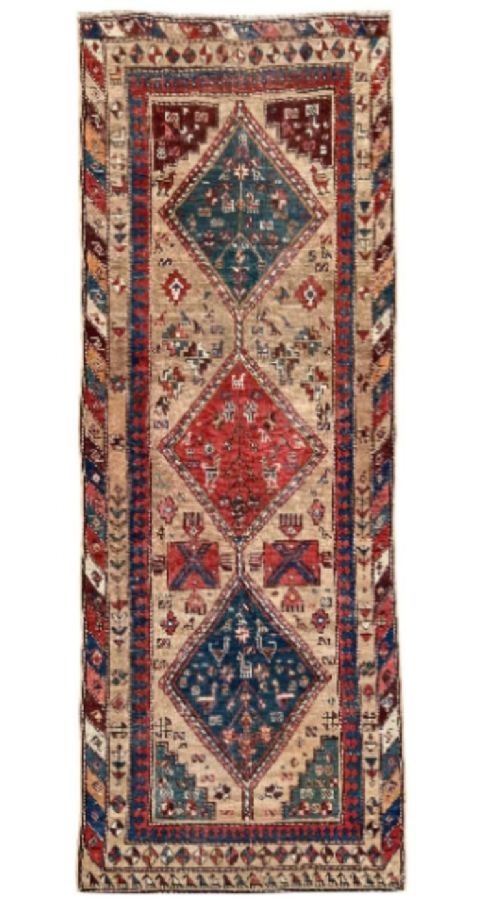
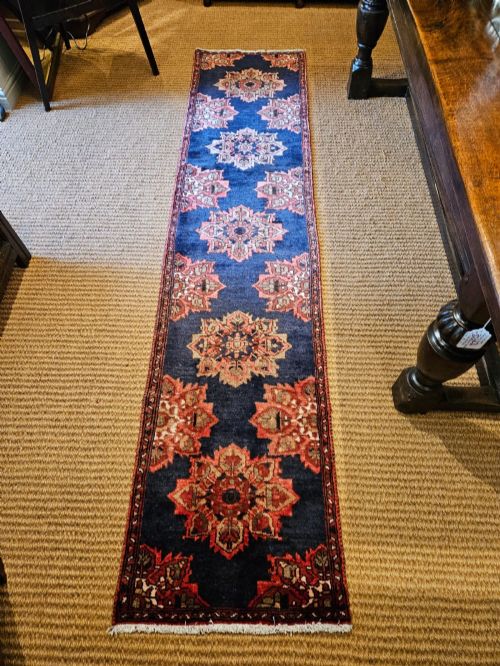
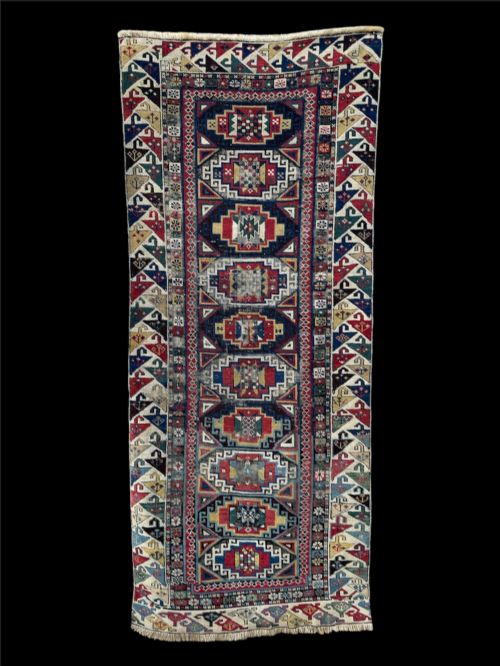
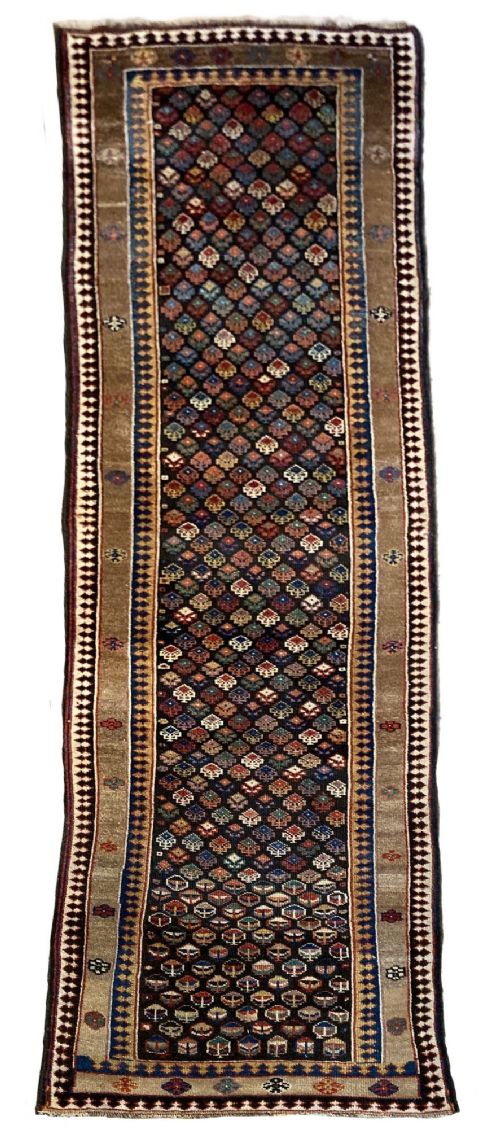
When searching for a blue wool hall runner, collectors encounter narrow, elongated rugs designed specifically for corridors and passageways. These pieces originate from traditions such as Persian tribal weaving, Caucasian workshops, and Anatolian villages.
The selections available span from the late nineteenth century into the early twentieth century, encompassing periods like eighteen eighty, eighteen ninety, nineteen hundred, nineteen ten, and nineteen twenty. Forms include narrow formats, long rugs, and paired runners.
Origin names appearing across the inventory include Heriz, Kurdish, Hamadan, Bakshaish, Gorevan, Sarouk, Talish, Kazak, and Ushak. Each region contributes distinct geometric or floral layouts suited to linear spaces.
How they were made
The construction of these runners relies heavily on wool and hand-spun wool, paired with cotton foundations in many examples. This combination provides the durability required for heavy foot traffic in hallways.
Weavers utilised natural dyes to achieve deep navy and softer blue tones, which interact with secondary shades in the field and borders. Hand-knotting techniques secure the pile firmly to the warp and weft threads.
Several narrow runners stretch beyond twelve metres in length, designed for grand corridors where footsteps echoed.
What varies in quality
The quality of a runner rests in the crispness of the drawing and the saturation of the natural dyes used in the wool pile. Tighter knot counts and balanced proportions elevate certain regional types above simpler utility weaves.
Survival of the original border structure and even pile retention across long expanses distinguish superior examples from heavily worn specimens.
The Blue Wool Hall Runner Glossary
- Runner
- A long, narrow rug format intended for hallways, corridors, and stairs. These pieces balance length with restricted width to fit narrow architectural spaces.
- Warp
- The vertical threads stretched on the loom that form the structural skeleton of the rug. Fringe ends typically display these extending foundation cords.
- Weft
- The horizontal threads passed between warp threads to bind the knots in place. Multiple shots of weft add stability to the woven fabric.
- Natural dye
- Colourants derived from plant, insect, and mineral sources rather than synthetic chemicals. These dyes yield rich hues that develop a pleasing patina over time.
- Medallion
- A central ornamental motif placed in the field of the rug. Many tribal and village designs feature geometric or floral medallion systems.
Blue Wool Hall Runner: Frequently Asked Questions
What rooms suit a hall runner?
These long carpets fit naturally into narrow corridors, entryways, and passages where floor protection and comfort underfoot are needed. Their elongated proportions also work well beside beds or along gallery spaces.
Because they measure long and narrow, they draw the eye down a passage while withstanding the constant movement of daily foot traffic.
How do I care for wool runners?
Regular gentle vacuuming without a rotating brush roll keeps dust from settling deep into the wool pile. Rotating the runner every year ensures even wear across high-traffic areas.
Professional cleaning tailored to antique textiles preserves the natural lanolin in the wool and protects the traditional dyes.
How are regional styles told apart?
Caucasian pieces tend to display crisp geometric medallions and sharp rectilinear motifs in saturated palettes. Persian tribal designs often incorporate organic floral elements, boteh patterns, or earthy field tones.
Village workshops from regions like Heriz or Hamadan feature robust structures and distinct border arrangements that reflect local weaving customs.
What is a natural dye?
Natural dyes are organic colourants sourced from plants, roots, and insects before the invention of synthetic aniline dyes. They produce complex, subtle tones that age gracefully.
These vegetable colours often exhibit minor tonal variations known as abrash, which add depth and visual movement across the wool surface.