


Blue White Serving Tray
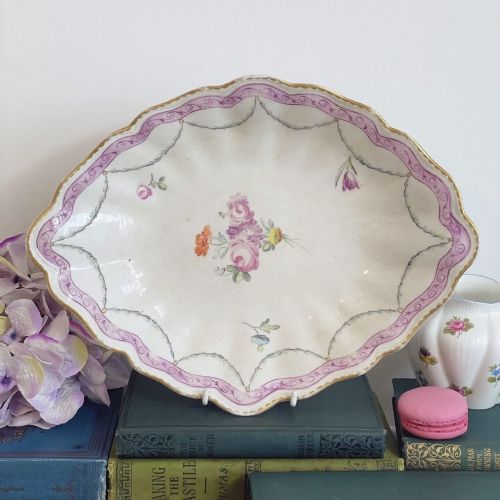
Blue white serving tray forms appear in earthenware, pearlware, and porcelain across eighteenth and nineteenth century periods.
Blue White Serving Tray
A blue white serving tray is a ceramic utility piece designed for meat, game, cheese, and general service at table. When you search this phrase, you encounter large platters, meat dishes, sauce tureen stands, bread stands, and shallow trays created for dining service.
The versions most frequently met on this page belong to the Georgian and Victorian eras, alongside Chinese export porcelain. Potters shaped these forms in earthenware, pearlware, ironstone, and porcelain, applying cobalt pigment under the glaze to render scenic and figural patterns.
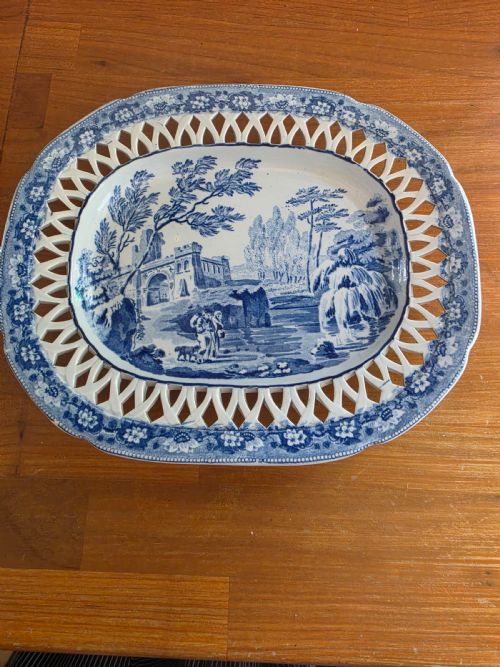
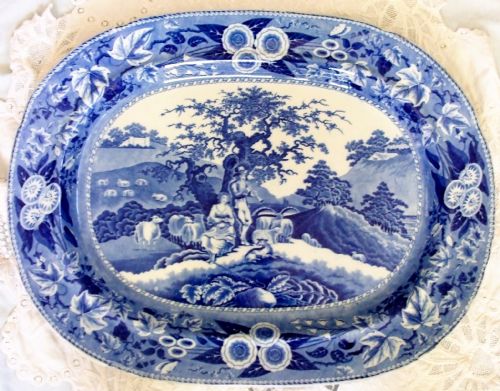
The evidence shows forms ranging from standard oval meat plates to pierced trays, well and tree platters with reservoirs, and triangular trefoil dishes. Makers decorated these utilitarian pieces with transfer-printed or handpainted motifs such as Chinese Villa, Piping Shepherd, Bridge of Lucano, and classical ruins.
How they were made
Potters utilised earthenware, pearlware, ironstone, and porcelain as the primary ceramic bodies for these trays. Cobalt pigment provided the blue colour, applied either by hand painting or via transfer printing from engraved copper plates onto the ceramic surface before glazing.
Moulders formed the platters and dishes in moulds, sometimes adding pierced rims, shaped feet, or integrated wells and reservoirs for collecting carving juices. A transparent glaze sealed the cobalt decoration during firing in kilns, producing the durable glossy finish seen on these serving vessels.
Meat platters with built-in drainage channels ensured that nineteenth-century carving mishaps stayed off the dining room tablecloth.
What varies in quality
Quality in these pieces rests upon the crispness of the cobalt transfer print and the balance of the ceramic body during firing. Sharp definition in complex transfer patterns like classical ruins or Chinoiserie scenes distinguishes superior examples from blurred impressions.
The weight and stability of the earthenware or ironstone body indicate the maker's skill in handling large platter formats without warping in the kiln. Furthermore, the complexity of the form - such as pierced fretwork borders, wells for meat drainage, or moulded handles - separates standard utility wares from ambitious exhibition pieces.
Davenport·Minton·Spode·Copeland and Garrett·Don Pottery·Thomas Lakin·John Rogers and Son·J and R Clews·Elkin Knight and Bridgwood·Masons Ironstone
The Blue White Serving Tray Glossary
- Transfer print
- A decorative technique where an engraved copper plate transfers a design onto tissue paper, which is then stamped onto the unglazed ceramic body. This process allowed complex pictorial scenes to be replicated rapidly across large meat platters.
- Pearlware
- A refined earthenware body developed in the late eighteenth century featuring a subtle bluish glaze that pooled in recesses to neutralize the natural yellowish tint of the clay. It served as a primary canvas for blue and white domestic wares.
- Well and tree
- A platter design featuring an integrated channel system and a central well that collected juices from roasted meat during carving. This practical innovation kept joints elevated above accumulated liquids.
- Ironstone
- A heavy, durable ceramic paste patented in the early nineteenth century that combined earthenware and porcelain characteristics. It resisted chipping and provided a robust surface for large serving dishes.
- Trefoil
- A three-lobed vessel shape derived from gothic architecture, utilised for specialised serving dishes and stands. The compartmentalized form held distinct food items on a single tray.
Blue White Serving Tray: Frequently Asked Questions
What were blue white serving trays used for?
These trays served primary roles in nineteenth-century dining, carrying large joints of meat, poultry, cheese, and game to the table. Specialised variants included wells to catch carving juices and tureen stands to protect dining surfaces.
Larger platters accommodated substantial family meals, while smaller trays and stands held bread, sauces, or side dishes as part of coordinated table services.
How do I date a blue and white platter?
Dating relies on ceramic body composition, pottery marks, and decorative style identifiers. Early nineteenth-century pieces often utilise pearlware bodies with refined blue transfer prints depicting romantic ruins or classical landscapes.
Later Victorian examples shift towards heavier ironstone bodies and industrial manufacturing marks stamped into the underside. Examining the backstamp alongside the specific pattern name provides the most reliable chronological indicator.
Can I use antique platters for serving food?
Most antique earthenware and ironstone trays remain structurally sound for serving dry foods, bread, or cold items at table. However, historic glazes on nineteenth-century ceramics can be sensitive to modern dishwashers and acidic foods.
Hand washing in warm soapy water preserves the cobalt decoration and prevents crazing in the historic glaze. Many collectors prefer to display these large platters on walls or dressers rather than risking daily utility use.
What is the difference between earthenware and ironstone?
Earthenware is a porous, lower-fired ceramic body that requires a complete glaze seal to remain functional for serving wet foods. It forms the basis of most Georgian and early nineteenth-century domestic platters.
Ironstone is a denser, vitrified refinement invented to resist chipping and heavy wear during Victorian service. It offers greater weight and durability while maintaining the bright white ground necessary for cobalt transfer printing.