


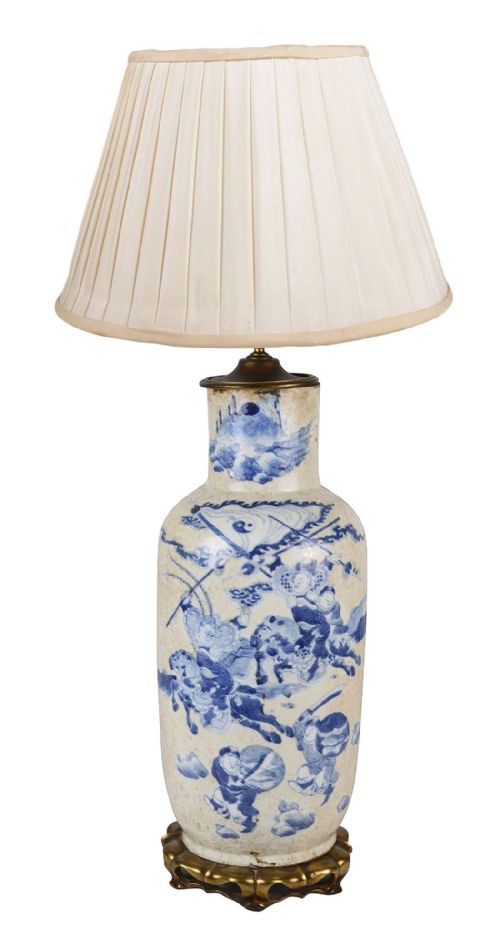

Blue White Desk Lamp
A blue white desk lamp brings together centuries-old ceramic vessels and later lighting forms to create a practical centrepiece for any room.
Blue White Desk Lamp
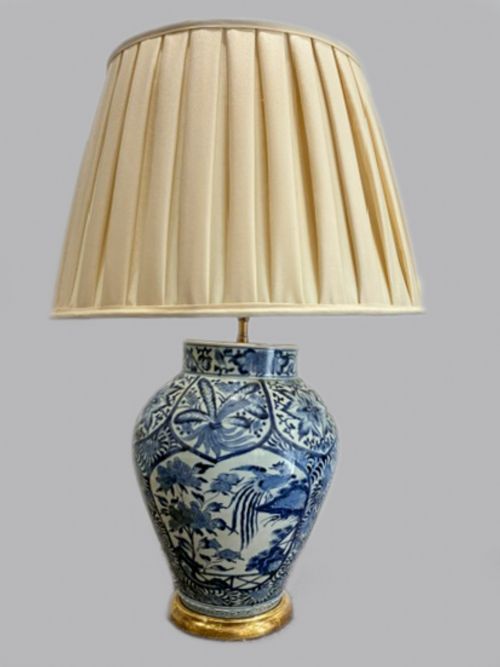
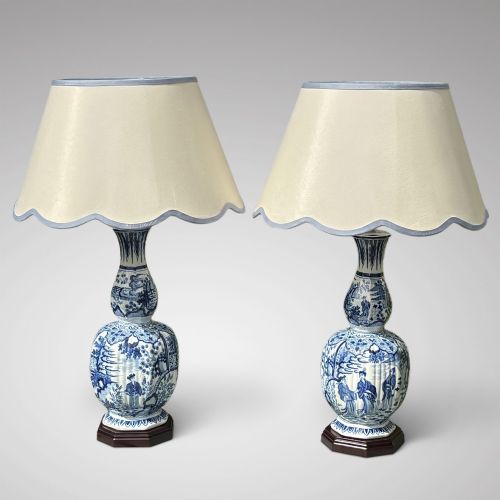
A blue white desk lamp typically begins life as a vessel, such as an eighteenth-century Delft vase or a nineteenth-century Chinese ginger jar, before later conversion into a functional light.
The selection ranges from late seventeenth-century Japanese porcelain to Art Deco figural porcelain, often paired with fabric or silk shades.
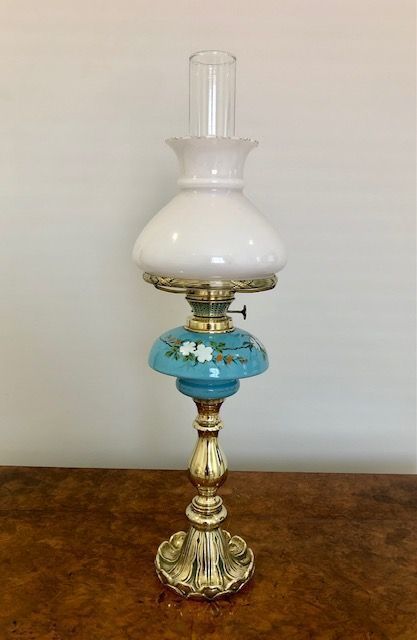
Oil lamps featuring brass bases and glass reservoirs also appear alongside these ceramic conversions, spanning periods from the seventeenth century through to the 1920s.
Materials and Construction
Makers utilised high-fired ceramic, porcelain, earthenware, and Delftware for the body of the lamp, frequently decorated in cobalt blue against a white ground.
Metal components incorporate brass and gilt bases, while supporting elements draw on glass, black glass, and occasionally wood.
Shades are fashioned from fabric and silk, complementing the structural ceramic or brass bodies.
Listings feature brass, porcelain, silk, and glass across periods from the seventeenth century to the 1920s.
Markers of Quality
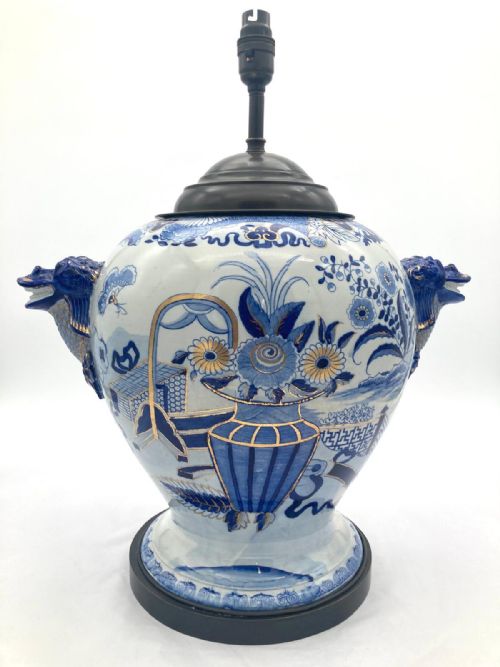
The pedigree of the original ceramic body dictates the standing of the piece, with early Japanese Arita wares, Dutch Delft, and ironstone vessels commanding particular interest.
The conversion process itself matters greatly, distinguishing between sympathetic adaptations that preserve the vessel and heavier interventions.
Accoutrements such as handmade shades, gilt mounts, and integrated brass or glass bases elevate the overall composition.
Hicks and Meigh
The Blue White Desk Lamp Glossary
- Delftware
- Tin-glazed earthenware produced in the Netherlands, known for its characteristic blue and white painted decoration. This tin glaze gives the surface an opaque white finish.
- Imari
- Japanese export porcelain decorated in underglaze blue and overglaze iron red and gold. It was widely produced in the Edo period.
- Crackleware
- Pottery featuring a network of fine cracks in the glaze, intentionally created during the firing process. It adds texture and visual depth to the surface.
- Ginger jar
- A ceramic vessel with a wide body and domed cover, originally used for storing spices. These jars are frequently adapted into lamps.
- Ironstone
- A type of durable earthenware patented in the nineteenth century. It bridges the gap between common pottery and fine porcelain.
Blue White Desk Lamp: Frequently Asked Questions
Are these original lamps?
Most of these pieces started as vases, jars, or oil lamps before being converted into electrical table lamps at a later date. The ceramic or brass bodies often date back centuries earlier than the wiring.
This conversion practice preserves historic vessels by giving them a practical function in modern interiors.
How do I date a ceramic base?
Dating relies on stylistic clues in the blue and white painting, the type of ceramic body such as crackleware or ironstone, and the formation of the base. Edo period Japanese wares and seventeenth-century pieces show distinct potting techniques.
Comparing the glaze and weight against known periods helps establish the age of the vessel.
Where should I place a ceramic lamp?
These lamps suit desks, sideboards, and reading tables where their height and decorative patterns can be fully appreciated. Their substantial ceramic or brass bases provide stability on flat surfaces.
Pairing them with appropriate silk or fabric shades ensures they cast a warm, ambient light.
What styles are available?
The selection includes Chinoiserie, Dutch Delftware, Regency designs, and Art Deco figural porcelain. Each style reflects the aesthetic preferences of its respective period.
From late Victorian brass oil lamps to eighteenth-century Japanese Arita Imari, the range covers diverse decorative traditions.