




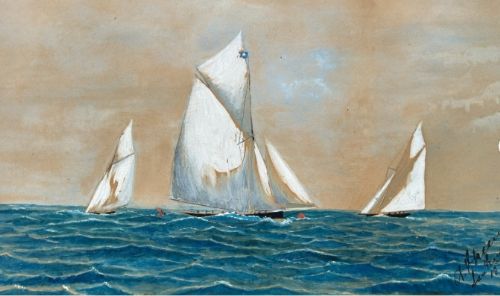


Blue Watercolour Coastal Landscape
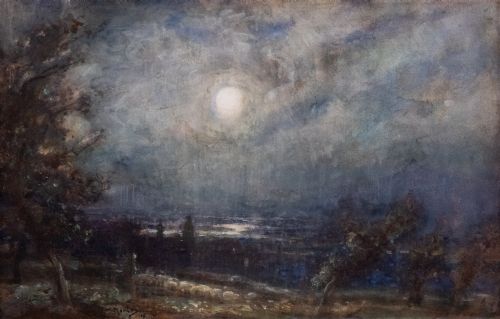
A blue watercolour coastal landscape captures the shifting light of shorelines and harbours through translucent washes on paper.
Blue Watercolour Coastal Landscape
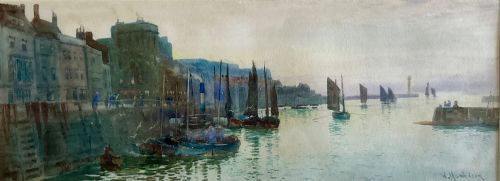
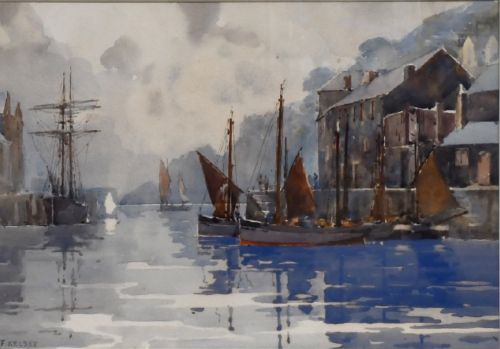
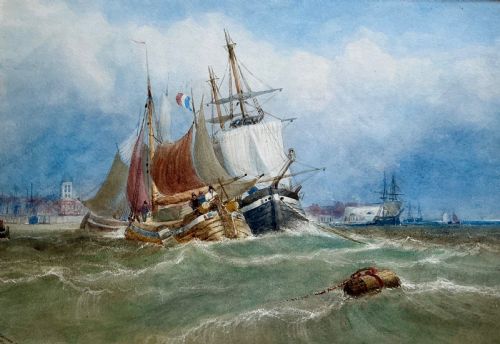
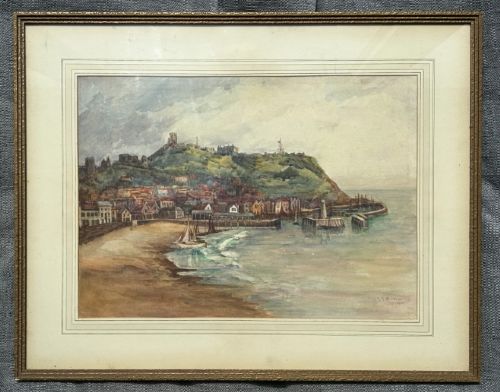
A blue watercolour coastal landscape depicts maritime scenes, fishing harbours, and shorelines using translucent pigments on paper, spanning from the late Victorian era through the mid twentieth century.
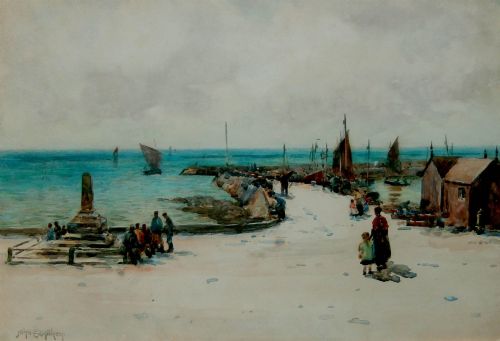
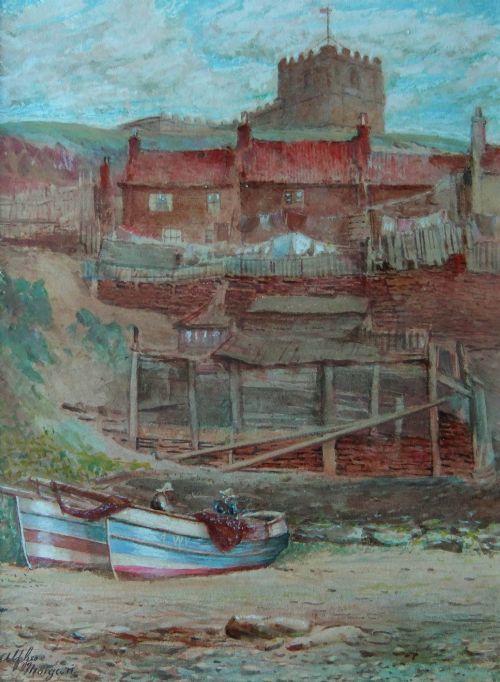
The works on this page lean heavily towards traditional British coastal views from Yorkshire, Cornwall, and Norfolk, alongside occasional continental European and overseas harbours.
Common subjects include moored fishing boats, sailing vessels, rocky coves, and sweeping bay views rendered in distinct regional styles characteristic of British maritime painting.
How they were made
Artists applied watercolour pigment and occasional touches of bodycolour or ink onto sheets of paper, often working en plein air to capture transient atmospheric effects.
The characteristic blue tones derive from mineral and organic watercolours diluted with water to create varying degrees of transparency across the paper surface.
Framing typically involves protective glass set within period wooden mouldings, occasionally supplemented by ebonised or gilt surrounds.
Listings span the nineteenth and twentieth centuries, featuring works executed on paper in watercolour, gouache, and ink.
What varies in quality
Quality rests upon the artist's handling of pigment transparency and brushwork control, separating confident tonal washes from flat or overworked areas.
Compositional strength and the accurate depiction of maritime architecture or vessel rigging distinguish accomplished hands from competent amateur output.
The survival of original framing and good preservation of the paper support without excessive fading or foxing elevate the standing of a piece.
James Orrock·Thomas William Morley·Henry Barlow Carter·Thomas Bush Hardy·Edward Seago
The Blue Watercolour Coastal Landscape Glossary
- Watercolour
- A painting method in which the paints are made of pigments suspended in a water-based solution. The paper itself often serves as the white highlight within the composition.
- Seascape
- A work of art depicting the sea, coastal views, or marine subjects. These often feature fishing vessels, harbours, and tidal flats.
- Gouache
- An opaque water-based paint used alongside transparent watercolour to add solid highlights and dense areas of colour. It provides heavier texture in painted details.
- Wash
- A thin, fluid layer of diluted watercolour pigment spread across the paper to create skies, water, or atmospheric distance. Controlled washes require a steady hand and quick application.
- Foxing
- Brown spots or discoloration on antique paper caused by chemical reactions in the pulp over time. It is a common condition issue in older works on paper.
Blue Watercolour Coastal Landscape: Frequently Asked Questions
How do I date an old coastal watercolour?
Dating relies upon artist biographical records, costume details of figures on the shore, and the style of the framing. Exhibition labels or inscriptions on the reverse often provide firm chronological clues.
Paper characteristics and handwritten signatures also help anchor the piece to a specific decade, particularly when compared against dated works by the same hand.
Are these paintings original works?
Every piece presented here is an original hand-painted work on paper rather than a mechanical reproduction or print. The brushstrokes and pooling of pigment remain visible upon close inspection.
Artists painted each scene individually, meaning no two marine landscapes on this page share identical compositions or wash patterns.
How should I frame and display them?
Watercolours require conservation framing behind glass with acid-free mounts to prevent direct contact between the paper surface and the glazing. This protects the delicate pigments from atmospheric moisture.
Display the work away from direct sunlight to prevent the blue and grey watercolours from fading over time.
What subjects appear most frequently?
Fishing boats at low tide, bustling harbour entrances, and rugged cliffs dominate the regional British views. Popular locations include Yorkshire fishing ports like Whitby and Cornish coastal villages.
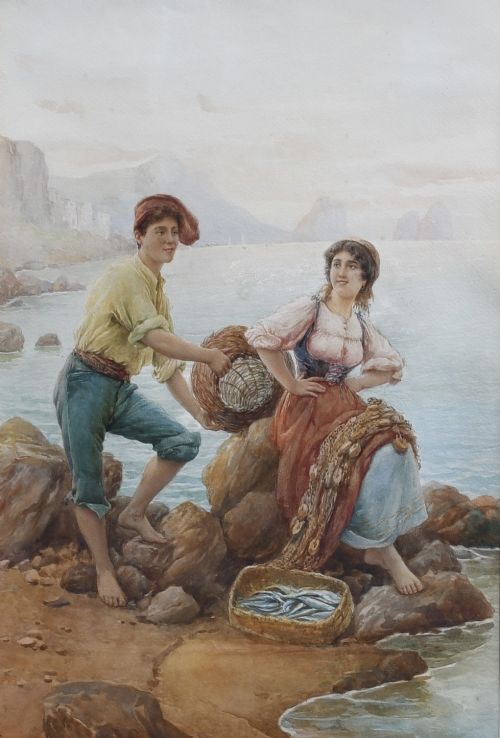
Occasional scenes extend to European rivers and international coasts, reflecting the travels of British marine artists during the nineteenth and early twentieth centuries.