






Blue Vintage Tapestry
Blue vintage tapestry pieces bring historical textile artistry into interiors through framed works, seat upholstery, and wall panels.
Blue Vintage Tapestry
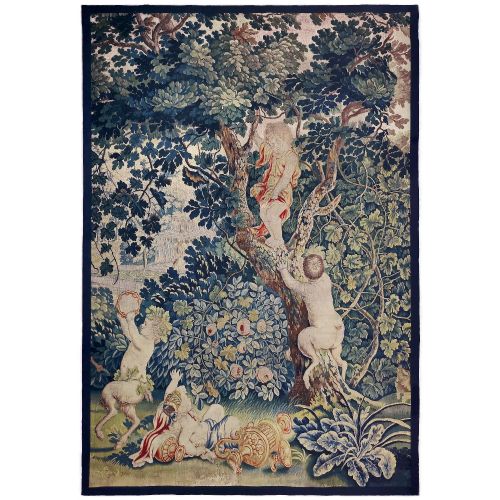
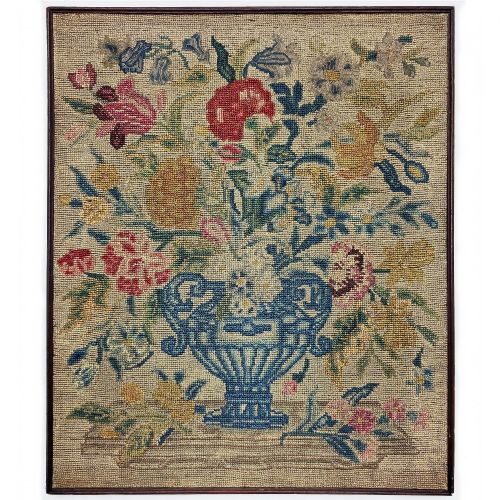
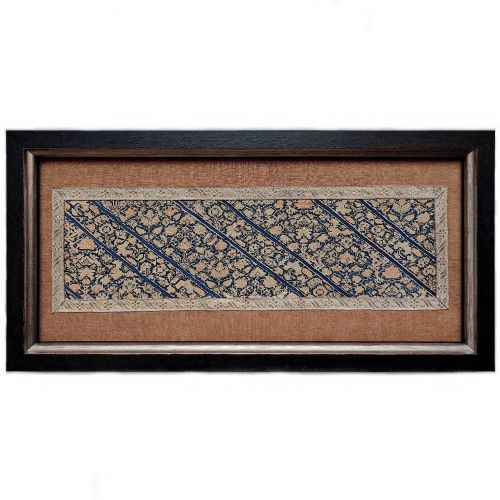
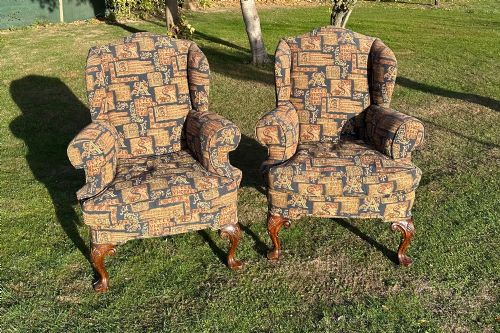
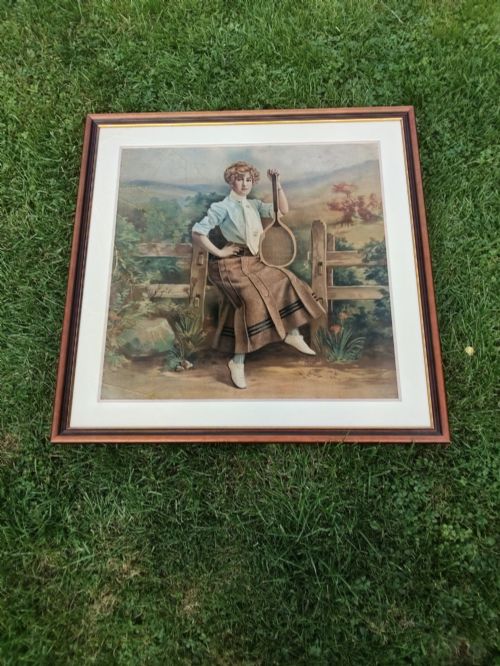
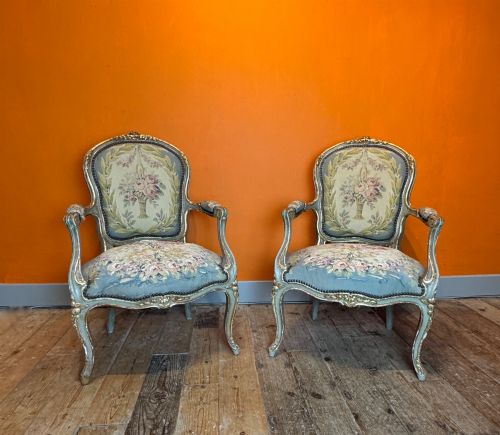
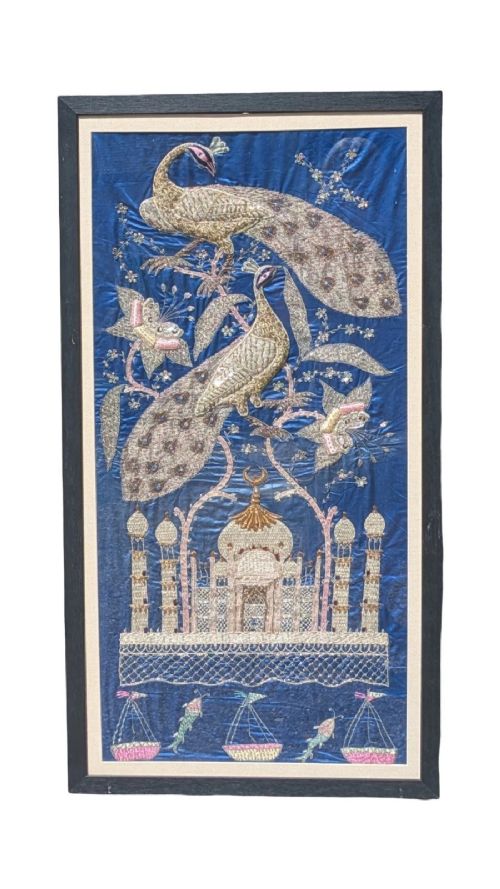
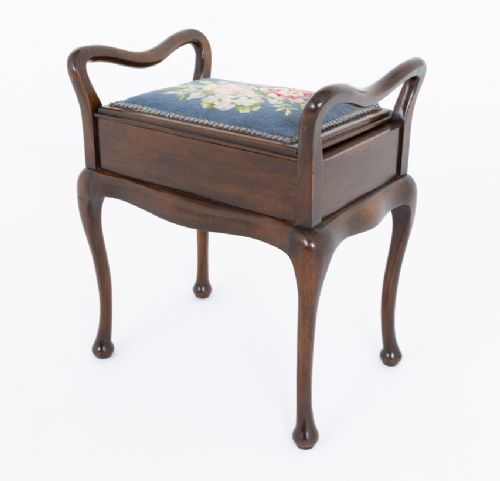
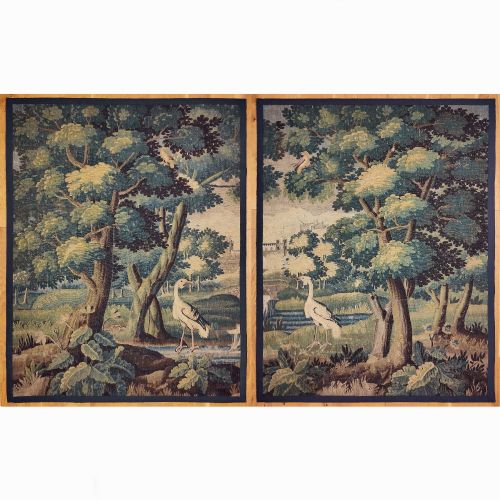
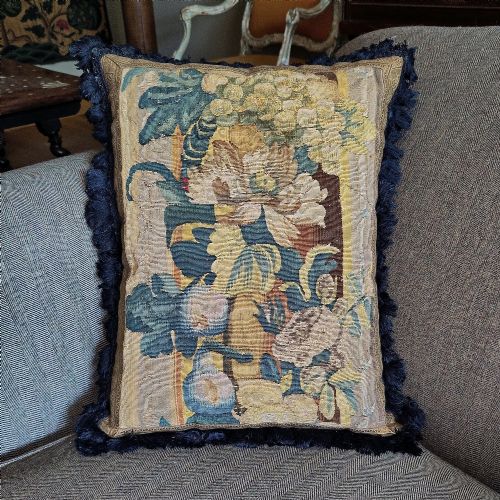
A blue vintage tapestry search leads you to a varied selection of antique textiles, ranging from framed Edwardian pictures and needlework panels to seventeenth-century Flemish fragments and Aubusson verdure panels. You will also encounter upholstered armchairs, piano stools, and cushions incorporating historical woven materials.
The objects span multiple centuries and geographic origins, including Portuguese Arraiolos needlepoint, Bessarabian kilims, and Persian tribal rugs. Seventeenth-century examples appear alongside pieces from the Edwardian era and the 1930s.
Wall art and framed textile pieces dominate the visual presentation of this category, alongside functional seating supported by mahogany, walnut, and oak frames. Buyers select these items to introduce textured historical surfaces into domestic spaces.
Materials and Construction
Makers utilised wool, silk, and cotton yarns to construct these woven surfaces, often working on fine canvas or support fabrics. Frames and furniture mounts incorporate mahogany, walnut, oak, brass, and parcel gilt wood.
Construction techniques include needlepoint, embroidery, kilim flatweaving, and traditional Flemish tapestry weaving methods. Artisans combined these textile structures with hand-carved wooden frames, glazed picture mounts, and upholstered furniture springs.
Blue Vintage Tapestry Retail Price Guide 2026
Typical asking prices for blue vintage tapestry among the pieces listed under this phrase on Sellingantiques today, from the lower quarter to the upper quarter. They describe what is for sale here now, not the wider market.
Object forms range from framed wall art and cushions to upholstered armchairs, piano stools, and kilims.
Markers of Quality
Quality rests in the precision of the needlework and the survival of the original woven fibres, where tight, even stitching distinguishes superior panels from worn examples. The integrity of the underlying wooden frames and the crispness of carved details also separate standard production from finer work.
Age and provenance elevate certain items, particularly seventeenth-century fragments and Aubusson panels displaying complex verdure designs. Complete decorative harmony between textile upholstery and the supporting furniture frame indicates higher craftsmanship.
The Blue Vintage Tapestry Glossary
- Aubusson
- A style of tapestry originating from French ateliers, known for verdure scenes and pictorial compositions. These panels often depict lush garden landscapes and foliage.
- Kilim
- A flatwoven carpet or rug produced without a pile, common in tribal weaving traditions. They feature geometric patterns and structured slit-weave openings.
- Needlepoint
- Embroidery stitched onto a stiff open-weave canvas foundation, completely covering the ground. This technique creates durable pictorial panels and upholstery.
- Verdure
- A tapestry design dominated by foliage, trees, and natural landscapes, frequently executed in green and blue tones. These scenes typically portray stylised forests.
Blue Vintage Tapestry: Frequently Asked Questions
How do I hang a textile panel?
Textile panels require professional mounting onto padded boards or conservation-grade frames to distribute weight evenly across the fabric.
Direct exposure to strong sunlight should be avoided to prevent blue dyes from fading over time.
Can I use these stools daily?
Antique stools with tapestry upholstery function well for seating when the underlying wooden frame remains structurally sound and stable.
Occasional use preserves the delicate wool and silk threads of the antique needlework surface.
What period do these pieces date from?
The pieces span from seventeenth-century Flemish fragments up to Edwardian and 1930s decorative works.
Stylistic details in the floral motifs and framing help determine the precise era of creation.
How do I clean antique tapestries?
Light surface dust can be removed gently using a low-suction vacuum through a protective mesh screen.
Professional textile conservators should handle deeper cleaning or structural repairs to avoid damaging fragile threads.