

Blue Vintage Rug
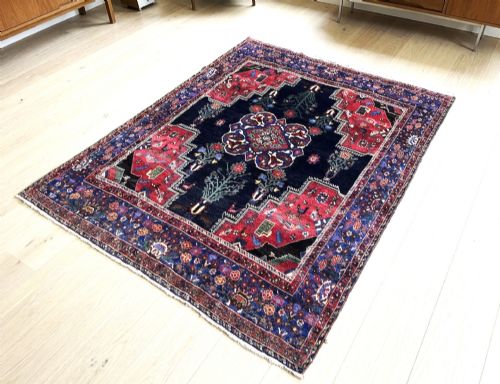
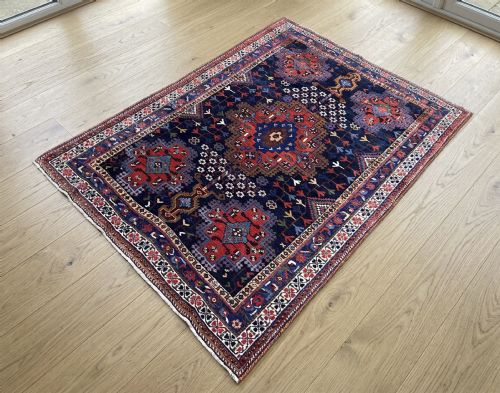
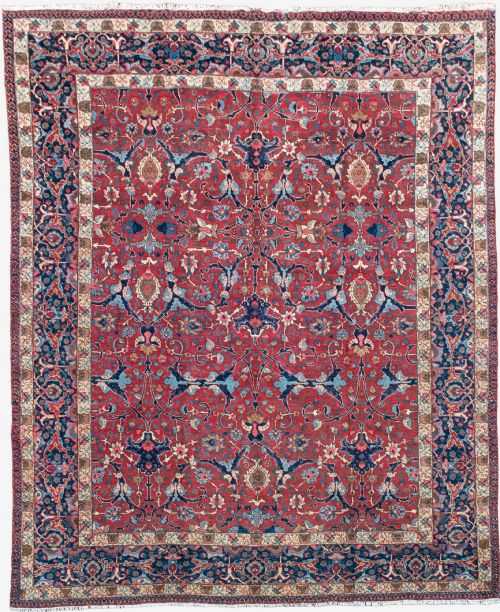
A blue vintage rug brings distinct tribal patterns and rich natural dyes onto the floor, anchoring a room with genuine age and texture.
Blue Vintage Rug
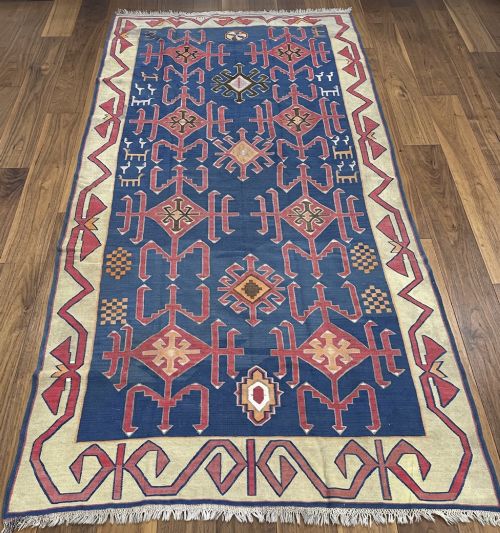
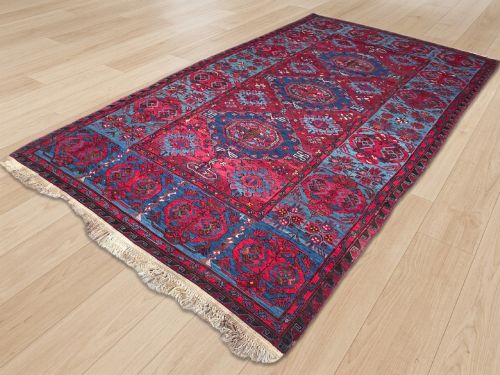
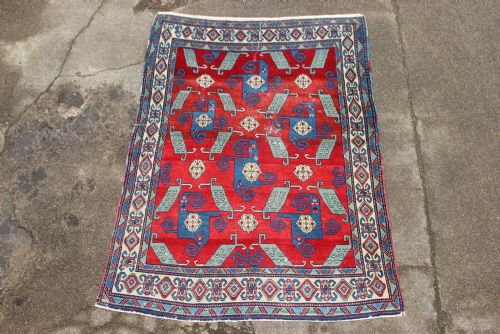
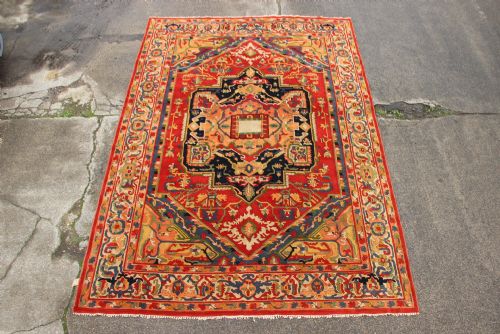
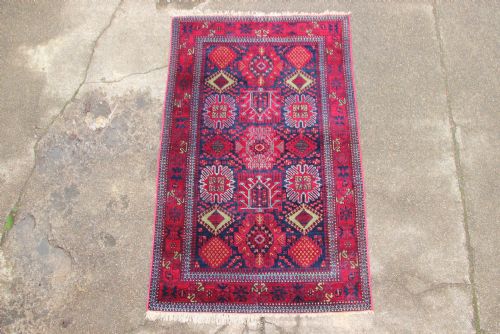
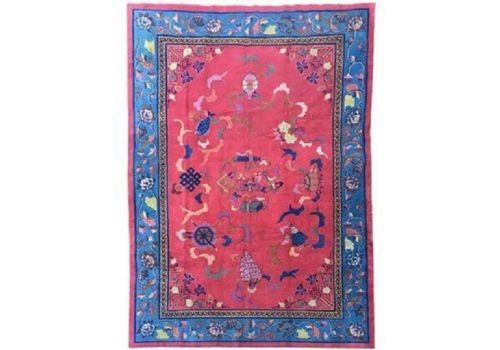
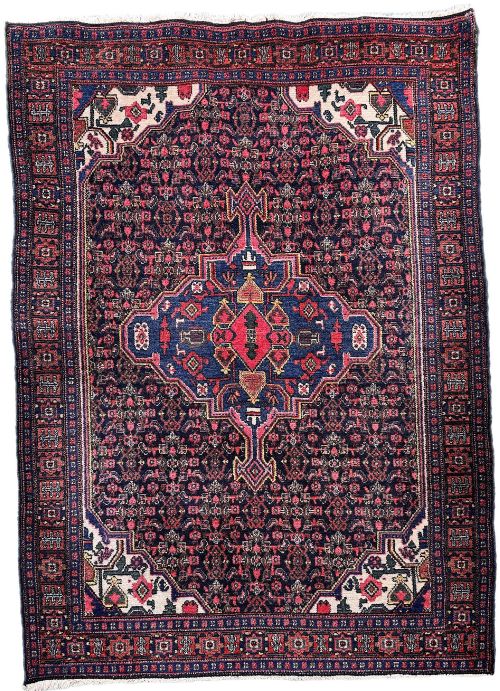
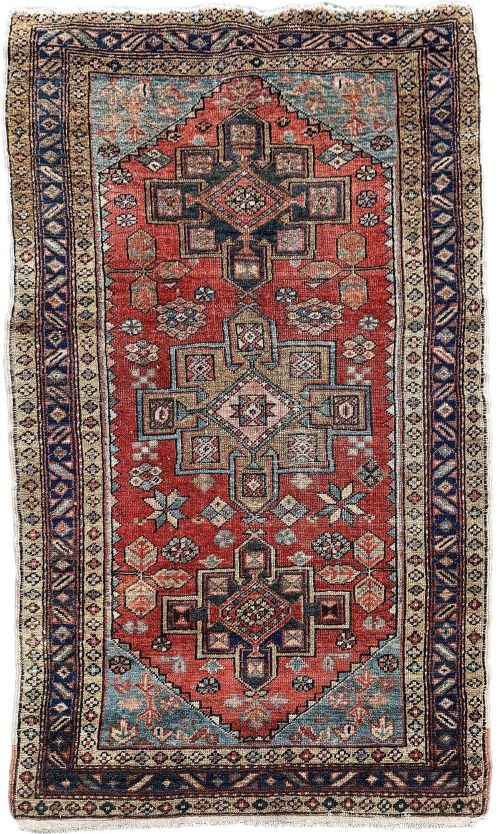
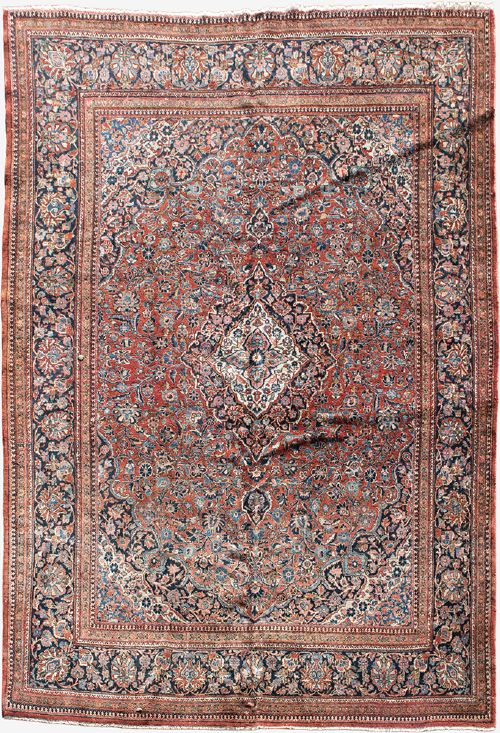
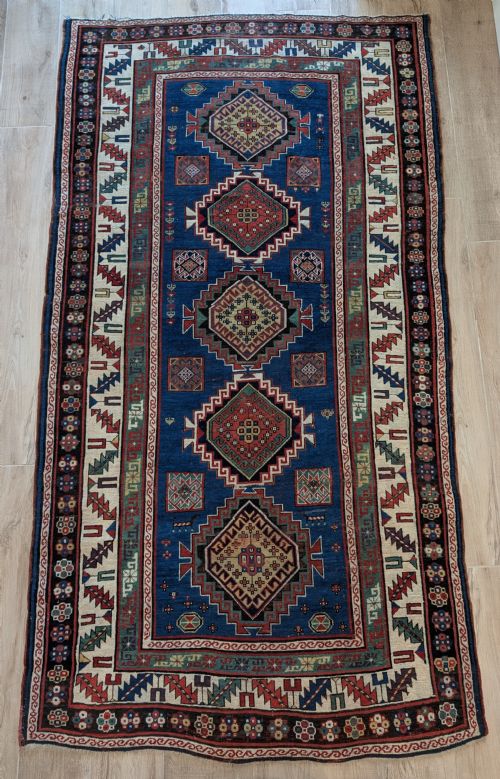
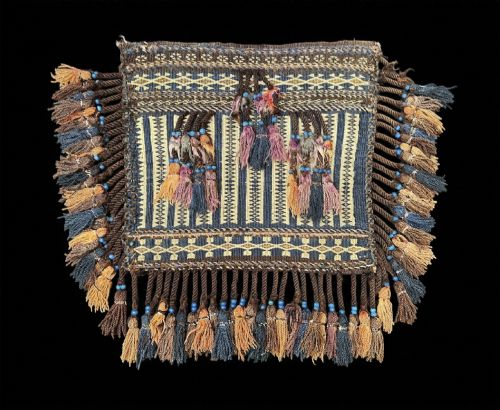
A blue vintage rug search leads to floor coverings woven across Persia, the Caucasus, Anatolia, China, and Tibet between the late nineteenth century and the 1930s. Buyers encounter room-size carpets, long runners, saddle covers, and hearth-sized pieces created by tribal and village weavers.
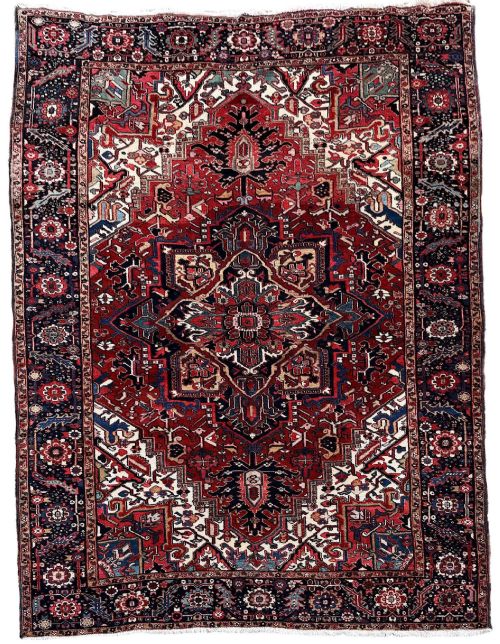
The selections span Persian Heriz, Kazak, Khamseh, and Ushak traditions alongside Tibetan and Chinese Art Deco designs. Most pieces arrive with visible wear, showing the organic softening of wool and cotton foundations over decades of daily use.
How they were made
Weavers constructed these pieces using hand-spun wool, standard wool, cotton, and occasional silk highlights, occasionally incorporating glass beads into the textiles. Artisans tied pile knots or wove flat-woven kilims by hand on upright looms.
Dyes derived from natural sources yielded deep indigos, soft blues, and contrasting grounds that mellowed gradually over generations. Foundations of cotton and wool received dense knotting to withstand heavy foot traffic in domestic spaces.
Blue Vintage Rug Retail Price Guide 2026
Typical asking prices for blue vintage rug among the pieces listed under this phrase on Sellingantiques today, from the lower quarter to the upper quarter. They describe what is for sale here now, not the wider market.
One tiny Tibetan sleeping rug survived a century of mountain winters before arriving on the modern floor.
What varies in quality
Knot density and structural integrity dictate the baseline quality of each woven textile, separating loosely constructed village pieces from tightly packed workshop carpets. The precision of the geometric or floral layout reveals the weaver's skill.
The stability of the wool pile and the preservation of original edge bindings determine how well a textile holds its form. Even wear across the surface indicates an even distribution of material quality from the outset.
The Blue Vintage Rug Glossary
- Kazak rug
- A geometric tribal carpet woven in the Caucasus region, typically distinguished by bold primary colours and rectilinear medallions.
- Heriz carpet
- A durable room-size Persian rug originating from the Heris district, known for large-scale geometric centre medallions and robust wool.
- Kilim
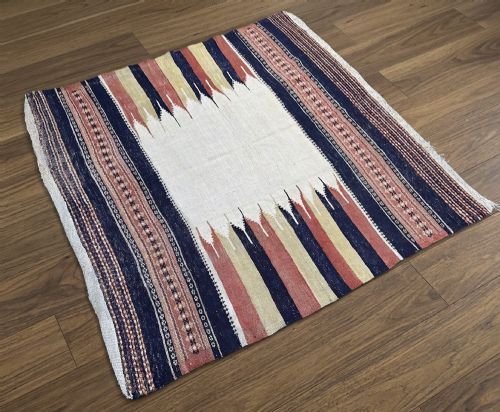
- A flat-woven rug or tapestry produced without a pile, resulting in a lighter textile with visible warp and weft threads.
- Soumak
- A technique of brocade-style flat-weaving that leaves trailing threads on the reverse side, creating a thicker and sturdier structure than a standard kilim.
- Khaden
- A small Tibetan sleeping rug or seating mat, traditionally utilised for domestic comfort in high-altitude monasteries and homes.
Blue Vintage Rug: Frequently Asked Questions
How do I clean an antique rug?
Professional immersion washing remains the standard method for removing embedded dust without damaging fragile historic wool and cotton foundations.
Harsh chemical detergents and vigorous scrubbing degrade natural dyes and weaken the structural knotting over time.
Are these rugs suitable for high traffic?
Dense wool piles and sturdy cotton foundations allow many traditional village carpets to withstand regular walking in active hallways and living spaces.
Lighter flat-weaves and delicate silk highlight pieces require placement in lower-traffic areas to preserve their remaining structure.
How do I identify a Kazak rug?
Caucasian Kazak pieces display bold primary colours, stark geometric motifs, and hooked medallions arranged across wool foundations.
The robust knotting and expressive, uncrowded village designs separate them from finer city-woven Persian workshop carpets.
What is a runner rug used for?
Long narrow runners provide durable floor coverage in corridors, staircases, and narrow transitional hallways between larger rooms.
Their elongated proportions showcase repeating tribal medallions and border patterns designed specifically for linear spaces.