




Blue Velvet Chairs
Blue velvet chairs bring tactile depth and rich colour to a room, appearing primarily in Victorian, Edwardian and Art Deco forms.
Blue Velvet Chairs
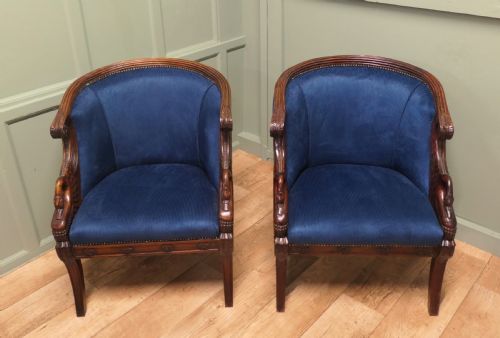
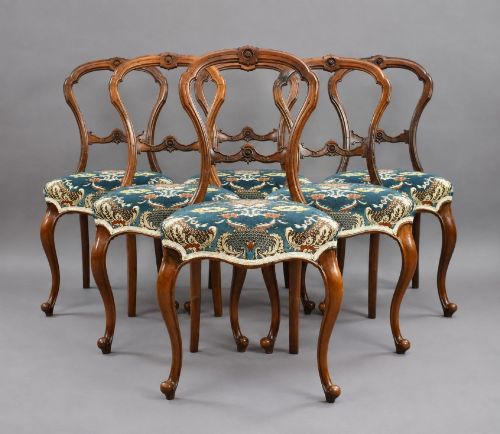
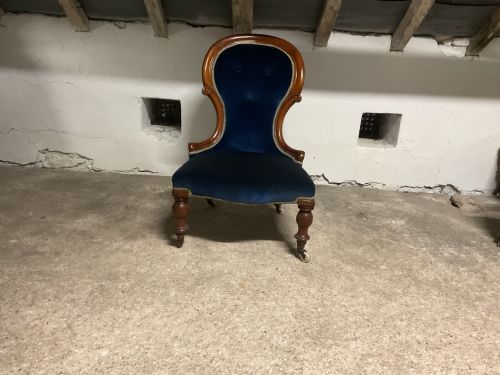
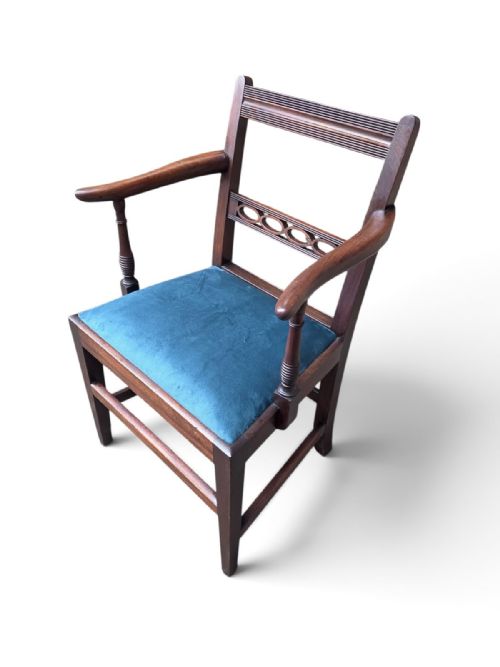
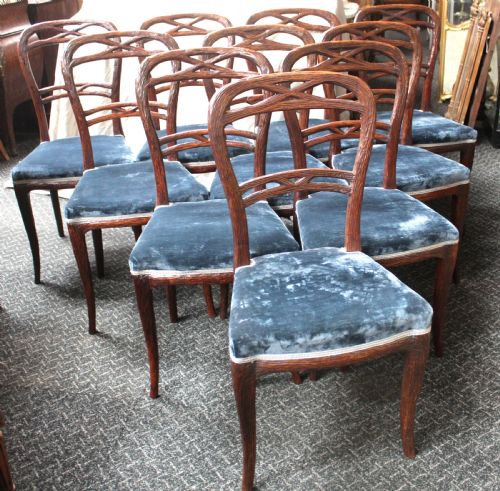
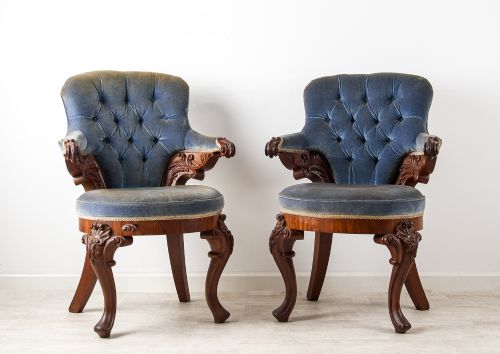
When buyers search for blue velvet chairs, they encounter a broad array of seating, ranging from button-backed nursing chairs and library armchairs to matched sets of dining chairs and occasional boudoir seating. The Victorian era supplies a significant proportion of these examples, often executed in rich mahogany or carved walnut with sprung seats.
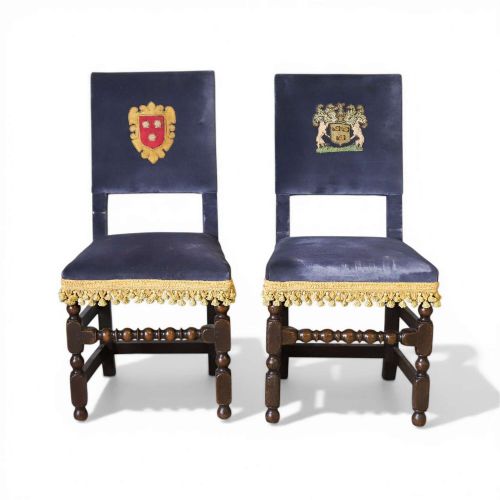
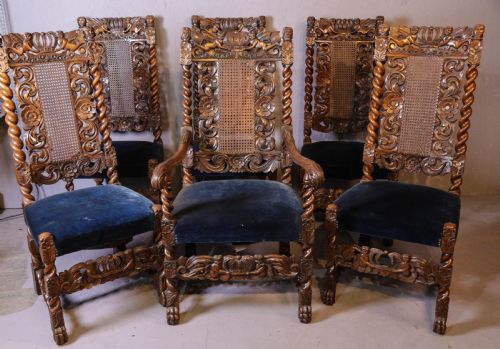
Beyond the standard parlour and dining forms, the selection encompasses specialised seating such as rocking chairs, desk armchairs, and low slipper chairs upholstered in vibrant hues. Historical revivals dominate the offerings, including Jacobean and William and Mary styles executed in oak and walnut, alongside occasional twentieth-century Art Deco expressions.
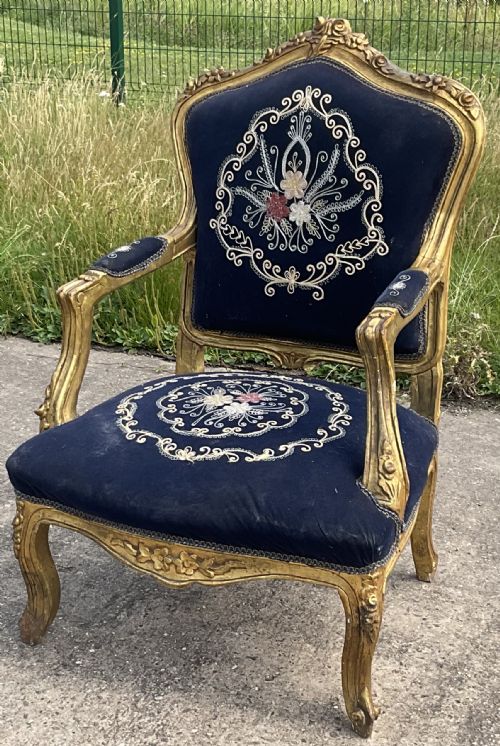
The frames vary from modest turned wood and bentwood to heavily carved giltwood and rosewood structures. Upholstery ranges from deep sapphire tones to electric blue textiles, sometimes accented with contrasting piping or heraldic crests.
Materials and construction methods
Makers constructed the structural frames of these seats using dense hardwoods such as mahogany, walnut, oak, and occasional rosewood or giltwood, often utilising mortise and tenon joinery for stability. Carved details on arms, crest rails, and legs reflect the specific period taste, from Georgian restraint to Victorian exuberance.
The upholstery technique relied on traditional stuffing materials secured over webbed frames and internal springs, finished with hand-tacked textile edges. Pile velvet requires careful handling during installation to ensure the nap runs uniformly, creating the characteristic play of light across the blue surface.
Listings feature mahogany, walnut, oak, and giltwood frames paired with traditional textile and velvet upholstery across Victorian and Edwardian periods.
Judging the standard of execution
Quality rests principally in the crispness of the timber carving and the integrity of the underlying frame construction. Finer pieces demonstrate substantial timber weight, tight joinery, and sophisticated proportions that distinguish bespoke workshop production from mass-market output.
The standard of the upholstery work contributes heavily to the overall merit, particularly the precision of the velvet placement and the durability of the internal stuffing. Original frames paired with sympathetic textile reupholstery retain higher integrity than heavily altered pieces.
Holland & Son·Trollope & Colls Ltd·Liberty
The Blue Velvet Chairs Glossary
- Balloon back
- A rounded, oval-shaped chair back popular during the Victorian period. This profile offers comfortable lumbar support while showcasing figured mahogany grain.
- Fauteuil
- An open-arm armchair originating in France, typically featuring an exposed wooden frame with upholstered back and seat. The style emphasises lightness and decorative carving.
- Giltwood
- Timber coated with a thin layer of gold leaf or gesso. This finish appears frequently on formal revival seating.
- Slipper chair
- A low-seated upholstered chair designed originally for bedrooms to assist with footwear. They typically sit close to the floor with minimal exposed frame.
- Wingback
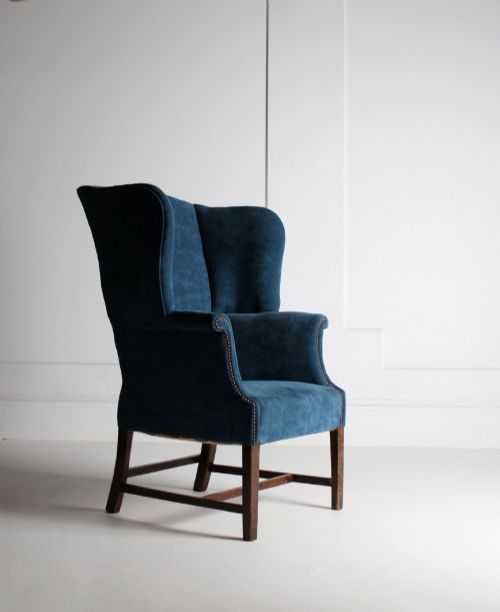
- An armchair featuring protective side panels attached to the backrest. These extensions originally deflected drafts in cold rooms.
Blue Velvet Chairs: Frequently Asked Questions
What periods do these chairs come from?
The listings span several centuries, with a heavy concentration of Victorian and Edwardian examples alongside seventeenth-century Scottish clan pieces and twentieth-century Art Deco designs.
Craftsmanship and timber choices shift across these eras, moving from heavy carved oak and walnut in earlier revival pieces to lighter rosewood, mahogany, and bentwood forms in the nineteenth and twentieth centuries.
How do I care for blue velvet?
Velvet requires gentle maintenance to preserve the pile and prevent crushing. Regular light brushing with the nap keeps the fabric looking even.
Avoid placing these chairs in direct sunlight to prevent the blue dye from fading over time. Professional cleaning is recommended for heavier marks.
Are these chairs suitable for daily dining?
Dining chairs within this selection, particularly the Victorian mahogany sets, were engineered for regular use around a table. Their robust frames and supportive backs suit everyday seating.
Lighter boudoir chairs and slipper chairs are better suited for occasional use in studies or bedrooms rather than heavy communal dining.
How can I tell a Victorian chair from a Georgian one?
Georgian chairs generally feature simpler, cleaner lines with restrained mahogany or walnut framing and architectural proportions. Victorian pieces often introduce heavier ornamentation, button-tufting, and more exuberant carved walnut or rosewood structures.
Upholstery styles also differ, as Victorian designs frequently utilised internal coil springs while earlier Georgian seats relied on webbing and hair stuffing.