



Blue Transferware Basin
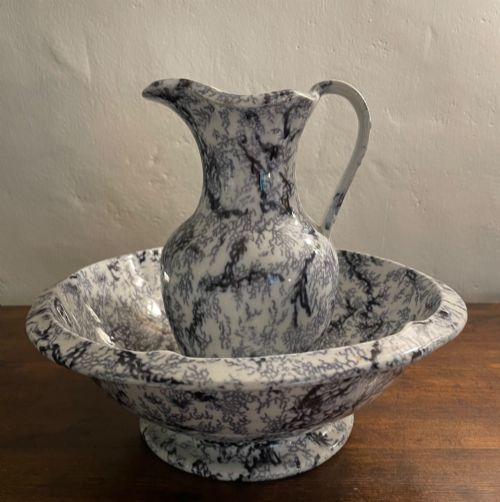
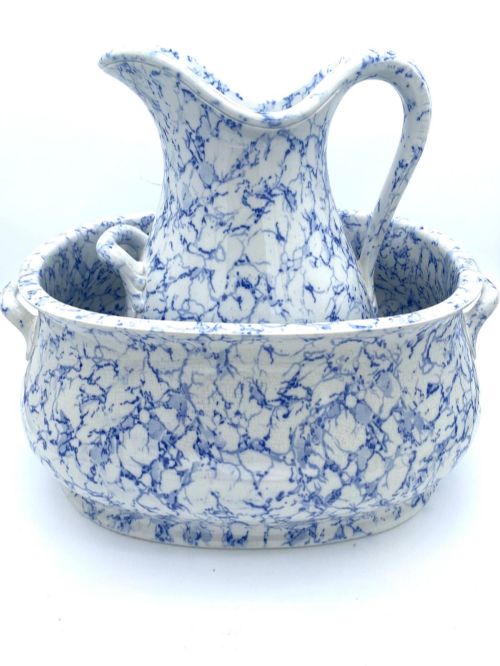
A blue transferware basin brings deep cobalt depth and crisp printed scenes to your washstand.
Blue Transferware Basin
A blue transferware basin is a ceramic vessel designed for washing, typically found in forms such as wash basins, washstand sets, and footbaths. These pieces span the Georgian, Regency, and Victorian periods, reflecting domestic hygiene routines of the nineteenth century.
You are most likely to meet large footbaths and complete jug and basin sets on this page. The listings include earthenware and pearlware bodies decorated with blue printed motifs, alongside associated pitchers and water jugs.
Origins stretch from Staffordshire potteries to specific factories like Minton and Doulton Burslem. Makers applied transfer printing to create intricate patterns ranging from classical Italian marble designs to classic blue and white scenes.
Materials and construction
Potters shaped these vessels from earthenware and pearlware, applying a fluid glaze to seal the porous ceramic body. Some pieces incorporate gilt highlights or silver plate mounts to elevate their decorative appeal.
The characteristic blue decoration relies on transfer printing, a technique where an engraved copper plate transfers a printed design onto tissue paper, which is then applied to the ceramic surface before firing.
Blue Transferware Basin Retail Price Guide 2026
Typical asking prices for blue transferware basin among the pieces listed under this phrase on Sellingantiques today, from the lower quarter to the upper quarter. They describe what is for sale here now, not the wider market.
Early decorators occasionally sneezed near the copper plate, leaving whimsical blurs in the cobalt skies of otherwise stern Victorian wash basins.
Judging quality and execution
Quality reveals itself in the clarity of the printed transfer and the crispness of the cobalt pigment against the white ceramic ground. Finer examples maintain an even glaze without blurring or pooling in the recessed curves of footbaths and basins.
The weight and balance of the vessel, especially in large footbaths and heavy wash bowls, distinguish standard domestic output from superior factory productions by makers such as Minton or Ridgway.
Ridgway·Minton·Doulton Burslem·Spode·Heathcote
The Blue Transferware Basin Glossary
- Transferware
- Earthenware decorated by applying a printed design from a copper plate onto the ceramic body using tissue paper. This technique allowed factories to produce complex patterns consistently across large wash sets.
- Pearlware
- A refined earthenware developed in the late eighteenth century with a bluish glaze that pooled in crevices to mimic Chinese porcelain. It forms the body of many early nineteenth-century basins.
- Footbath
- A large, deep vessel with carrying handles designed for soaking feet before the widespread use of plumbed bathrooms. These pieces often feature printed blue scenes and sturdy rims.
- Flow blue
- A Staffordshire technique where lime or ammonia chloride was introduced during the kiln firing to deliberately blur the cobalt transfer print. This created a soft, hazy aesthetic popular on mid-nineteenth-century jugs and basins.
- Washstand set
- A matching collection of ceramic wares including a basin, water jug, and smaller chamber pots or soap dishes. These sets sat upon wooden washstands in Victorian bedrooms.
Blue Transferware Basin: Frequently Asked Questions
What was a blue transferware basin used for?
These vessels served as the primary washing bowl on a bedroom washstand before modern plumbing arrived in homes. Water was poured from a matching jug into the basin for morning and evening ablutions.
Larger variations, known as footbaths, sat on the floor for soaking feet. They were substantial enough to hold significant volumes of warm water and featured sturdy side handles for carrying.
How do I date a blue transferware basin?
Dating relies on stylistic clues, ceramic bodies, and registry marks stamped into the underside of the earthenware. Pearlware bodies and certain floral borders typically point toward the Georgian and Regency eras.
Victorian and Edwardian pieces often display heavier proportions and crisper Doulton Burslem or Minton factory stamps. Comparing the depth of the blue transfer print also helps narrow down the production decade.
Can I use an antique basin for daily washing?
Most collectors treat these pieces as decorative items or display pieces for dry flowers rather than active wash vessels. The historic earthenware and glaze can be sensitive to thermal shock from very hot water.
Displaying them on sturdy surfaces lets you appreciate the interior transfer prints safely. Hand washing with mild soap is recommended if cleaning is necessary.
What is flow blue and how does it differ?
Flow blue is a specific variant where the cobalt print bleeds slightly into the surrounding white glaze during the kiln firing. This creates a hazy, atmospheric depth unlike sharp, crisp transferware.
Potters achieved this effect by introducing volatile substances into the kiln atmosphere. It became particularly fashionable on mid-nineteenth-century jugs and footbaths.