

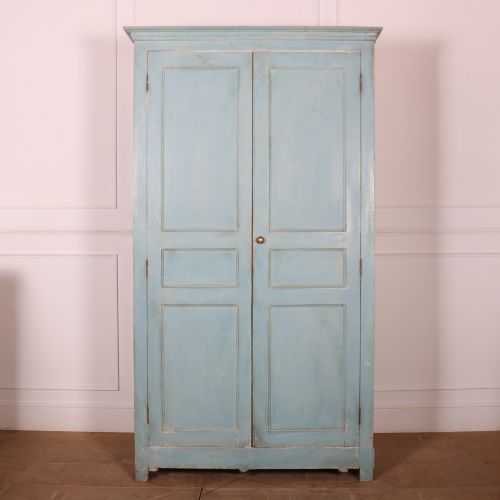
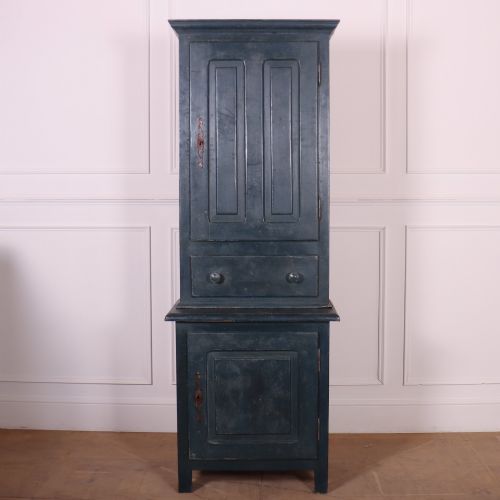
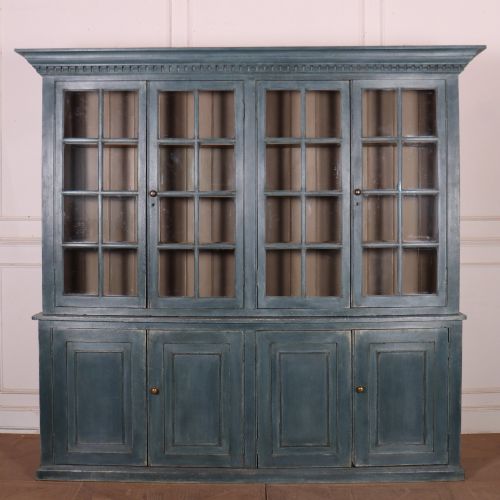
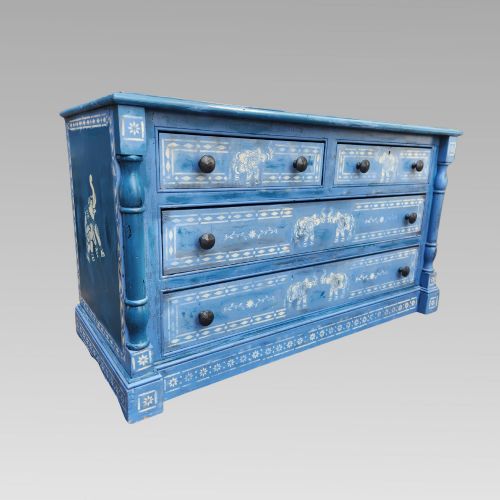

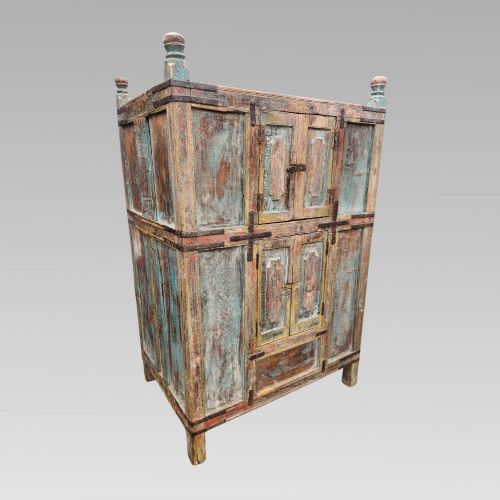


Blue Storage Cabinet
A blue storage cabinet brings functional utility and regional painted character to an interior.
Blue Storage Cabinet
A blue storage cabinet encompasses utilitarian pine cupboards, kitchen dressers, and linen presses produced across various centuries and regions. Buyers exploring this category encounter pieces originating from British country workshops as well as Scandinavian and Indian domestic settings.
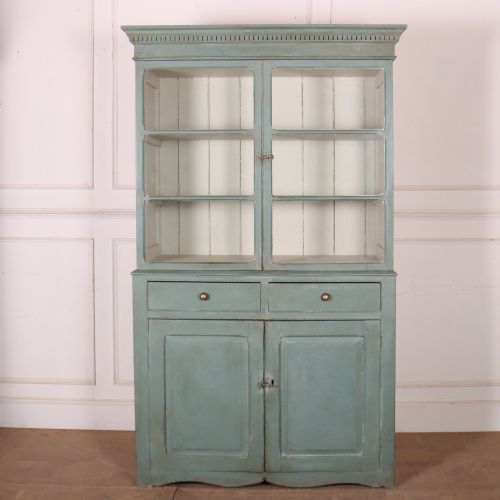
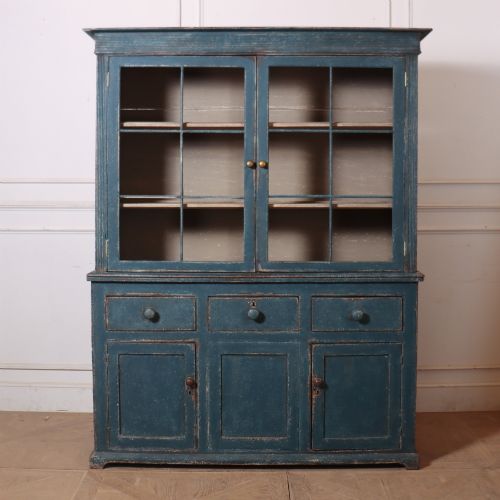
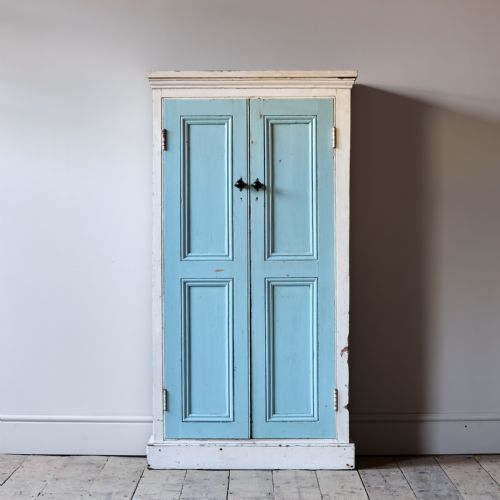
The version met most frequently on this page is the nineteenth-century painted pine cupboard, often originating from Sweden or the wider Scandinavian region. These pieces take forms ranging from tall double-door wardrobes and wall cabinets to two-part kitchen dressers finished in muted or scraped paint.
How they were made
Construction relies primarily on solid pine and regional timbers such as teak and cedar, assembled using traditional joinery methods suited for domestic storage. Iron and brass hardware, including strap hinges and latches, secure the doors and drawers of these heavy pieces.
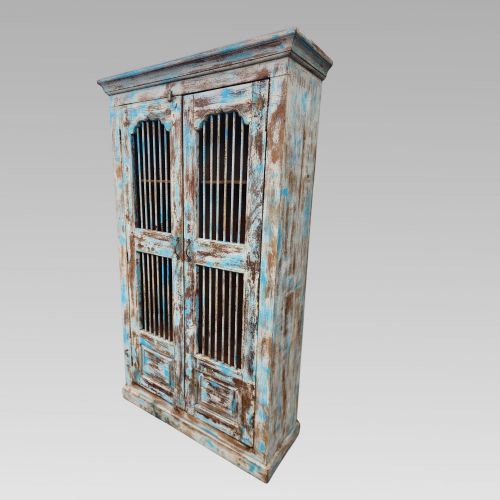
Surfaces are finished with layers of paint, including traditional ragwork and scraped techniques that reveal underlying hues over decades of use. Glazed doors incorporate glass panes within timber frames to display contents within kitchens and living spaces.
Blue Storage Cabinet Retail Price Guide 2026
Typical asking prices for blue storage cabinet among the pieces listed under this phrase on Sellingantiques today, from the lower quarter to the upper quarter. They describe what is for sale here now, not the wider market.
Listings in this category span the eighteenth, nineteenth, and early twentieth centuries, featuring pine, teak, cedar, and iron.
What varies in quality
The integrity of the original painted surface distinguishes standard utility items from exceptional examples of folk art and regional craftsmanship. Surface treatments that retain their early scraped or layered paint show greater historical and visual depth than later repainted surfaces.
Structural proportion and timber selection also divide the range, with dense pine, cedar, or teak assemblies maintaining better alignment over time. Hardware originality, from brass escutcheons to iron strap hinges, contributes to the overall integrity of a cabinet.
The Blue Storage Cabinet Glossary
- Ragwork
- A paint finish applied or manipulated with rags to create a mottled or textured pattern on the timber surface. This technique appears frequently on nineteenth-century Scandinavian storage furniture.
- Almirah
- A freestanding cupboard or wardrobe originating from the Indian subcontinent. These storage units often feature painted finishes and substantial internal shelving.
- Gustavian
- The Swedish neoclassical style spanning the late eighteenth and nineteenth centuries, characterised by restrained proportions and pale painted surfaces. Cabinets from this design tradition often display subtle carved mouldings.
- Housekeepers Cupboard
- A large institutional or domestic storage piece traditionally used for linens, dry goods, and household provisions. These multi-shelf cupboards offer deep internal capacity.
Blue Storage Cabinet: Frequently Asked Questions
What is a blue storage cabinet?
A blue storage cabinet is a utilitarian wooden piece designed to hold household goods, kitchenware, or linens. These items are finished with historic paint layers in various shades of blue.
The category includes regional pieces such as Swedish linen cupboards, British kitchen dressers, and Indian almirahs. Each type reflects the domestic storage needs of its specific period and origin.
How do I date a blue storage cabinet?
Dating relies on examining construction methods, timber types, and the composition of the paint layers. Hand-cut nails, dovetail joints, and historic iron hardware offer reliable chronological clues.
Stylistic markers such as Gustavian neoclassical lines or nineteenth-century vernacular framing further narrow the period of manufacture. Comparing the patination of the interior to the exterior helps confirm age.
Where were blue storage cabinets used?
These cabinets served primarily in domestic spaces including kitchens, halls, and bedrooms for storing provisions, clothing, and domestic utensils. Larger dressers and linen cupboards stood in working farmhouses and country homes.
Wall cupboards and smaller cabinets provided compact storage in tighter quarters. Their painted finishes suited both formal rooms and utilitarian spaces.
How do I care for a painted cabinet?
Maintenance involves keeping the timber away from direct heat sources and rapid humidity fluctuations to prevent wood movement. Dusting with a dry, soft cloth preserves the historic painted surface.
Avoiding harsh chemical cleaners protects fragile layers of early or scraped paint. Proper placement ensures the structural joints remain stable over time.