



Blue Stone Diamond Ring
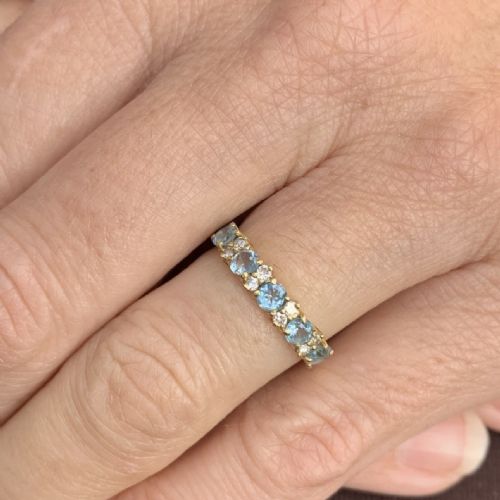
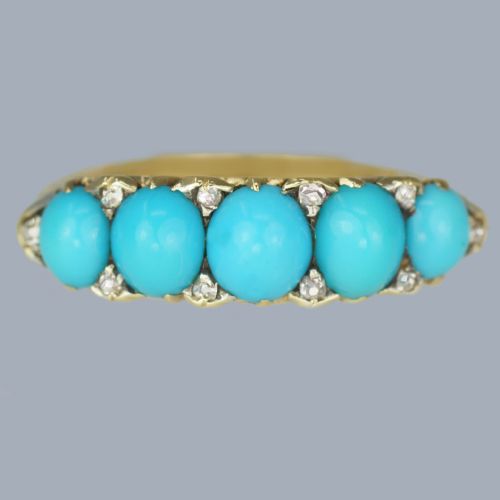
A blue stone diamond ring pairs bright white diamonds with sapphire, turquoise, aquamarine, zircon, or spinel set in gold or platinum.
Blue Stone Diamond Ring
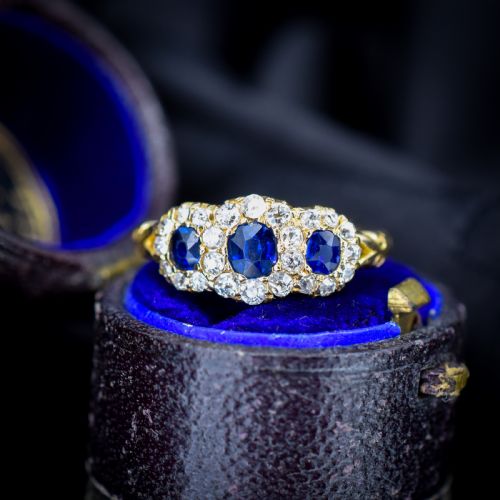
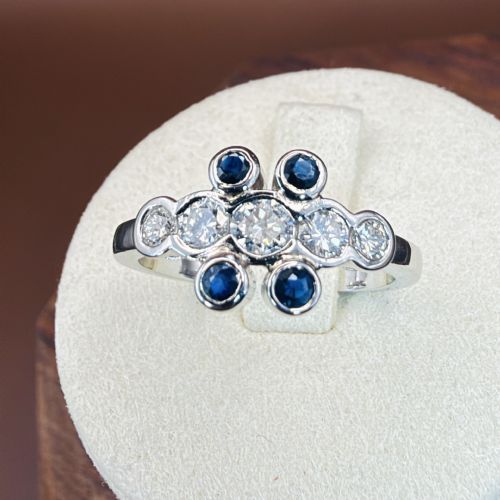
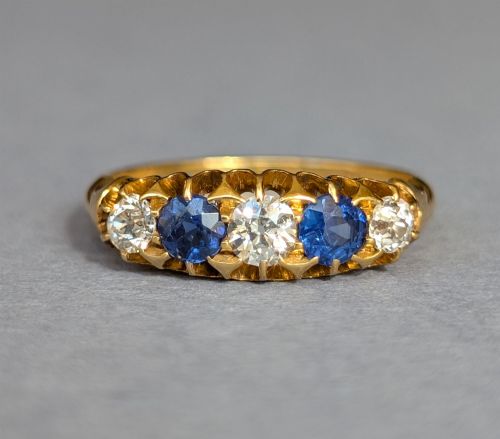
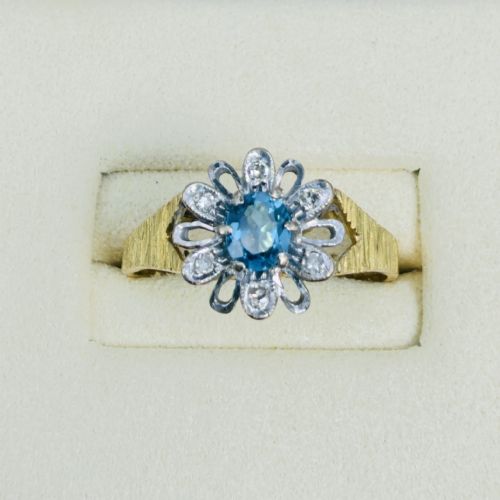
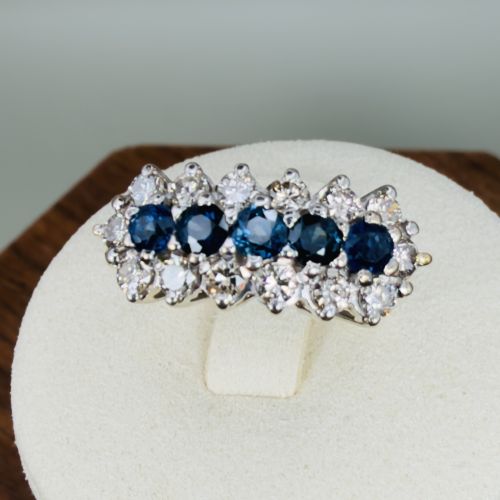
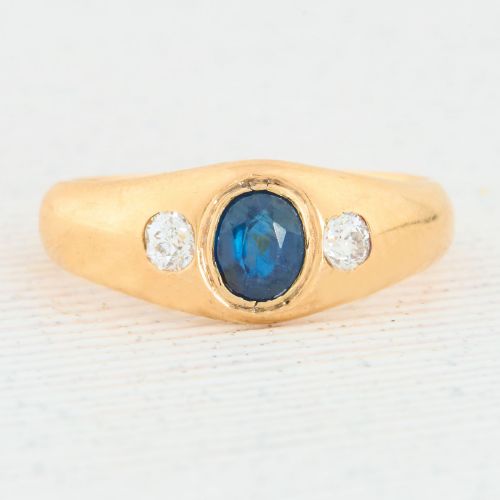
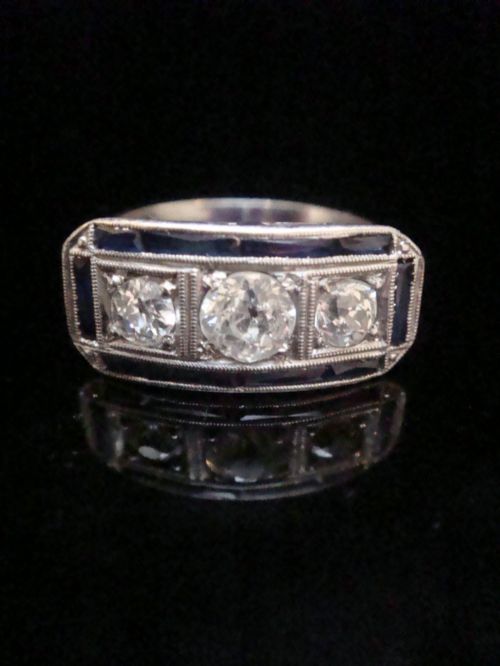
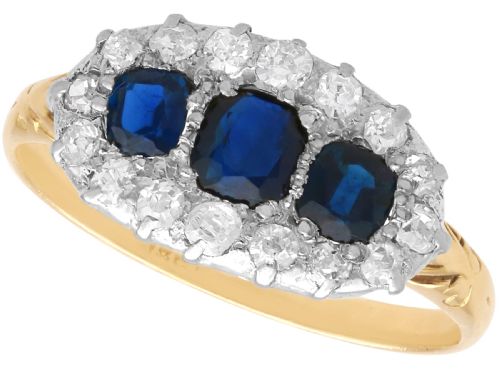
A blue stone diamond ring is a finger ring combining blue gemstones and diamonds across periods from the Victorian era through the mid-twentieth century. The phrase covers clusters, boat rings, trilogy arrangements, five stone bands, and gypsy settings made in styles including Art Deco, Edwardian, and Art Nouveau.
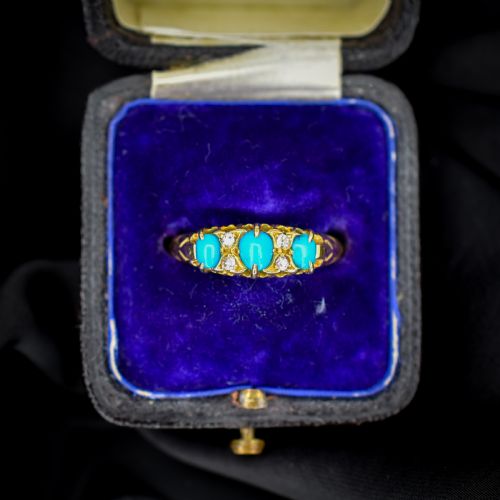
Buyers meet Victorian examples featuring sapphires or turquoise alongside old cut diamonds in eighteen carat yellow gold. Edwardian and Art Deco pieces bring finer platinum work, geometric daisy clusters, and precise milgrain edging to the same colour contrast.
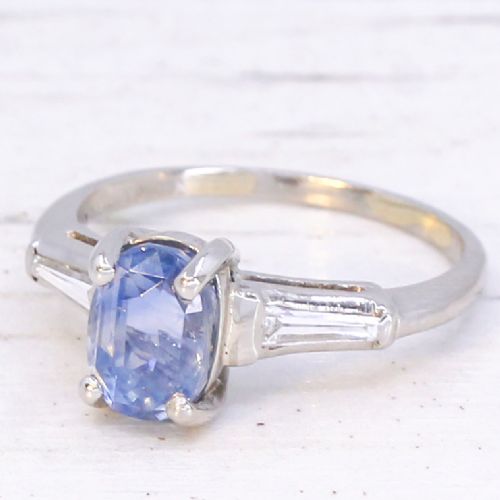
Mid-century items introduce modern cuts and heavier mounts in eighteen carat gold or platinum. These configurations reflect shifting tastes in gemstone arrangement while retaining the core pairing of a blue centre stone flanked or surrounded by diamonds.
How they were made
Goldsmiths utilised eighteen carat yellow gold, fifteen carat gold, and fourteen carat gold for mounting, alongside platinum for Edwardian and Art Deco settings. These metals provided the structural strength required to hold multiple stones securely in claw, bezel, or flush settings.
Stones were cut by hand in earlier periods, using old European cuts and rose cuts for diamonds alongside cushion and oval cuts for sapphires. Later mid-century examples incorporated brilliant cuts and more uniform calibrated stones.
Construction methods evolved from solid gold galleries with heavy backings in Victorian boat rings to open pierced platinum work in Art Deco mounts designed to maximise light passing through the blue stones and diamonds.
What varies in quality
The choice of blue gemstone creates the primary distinction in quality across these pieces, with unheated stones from specific origins such as Kashmir, Burma, or Ceylon commanding higher regard than treated or standard commercial varieties. The depth and saturation of the blue hue dictate visual impact alongside diamond clarity and cut precision.
The integrity of the metalwork and setting techniques separates standard production from finer examples. Hand-carved shoulders, crisp hallmarks, intact milgrain, and secure claw or bezel settings indicate skilled workshop execution from periods like the Edwardian era and Art Deco years.
The Blue Stone Diamond Ring Glossary
- Cluster ring
- A ring design featuring a central gemstone surrounded by a border of smaller stones, typically diamonds encircling a blue sapphire or turquoise.
- Trilogy ring
- A three-stone ring arrangement representing past, present, and future, commonly pairing a central blue stone with two flanking diamonds.
- Gypsy ring
- A style where stones are flush-set directly into a heavy tapered gold band rather than held in raised claws.
- Old cut diamond
- A hand-faceted diamond shape predating modern brilliant cutting, characterised by a smaller table and a higher crown.
- Milgrain
- A decorative beaded edge applied to metal settings, prevalent in Edwardian and Art Deco jewellery.
Blue Stone Diamond Ring: Frequently Asked Questions
What periods do these rings come from?
The selection spans the late nineteenth century through the mid-twentieth century. Pieces originate from Victorian, Edwardian, Art Nouveau, and Art Deco periods, alongside mid-century designs.
Each era brings distinct mounting styles and metal choices, ranging from heavy yellow gold Victorian boat rings to geometric platinum Art Deco clusters.
Which blue stones are used alongside diamonds?
Sapphire is the most frequent blue stone found in these rings, including stones from Kashmir, Burma, and Ceylon. Other pieces incorporate turquoise, aquamarine, blue zircon, and blue spinel.
These stones appear in shades from deep navy to bright cornflower blue, paired with old cut or brilliant cut diamonds.
What metals support the stones?
Eighteen carat yellow gold is the predominant metal across Victorian and Edwardian examples. Fifteen carat gold and fourteen carat gold also appear in specific period pieces.
Platinum and white gold gain prominence in the Art Deco and mid-century eras, often providing a bright contrasting frame for the diamonds.
How do cluster and trilogy settings differ?
Cluster rings group multiple smaller diamonds around a central blue stone in a circular, oval, or daisy formation. Trilogy rings place three stones in a row across the finger, usually a blue centre stone with a diamond on either side.