




Blue Snow Landscape Painting
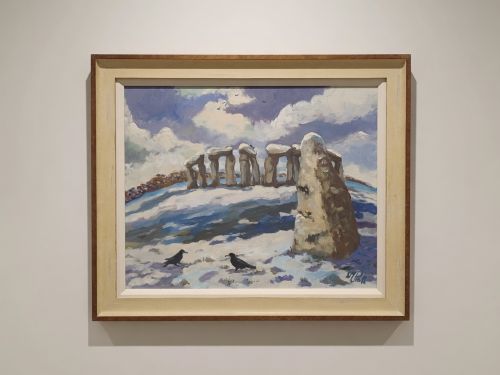
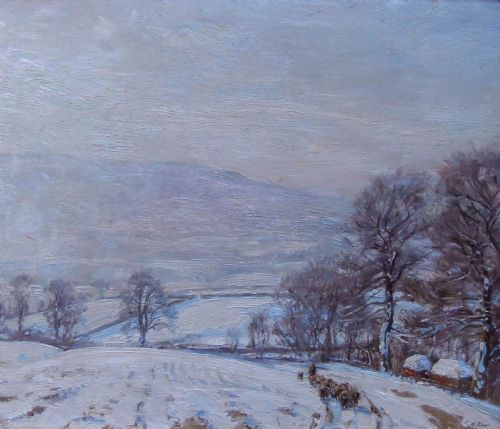
A blue snow landscape painting captures the stark chill of winter through muted palettes, offering a timeless glimpse into frozen rural scenes.
Blue Snow Landscape Painting
When you search for a blue snow landscape painting, you are looking at fine art works that capture winter scenes rendered primarily in cool tones, oil paint, and watercolour. These pieces span from the early twentieth century through to contemporary British art, reflecting varied stylistic interpretations of cold weather.
The versions you are most likely to meet on this page include watercolours on paper and oil paintings on canvas depicting rural dales and frosty mornings. Notable periods represented among these listings range from the nineteen-twenties and nineteen-thirties up to later decades, showing how artists captured winter light over time.
Materials and Technique
Artists create these works using oil paint on canvas or watercolour paint on paper, often framing the finished pieces in wood to preserve the fragile surfaces. The application of paint relies on impressionist and realist brushwork to convey the texture of snow and the grey light of winter skies.
Techniques range from the loose, expressive brushstrokes seen in British Impressionism and German Expressionism to the precise detailing of traditional watercolour painting. These methods dictate how light reflects off the painted snow, giving the landscape its characteristic chill.
Several artists braved the freezing British dales with frozen watercolours just to capture that exact shade of blue snow.
Assessing Quality and Merit
The distinction between standard examples and the finest works lies in the artist's ability to handle tone and atmosphere, capturing the specific quality of winter light rather than merely applying blue pigment. Pieces by established painters demonstrate a superior command of perspective and brushwork within the canvas or paper medium.
Condition and framing also influence the overall character of the piece, with well-preserved oil on canvas and original wood frames maintaining the integrity intended by the creator. Works that successfully evoke the silence and stillness of a snowy day naturally stand out in any collection.
Lucy Pratt·A. McDonald·Fred Lawson·Ernest Uden·Herbert Royle·Ernest Higgins Rigg·Emily M. Paterson·William Cave Day
The Blue Snow Landscape Painting Glossary
- Watercolour paint
- A water-based medium utilising finely ground pigments suspended in a water-soluble vehicle, traditionally applied to paper to achieve translucent washes of colour.
- Oil on canvas
- A painting technique where pigmented oil is applied to a stretched canvas support, allowing for rich texture, slow drying times, and deep colour saturation.
- German Expressionism
- An early twentieth-century modernist movement focused on presenting the world from a subjective perspective, often distorting forms for emotional effect.
- British Impressionism
- A painting style developed by British artists focusing on ordinary subject matter, natural light, and visible, spontaneous brushstrokes.
- Wood frame
- A rigid structural case surrounding a painting, constructed from timber to protect the edges of the canvas or paper and complement the artwork.
Blue Snow Landscape Painting: Frequently Asked Questions
What periods do these paintings come from?
The available artworks predominantly date from the nineteen-twenties and nineteen-thirties, reflecting early twentieth-century British and European artistic movements.
Additional pieces extend into the nineteen-forties, fifties, and later than nineteen-sixty, providing a diverse chronological spread of winter scenes.
How should I care for a watercolour?
Watercolours on paper require protection from direct sunlight to prevent the pigments and paper support from fading over time.
Displaying them behind UV-filtered glass within a stable indoor environment ensures the delicate paints remain well-preserved.
What is the difference between oil and watercolour?
Oil paint utilises a slow-drying oil binder that allows for thick impasto textures and deep, luminous colour layering on canvas.
Watercolour uses a water-soluble vehicle on paper, creating translucent washes that rely on the white of the paper to reflect light.
Where were these winter landscapes painted?
Many of these winter scenes depict specific British locations, such as Yorkshire dales, Wharfedale, and Swaledale, captured by regional artists.
Other works reflect broader European influences, including German expressionist interpretations of wartime resilience and winter conditions.