
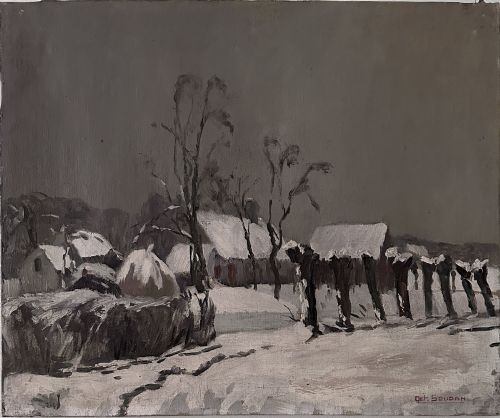


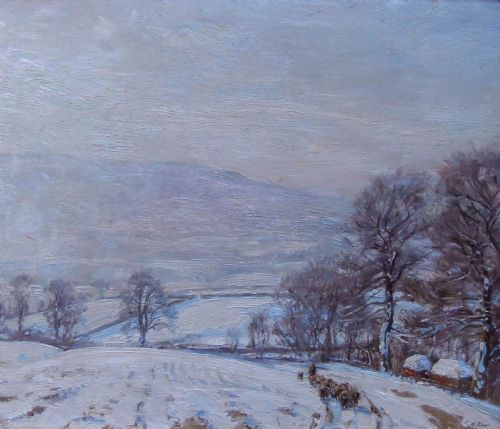
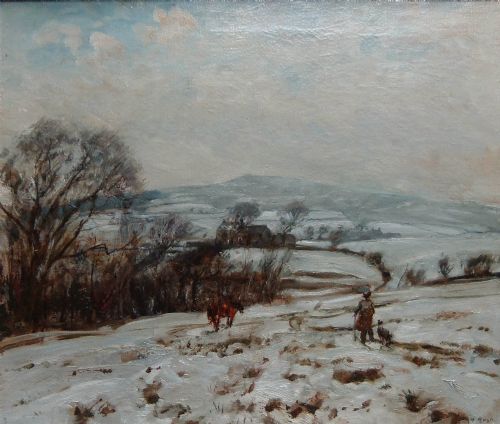


Snowy Landscape Oil Painting
A snowy landscape oil painting captures the quiet chill of winter, bringing traditional pastoral scenes and dramatic frost-bitten valleys directly onto your wall.
Snowy Landscape Oil Painting
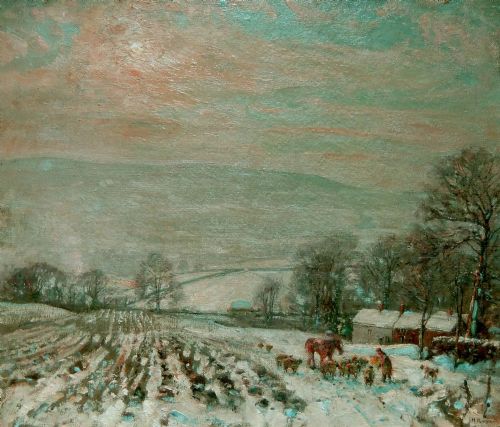
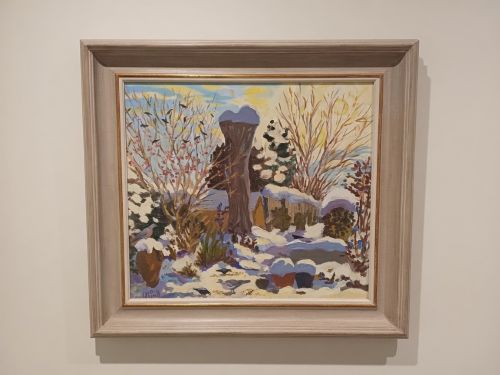
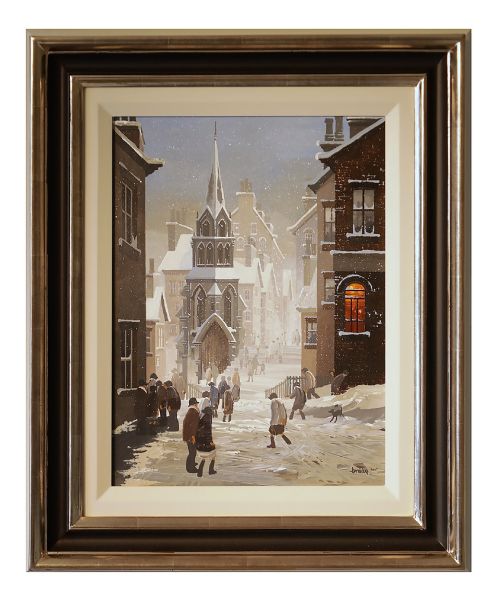
When you search for a snowy landscape oil painting, you find works executed on canvas and wood using oil paint, capturing cold weather scenes from the nineteenth century up to the modern era. These pieces frequently depict rural villages, livestock in snow, and quiet winter fields.
The most common examples on this page date from the nineteen-twenties, showcasing British Impressionism and traditional pastoral styles. They range from intimate depictions of Yorkshire valleys to broader winter vistas set in various European and Canadian locations.
Rural settings dominate the subject matter, with artists returning repeatedly to motifs like sheep droving, winter feeding, and snow-covered cottages. The works balance atmospheric lighting with the heavy textures characteristic of oil on canvas.
How they were made
Artists built these works using oil paint applied to canvas or wood panels, often framing the finished pieces in wood or giltwood frames. The medium allowed painters to build up thick layers of pigment to render the heavy texture of snow.
Brushwork varies from the smooth, careful applications found in nineteenth-century Victorian and Dutch School examples to the looser, more immediate strokes of British Impressionism and modern British works.
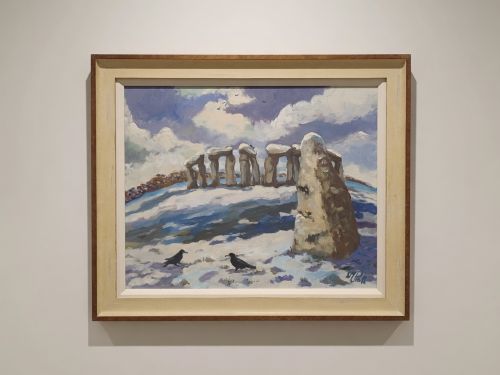
Several sheep make repeated appearances in the snow, faithfully trudging through Yorkshire winters and past Stonehenge.
What varies in quality
Quality in a snowy landscape oil painting lies in the artist's handling of light against white expanses and the structural integrity of the composition. Stronger works convey the biting atmosphere of winter through subtle colour shifts rather than flat white pigment.
The harmony between the canvas and its original frame often elevates a piece, as does the clarity of provenance linked to listed artists and recognised regional schools.
Herbert Royle·Lucy Pratt·Brian Shields Braaq·Charles Jones·Pieter Cornelis Steenhouwer·Ernest Higgins Rigg·John Richard Worsdale·Anthonij Anton Mauve·Carl Johansson
The Snowy Landscape Oil Painting Glossary
- Oil paint
- A slow-drying paint made from pigment particles suspended in a drying oil, commonly linseed. This medium allows for deep blending and rich textural buildup on canvas.
- Giltwood
- Wood carved and covered with a thin layer of gold leaf or gold paint. Frames of this material are frequently paired with traditional landscape paintings.
- British Impressionism
- A painting style developed in the late nineteenth and early twentieth centuries focusing on light and everyday subjects. It emphasises visible brushstrokes and natural illumination.
- Canvas
- A heavy woven fabric used as a surface for oil painting. It is typically stretched over a wooden frame before the artist begins working.
- Pastoral
- A genre of art depicting the rural countryside and agricultural life. These scenes often feature shepherds, livestock, and open fields.
Snowy Landscape Oil Painting: Frequently Asked Questions
Where should I hang a winter landscape?
These works suit rooms with steady temperature and humidity, away from direct sunlight and strong heat sources. Good ambient light helps bring out the subtle tones in the snow.
Pairing the painting with traditional or neutral wall colours allows the deep blues and whites of the winter scene to stand out clearly.
How do I identify the period of the painting?
Look at the framing materials, the style of the brushwork, and any inscriptions or signatures on the reverse of the canvas. Nineteenth-century works often feature tighter detail, while later pieces show looser impressionist tendencies.
Stretcher bars and canvas types also offer clues, as older pieces use hand-planed wood and heavier, tightly woven linen.
Why do winter scenes often feature livestock?
Animals provided a focal point for scale and narrative in traditional pastoral art, showing the resilience of rural life during harsh weather. Sheep droving and winter feeding were common daily tasks in the countryside.
Including cattle or sheep also created a warm contrast against the cold white and grey tones of snow-covered fields.