



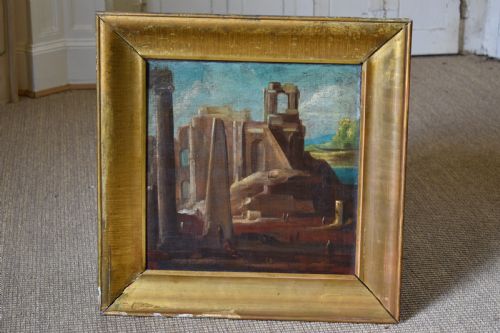
Blue Landscape Wall Art
Blue landscape wall art gathers paintings and tapestries spanning the nineteenth century to the modern era, offering serene views of rivers, coasts, and lakes.
Blue Landscape Wall Art
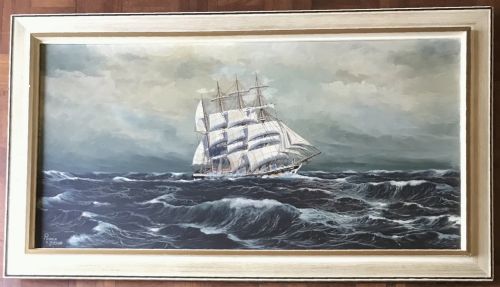
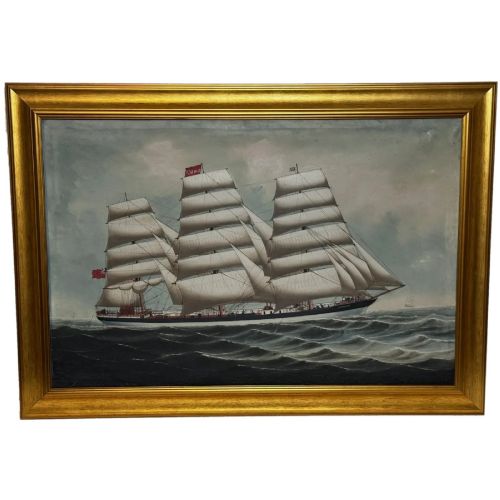
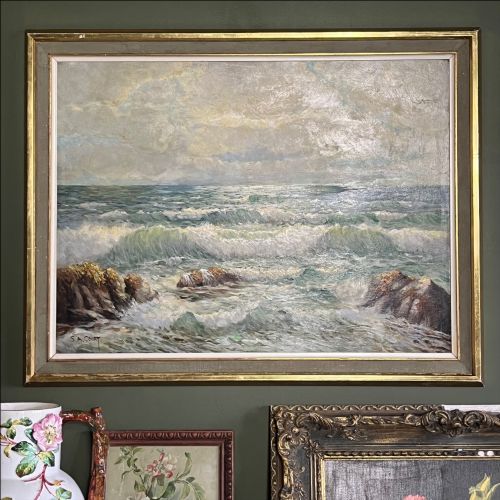
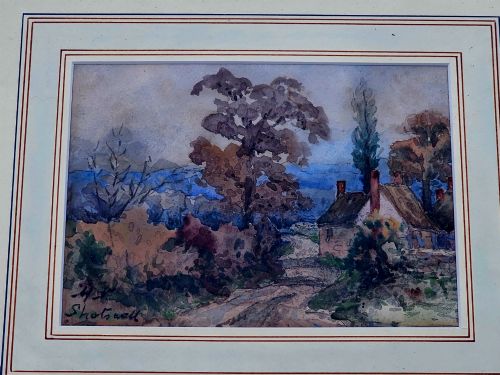
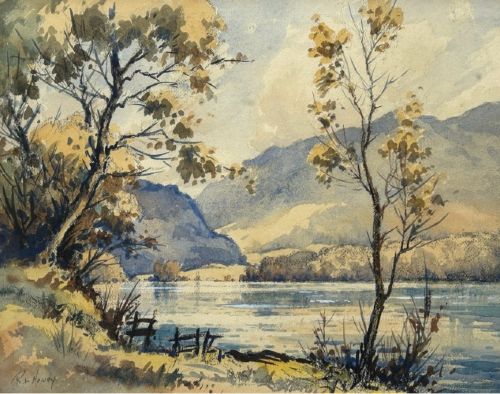
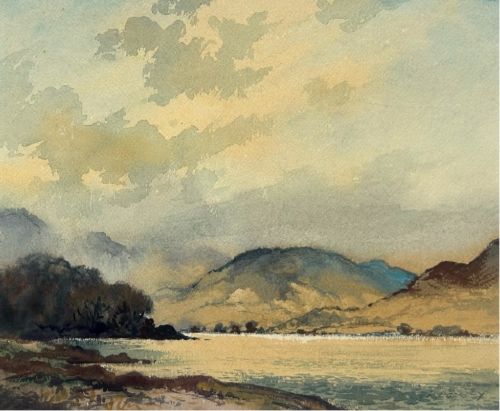
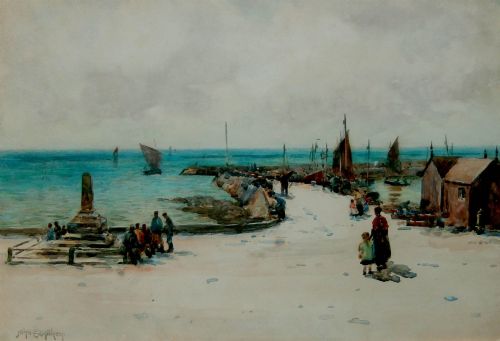
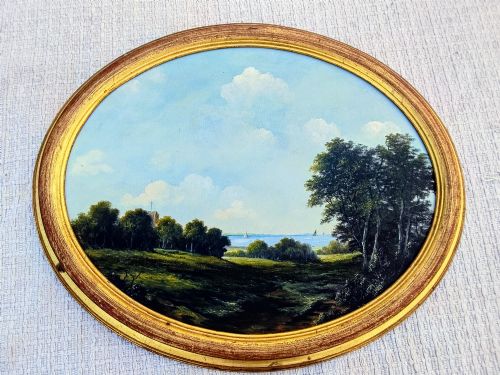
Blue landscape wall art comprises original paintings, watercolours, and wall tapestries created across the nineteenth and twentieth centuries. The selection ranges from Victorian coastal scenes and Edwardian watercolours to mid-twentieth-century oil paintings on canvas.
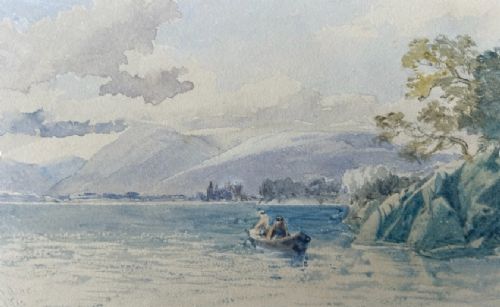
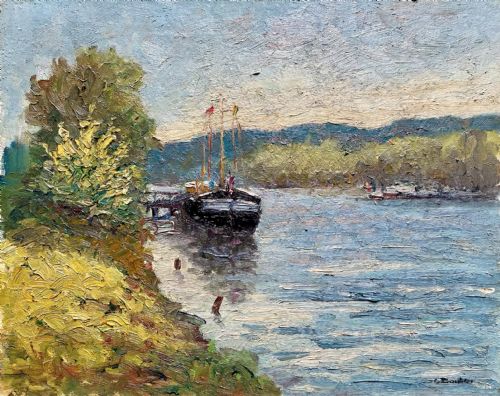
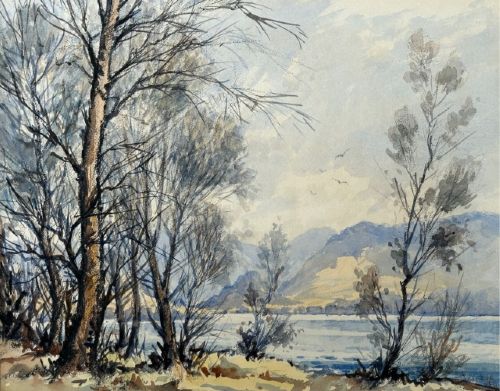
Buyers frequently encounter works depicting maritime views, river valleys, and lake districts rendered in distinct regional styles. These pieces capture settings such as Scottish lochs, Cornish harbours, and Venetian lagoons through the brush of individual artists.
The objects extend from intimate works on paper to large framed canvases and substantial French tapestries. Each piece records a specific topography interpreted through the prevailing aesthetic of its decade.
Materials and Technique
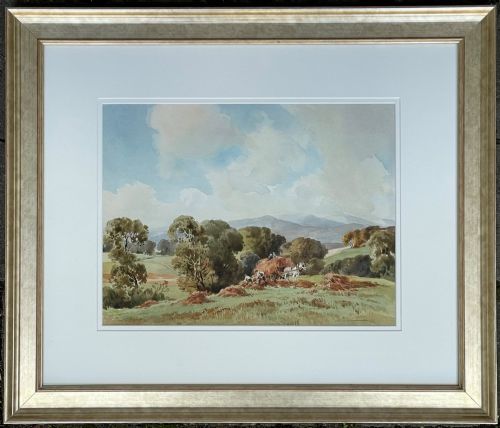
Makers utilised oil paint on canvas and watercolour pigment on paper, supported by wooden frames and glass glazing where appropriate. Aubusson examples employ woven textile threads to build large pictorial surfaces.
Artists applied oil paint en plein air or in studios, building texture and pigment depth across canvas supports. Watercolour works rely on controlled washes of pigment on paper to capture atmospheric light and water.
Wood provides the structure for stretchers and period frames, enclosing the canvas or paper support. Textiles form the structural base of woven tapestries depicting landscape scenes.
Among the coastal views and quiet lakes, a vintage poster advertising Dunlop bike tyres for the Tour de France makes a surprise appearance.
Execution and Composition
Quality rests upon the artist's handling of light, brushwork precision, and the balance of the composition. Stronger works demonstrate confident draughtsmanship and atmospheric depth.
The preservation of the pigment and support influences the integrity of the piece. Intact paper supports, stable canvas grounds, and original framing elements contribute to the standing of an artwork.
Thomas Miles Richardson Jnr·James Orrock·Alfred Young Nutt·Percy Lancaster·Reginald Arthur Borstel·Sidney A. Court·Robert Leslie Howey·John E. Aitken·William Banks Fortescue·Peter Brannan·Francis Moltino·Paul Bret·Bernard Benedict Hemy·Thomas Creswick·Albert Bierstadt·Alfred Wolmark·Eric Brown·Harry Kluge·Cecil Allan Mould·L. De Gent·William Matthison·William Henry Williamson·Lucy Pratt
The Blue Landscape Wall Art Glossary
- Watercolour
- A painting method where fine pigment is suspended in a water-based solution and applied to paper. This medium allows for translucent washes and delicate tonal shifts.
- En plein air
- A French term describing paintings executed outdoors to capture natural light directly. Artists working this way record immediate atmospheric conditions.
- Impressionism
- A nineteenth-century painting style focusing on transient effects of light and spontaneous brushstrokes. Practitioners sought to capture the visual sensation of a scene rather than rigid detail.
- Tapestry
- A heavy hand-woven textile featuring pictorial designs integrated into the fabric structure. These large wall hangings often depict pastoral or architectural scenes.
Blue Landscape Wall Art: Frequently Asked Questions
What periods do these pieces date from?
The works span from the nineteenth century through the Edwardian period and into the mid-twentieth century. Production dates cover specific decades including the eighteen-eighties, nineteen-tens, and nineteen-sixties.
Individual pieces reflect the artistic movements of their respective eras, moving from traditional Victorian views to post-impressionist interpretations.
How should I hang a large canvas?
Large canvases require secure wall fixings suited to the weight of the wooden stretcher and frame. Ensure the display location avoids direct sunlight to protect pigment integrity.
Position the centre of the artwork at eye level for optimal viewing within your interior space.
Are watercolours framed under glass?
Works on paper utilise glass glazing to protect the delicate pigment and paper support from dust and moisture. This barrier prevents airborne particles from settling directly onto the watercolour surface.
Frames often incorporate a card mount to separate the paper from the glass surface.
What subjects appear in these scenes?
The imagery focuses primarily on natural bodies of water, including coastal harbours, fishing boats, rivers, and lakes. Locations range from British coastal towns to Venetian lagoons and Italianate views.
Artists also recorded pastoral landscapes, floral gardens, and architectural settings near water.