
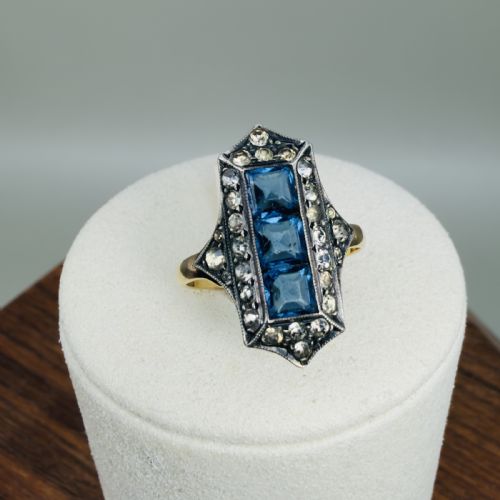


Blue Sapphire Plaque Ring
A blue sapphire plaque ring sits flat on the finger, bringing geometric lines and deep blue stones together in platinum and gold.
Blue Sapphire Plaque Ring
When you search for a blue sapphire plaque ring, you look at low, flat-topped designs that spread across the finger in geometric shapes. These pieces belong predominantly to the Art Deco and Edwardian eras, alongside later Retro and mid-century revivals.
The versions you meet most often on this page feature central blue sapphires flanked by diamonds, set within platinum or eighteen-carat gold. Forms range from elongated panels to square chequer clusters and pavé-set surfaces.
Origins stretch from the nineteen-twenties and nineteen-thirties back to the Edwardian period, with occasional nineteen-sixties interpretations. Each variation keeps the signature low profile that defines the plaque style.
How they were made
Maker workshops built these rings using platinum or eighteen-carat gold, often pairing white metals on top with yellow gold beneath. Platinum provided the strength needed for delicate, wire-like settings that held stones flush.
Goldsmiths set old-cut diamonds alongside blue sapphires in pavé and panel arrangements. Alternative materials such as white paste stones also appeared in silver-topped mounts during the period.
The periods represented span from the Edwardian era through Art Deco up to the nineteen-sixties.
What varies in quality
The distinction between tiers rests upon the precision of the metalwork and the integration of the stones. Finer examples display meticulous millegrain edges and seamless geometric symmetry in platinum.
Stone selection divides the range, with natural sapphires and old-cut diamonds occupying the upper tier while paste substitutes and simpler gold mounts form the rest.
The Blue Sapphire Plaque Ring Glossary
- Plaque ring
- A flat, ornamental ring design that sits low on the finger. It typically displays a wide geometric face covered in smaller gemstones.
- Art Deco
- A design style from the nineteen-twenties and nineteen-thirties. It relies on clean straight lines, symmetry, and geometric repetition.
- Pavé
- A setting technique where many small stones sit closely together. Tiny metal beads hold them in place so the surface resembles a road of stones.
- Old-cut diamond
- A diamond shape hand-faceted before modern cutting machinery existed. It possesses a smaller table and wider facets that catch candlelight softly.
- Millegrain
- A decorative technique using tiny raised metal beads along the edge of a setting. It adds a soft texture that frames the gemstones.
Blue Sapphire Plaque Ring: Frequently Asked Questions
How do I clean a blue sapphire plaque ring?
Warm soapy water and a soft brush remove everyday oils from the flat surface of the plaque. Take care around older platinum and gold settings.
Avoid harsh ultrasonic cleaners because they can loosen stones set tightly in delicate Edwardian or Art Deco frames.
Are these rings comfortable for daily wear?
The flat plaque profile sits snugly against the finger, making it less prone to catching on clothing than high-set solitaires. This shape suits regular wear.
Keep in mind that intricate millegrain work and delicate platinum wires need gentle treatment during heavy manual tasks.
What periods do these rings come from?
Most examples originate from the Edwardian era and the Art Deco period of the nineteen-twenties and nineteen-thirties. These decades favoured geometric platinum work.
Later mid-century and nineteen-sixties pieces also appear, offering bolder interpretations of the classic plaque format.
How do I tell sapphire from paste?
Natural sapphires feel cool to the touch and resist scratching from common household materials. Paste stones are glass substitutes.
Under magnification, paste may show tiny bubbles or rounded facet edges, whereas genuine sapphires display sharp crystal lines.