
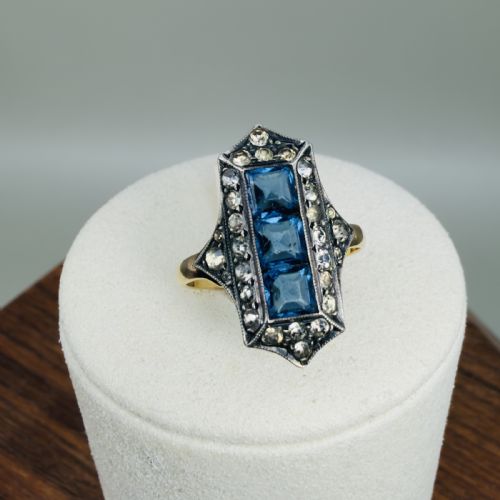


White Gold Plaque Ring
A white gold plaque ring brings flat geometric geometry and bright stones together, offering the distinct silhouette of the 1920s and 1930s.
White Gold Plaque Ring
A white gold plaque ring presents a flattened face across the finger, typical of the Art Deco period. These pieces originate primarily from the 1920s and 1930s, with later interpretations appearing from the 1960s.
The form relies on an elongated or cluster setting mounted on a band of 18ct gold, 18ct white gold, or silver. Jewellers shaped these frames into rectangular, chequer, or marquise profiles to display diamonds alongside sapphires or rubies.
Dress rings dominate this selection, offering substantial geometric presence on the hand. Buyers encounter combinations of old cut diamonds, white paste stones, and French cut rubies set within these flat surfaces.
How they were made
Maker workshops constructed these rings using 18ct gold, 18ct white gold, and silver. Platinum also appears in the mounting of stones to secure fine settings.
Craftsmen set old cut diamonds, sapphires, rubies, and white paste stones directly into the metal plate. The arrangement often incorporates cluster and three stone layouts across elongated geometric designs.
Listings feature items spanning the 1920s, 1930s, and 1960s. Materials include diamond, sapphire, ruby, paste, platinum, silver, and 18ct gold.
What varies in quality
The distinction between pieces rests on the precision of the geometric plaque and the integration of the central stones. Finer examples maintain crisp angles in rectangular and marquise settings without distortion of the metal.
Stone selection divides the range, moving from paste substitutions to certified diamonds paired with natural sapphires and rubies. The crispness of the old cut faceting dictates the visual depth of the face.
The White Gold Plaque Ring Glossary
- Plaque ring
- A ring featuring a flat, ornamented panel or plate resting horizontally on the finger. This layout provides a wide canvas for pavé or cluster stone settings.
- Art Deco
- The dominant design style of the 1920s and 1930s characterised by symmetry, geometric lines, and stylised motifs. It moves away from organic curves toward rigid architectural forms.
- Old cut diamond
- A precursor to the modern brilliant cut diamond, featuring a smaller table, higher crown, and open culet. These stones catch candlelight differently than modern cuts.
- Marquise
- A boat shaped gemstone or setting shape featuring pointed ends and curved sides. This silhouette elongates the appearance of the finger.
- French cut
- A square or rectangular gemstone cut with a high crown and a small table, often used in geometric borders. It creates a distinct tiled pattern across the metal.
White Gold Plaque Ring: Frequently Asked Questions
What is a plaque ring?
A plaque ring is a piece featuring a flat, wide surface that sits horizontally across the finger. This format displays geometric patterns formed by diamonds and coloured stones.
Such designs emerged strongly during the Art Deco era of the 1920s and 1930s. The flat plate allows jewellers to create intricate mosaic patterns using contrasting materials.
How do I date these rings?
Dating relies on material combinations, cutting styles, and structural motifs found within the piece. Art Deco examples from the 1920s and 1930s utilise specific geometric arrangements and old cut diamonds.
Later interpretations from the 1960s adopt similar aesthetic codes while showing different internal wear and metal treatments. Examining the construction of the plaque helps place the piece correctly.
Are these rings suitable for daily wear?
These dress rings function well for regular wear provided the stone settings remain secure. The flat plaque profile prevents the stones from catching excessively on clothing.
Periodic inspection by a jeweller ensures the claws holding the diamonds and sapphires stay firm. Gentle cleaning preserves the metal and stone surfaces.
What stones are used in these rings?
Diamonds form the primary white stone component, alongside white paste alternatives found in period pieces. Old cut stones provide the characteristic sparkle associated with these decades.
Sapphires and rubies supply the primary colour contrast, often cut in French styles or cluster arrangements. These coloured gems anchor the geometric patterns of the plaque.