



Blue Salt Glazed Jug
A blue salt glazed jug brings robust stoneware texture and striking cobalt decoration into any room.
Blue Salt Glazed Jug
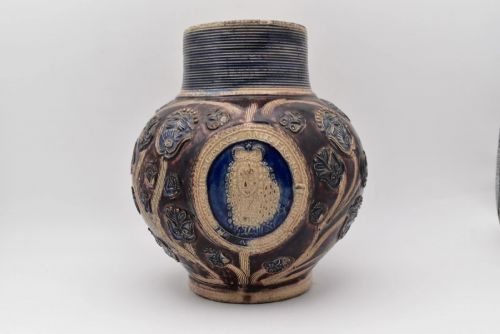
A blue salt glazed jug is a sturdy ceramic vessel defined by its textured surface and cobalt or manganese coloration. These items span various eras, including the seventeenth century, the eighteenth century, and the Victorian period.
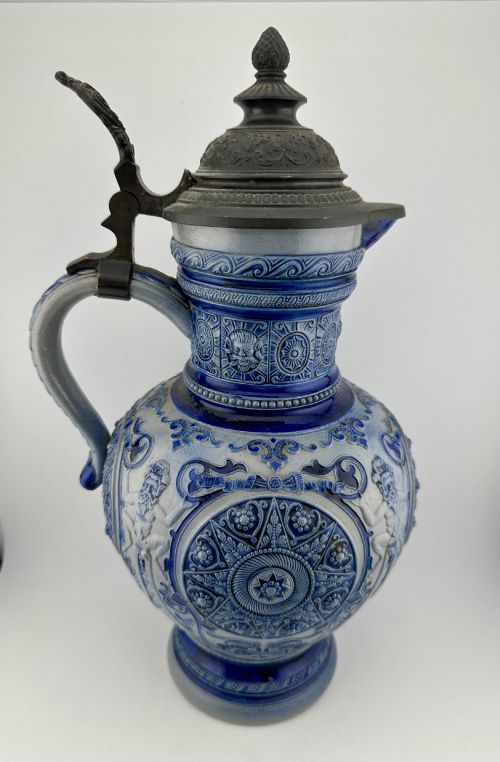
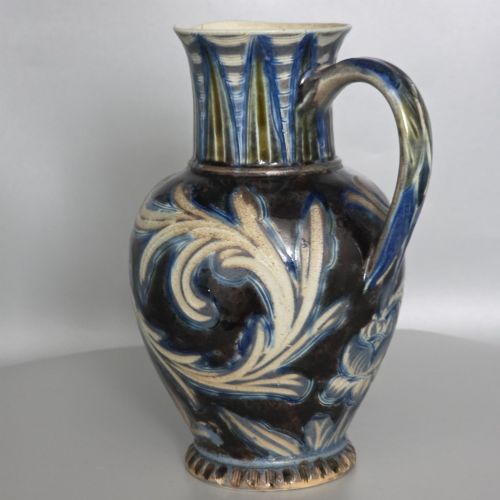
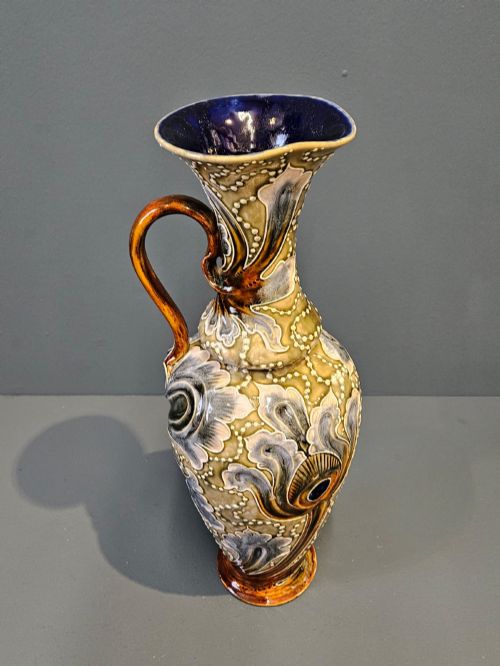
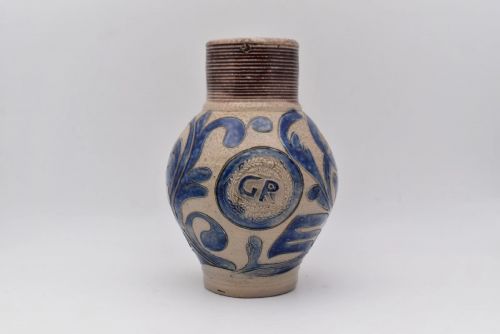
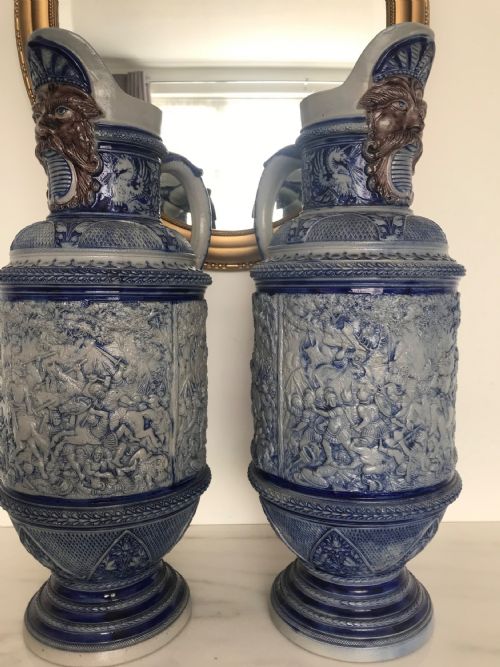
Collectors most frequently encounter Victorian Doulton Lambeth pieces and German Westerwald productions on this page. Forms range from large ewers and water jugs to pitcher jugs and decorative vessels.
German historical examples feature intricate moulded details like royal ciphers or battle scenes, whilst British Arts and Crafts and Art Nouveau items display incised botanical ornamentation.
How they were made
Potters shaped dense clay into jugs and pitchers, applying cobalt and manganese oxides for the characteristic blue tones before firing. Common materials include stoneware, ceramic, and salt-glazed stoneware.
During the high heat of the kiln, common salt was thrown into the fire to react with the silica in the clay. This process created a durable, pitted surface finish known as salt glaze.
Blue Salt Glazed Jug Retail Price Guide 2026
Typical asking prices for blue salt glazed jug among the pieces listed under this phrase on Sellingantiques today, from the lower quarter to the upper quarter. They describe what is for sale here now, not the wider market.
Listings feature salt-glazed stoneware from the seventeenth century up to the twentieth century, highlighting Westerwald and Doulton Lambeth production.
What varies in quality
Quality depends heavily on the crispness of the moulded relief work and the depth of the incised studio pottery decoration. Pieces bearing clear maker stamps or artist signatures generally stand out.
The vibrancy of the cobalt blue glaze and the overall balance of the pear shape or ewer form influence the visual appeal and desirability of each vessel.
Doulton Lambeth·Simon Peter Gerz·Emma Shute
The Blue Salt Glazed Jug Glossary
- Salt-glazed stoneware
- A hard, impermeable ceramic body with a distinctive pebbled texture created by introducing salt during the kiln firing. This finish protects the vessel against liquids and wear.
- Cobalt
- A metallic oxide used to produce rich blue decoration under the glaze. It remains stable at high kiln temperatures.
- Ewer
- A large jug with a wide spout and curved handle, traditionally used for holding and pouring water. Many antique examples serve a purely decorative function.
- Manganese
- A mineral oxide utilised by potters to achieve deep brown or purple tones alongside blue salt glaze. It often highlights incised patterns.
- Historismus
- A nineteenth-century German artistic style that revivalistically mimics historical periods like the Baroque. It frequently appears on Westerwald salt-glazed jugs.
Blue Salt Glazed Jug: Frequently Asked Questions
How do I date a salt glazed jug?
Examine the decorative motifs, such as royal ciphers or specific Art Nouveau patterns, which often align with documented periods like the Victorian era or the seventeenth century. Maker marks and studio stamps also provide a reliable guide to the decade of manufacture.
Material composition and manufacturing techniques evolved over the centuries, helping experienced collectors distinguish early German Westerwald salt glaze from later British studio pottery.
Can I use these jugs for water?
Many of these robust stoneware vessels remain entirely watertight due to the vitrified nature of salt-glazed ceramic. However, collectors often display them as decorative art pieces rather than putting them to daily use.
Checking the interior for any hairline cracks ensures safety if you decide to fill a water jug or ewer for a table setting.
What is Westerwald stoneware?
Westerwald stoneware originates from a famous German pottery region known for producing grey and blue salt-glazed vessels. These pieces typically feature stamped ornamentation and rich cobalt blue highlights.
Early examples often incorporate historical portraits or armorial bearings, making them sought-after items for historical ceramics collectors.
How do I clean a salt glazed jug?
Dust the textured surface gently with a soft, dry cloth to remove everyday particles. Avoid harsh chemical cleaners that might penetrate the historic salt glaze.
For safe maintenance, warm water and a mild soap applied with a soft brush will suffice for removing any accumulated dust from deep incised patterns.