




Blue Religious Artwork
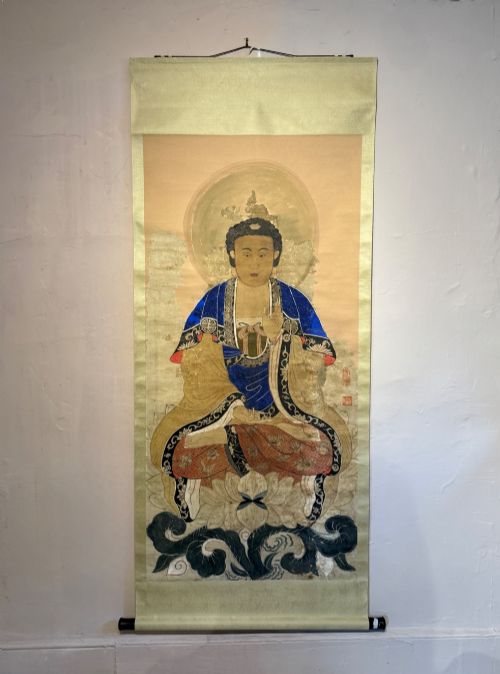
These blue religious artwork pieces bring centuries of devotional craft into your home through paintings, glass and panels.
Blue Religious Artwork
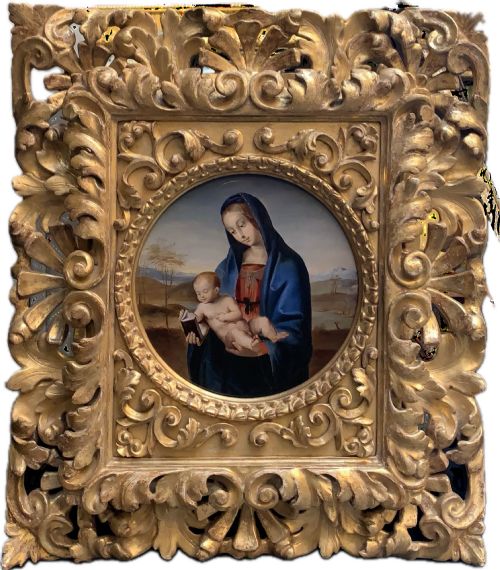
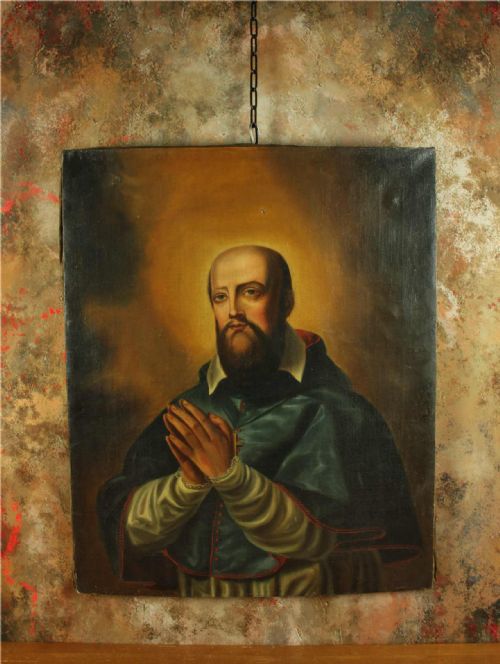
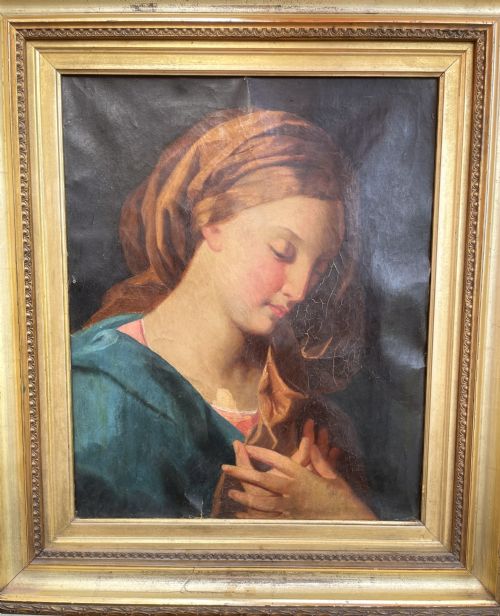
When you search for blue religious artwork, you encounter centuries of devotional imagery rendered in oil, glass and textile. These pieces span periods from pre-sixteenth century panels to mid-century modern interpretations.
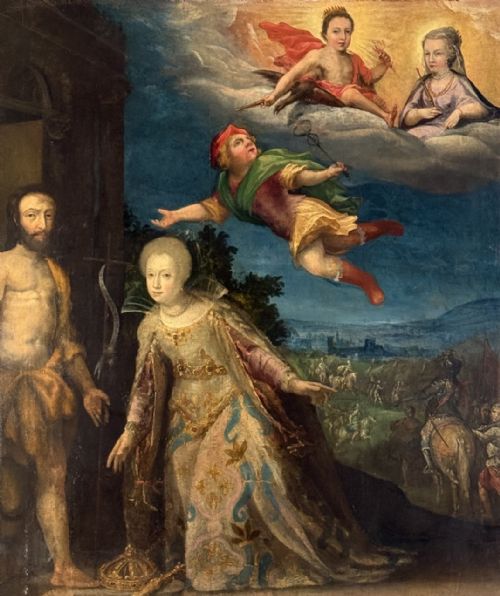
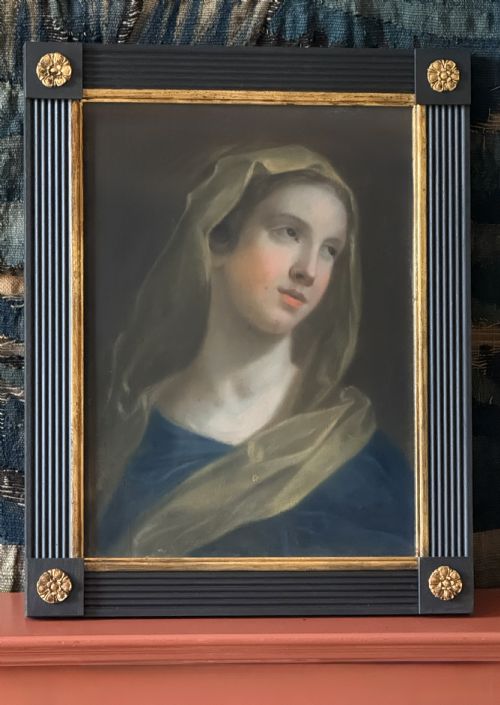
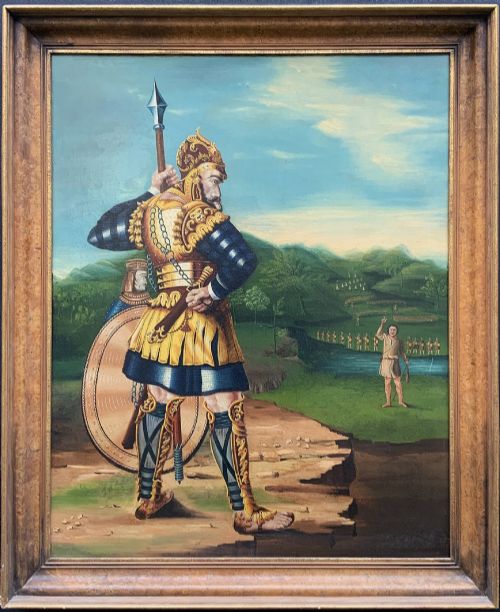
The most common forms you meet on this page are oil paintings on canvas or wood, alongside stained glass panels and framed textile art. Subjects range from the Madonna and child to biblical narratives like David and Goliath.
Origins stretch across European traditions, including Italian schools and British workshops. Makers include followers of master painters and named artists such as L.S. Wren.
Materials and techniques
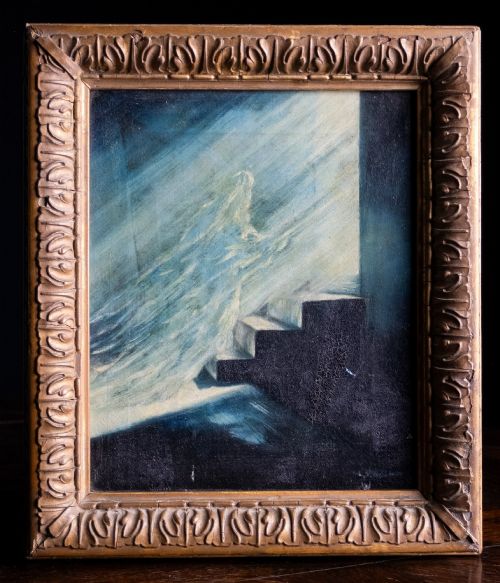
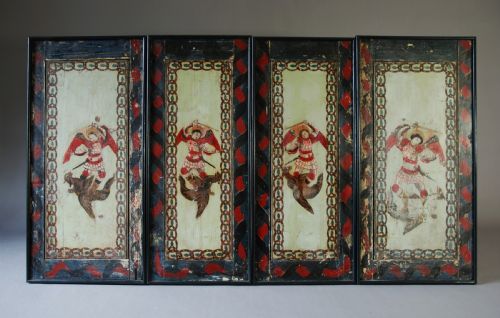
Painters utilised oil paint and pastel upon canvases, fruitwood panels and pine boards. Pigments created deep blue tones for sacred figures, often enhanced with gilt or gilded wood frames.
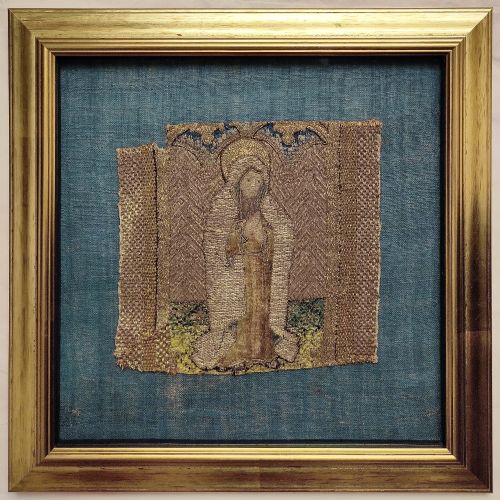
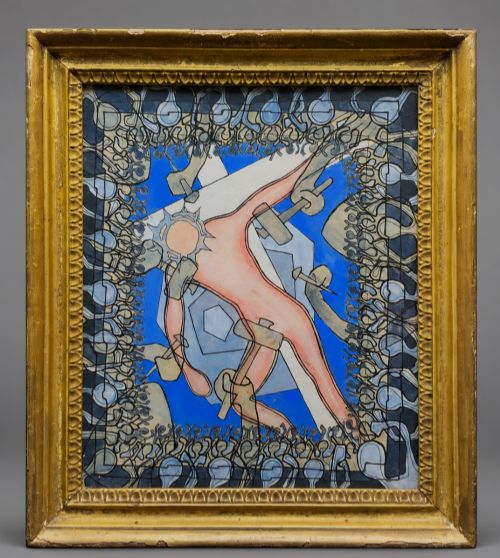
Stained glass panels employed lead cames to hold coloured glass pieces together, capturing light through translucent hues. Needlework created opus anglicanum textiles using fine threads.
Blue Religious Artwork Retail Price Guide 2026
Typical asking prices for blue religious artwork among the pieces listed under this phrase on Sellingantiques today, from the lower quarter to the upper quarter. They describe what is for sale here now, not the wider market.
Materials across these listings span oil on canvas, fruitwood panels, stained glass and Opus Anglicanum.
Quality and execution
The distinction between pieces rests upon the confidence of the brushwork and the depth of the composition. Master interpretations and studio works show greater anatomical precision and tonal control.
Materials also separate examples, where fruitwood or old canvas carry aged patina distinct from decorative pine panels. The handling of blue pigments determines the visual impact of the sacred subject.
L.S. Wren·Siegfried Bendixen·Benedetto Luti·Pompeo Batoni·Raffaello Sanzio Da Urbino
The Blue Religious Artwork Glossary
- Opus anglicanum
- Fine English needlework famous throughout medieval Europe for intricate ecclesiastical embroidery. It often incorporated gold and silver thread upon rich fabrics.
- Reverse glass painting
- An artistic technique where the image is painted directly onto the back of a glass pane. Viewed from the front, the colours possess a glossy brilliance.
- Stained glass
- Glass coloured by adding metallic salts during its manufacture, traditionally assembled into panels using lead strips. These were used in windows and decorative architectural settings.
- Fruitwood
- Dense timber harvested from fruit-bearing trees such as pear or apple, utilised for small panel paintings. It provided a smooth, stable surface for fine detail.
Blue Religious Artwork: Frequently Asked Questions
How are religious oil paintings cleaned?
Surface dust is gently removed using a soft, dry brush without applying moisture. Professional conservators handle deeper cleaning to protect old paint layers.
Avoid household cleaning products entirely when maintaining antique canvases and painted wood panels.
Where should I hang stained glass panels?
Stained glass requires natural light to reveal its colours fully, making window placements ideal. Hanging brackets must support the weight securely.
Artificial backlighting can substitute if window placement is impractical in your room layout.
How do I identify a fruitwood panel?
Fruitwood panels present a tight, fine grain without prominent growth rings. They feel heavy and dense compared to softwoods like pine.
Conservators often identify the specific wood species during restoration work on old master paintings.
What defines Victorian symbolism in art?
Victorian symbolism employs allegorical imagery to convey spiritual or moral concepts. Artists used specific motifs and deep colour palettes to evoke contemplation.
This style builds upon earlier religious traditions while introducing nineteenth-century aesthetic concerns.