
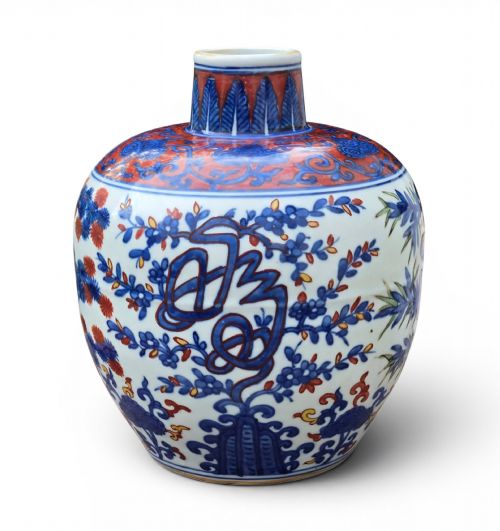


Blue Red Porcelain Vessel
These pieces of blue red porcelain vessel encompass centuries of ceramic craft, offering striking colour combinations for any interior.
Blue Red Porcelain Vessel
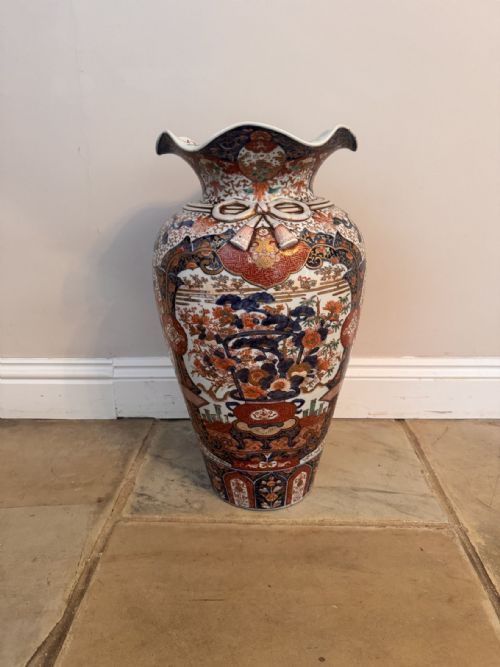
A blue red porcelain vessel brings together contrasting mineral pigments on a vitrified ceramic body, ranging from large floor-standing containers to small scholar's objects. When you search for a blue red porcelain vessel, you encounter items shaped as vases, ginger jars, covered jars, bowls, dishes, incense burners, and jardinières. The selection spans the sixteenth century through the Edwardian era, drawing from Chinese imperial kilns and Japanese Meiji production.
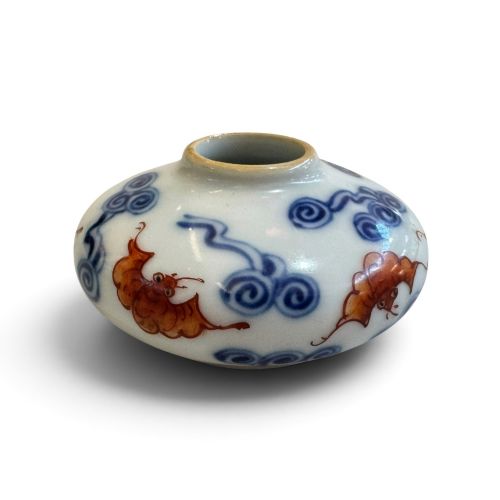
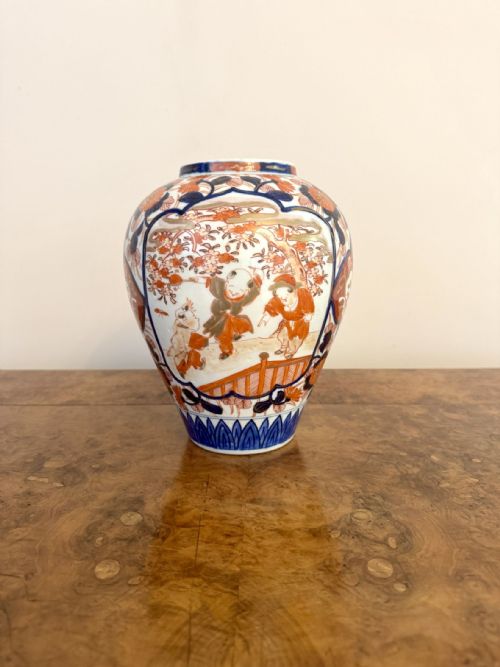
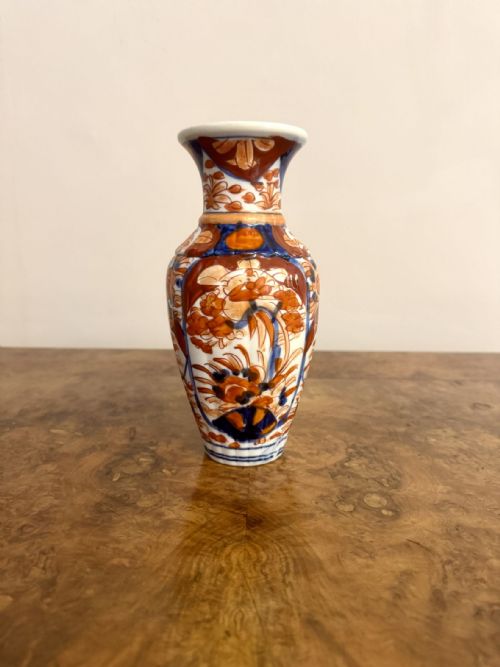
Japanese Imari pieces dominate the current selection, originating from the nineteenth and early twentieth centuries. These forms include hexagonal vases, boat-shaped dishes, and lidded jars decorated with cobalt glaze and iron-red enamel. Alongside these, Chinese porcelain works from the Ming and Qing dynasties represent earlier centuries, incorporating underglaze red motifs like bats, clouds, and longevity symbols.
How they were made
The makers formed these objects from refined white clay, applying mineral pigments beneath or over a clear glaze before firing them at high temperatures in kilns. Cobalt provided the deep blue tones, while iron-red enamel supplied the contrasting rust-red hues often paired with gilt or gold leaf detailing. Metal mounts occasionally complete the composition on lidded jars and incense burners.
Moulding and ribbing shaped the clay bodies of vases and bowls before artisans added hand-painted decoration. Artisans applied intricate patterns involving bamboo, longevity symbols, and bats, fusing the enamel and glaze to the porcelain surface during the firing process.
Bats painted on imperial porcelain flutter forever in iron-red, offering a silent wish for boundless happiness to whoever gazes upon them.
What varies in quality
Precision of brushwork and depth of pigment application separate standard production from superior pieces. The sharpness of the underglaze blue and the crispness of the iron-red enamel determine the visual impact of the decoration. Surface embellishments such as gold leaf application show varying degrees of hand-finished refinement.
The complexity of the vessel form dictates the skill required by the potter. Hexagonal shapes, ribbed bodies, and moulded contours demand greater technical control during shaping and firing than simple rounded vessels.
The Blue Red Porcelain Vessel Glossary
- Imari
- A style of Japanese porcelain exported from the port of Imari, traditionally decorated in underglaze blue, iron-red enamel, and gold. This aesthetic became popular in Europe during the nineteenth century.
- Koro
- A Japanese incense burner, typically fitted with a pierced cover to allow scented smoke to escape. These vessels often feature three or more feet and decorative handles.
- Underglaze red
- A decorative technique where copper-bearing pigments are applied to the unglazed porcelain body before glazing and high-temperature firing. Achieving a clear red tone requires precise kiln atmosphere control.
- Jardinière
- A large ornamental pot or container designed to hold growing plants or flowers. Oval and round forms appear frequently in nineteenth-century Japanese ceramics.
- Ginger jar
- A covered porcelain storage jar with a broad rounded shoulder and tapering base. Originally used for spices, these pieces later served purely decorative purposes.
Blue Red Porcelain Vessel: Frequently Asked Questions
What is a blue red porcelain vessel?
A blue red porcelain vessel is a ceramic piece decorated with cobalt blue and iron-red pigments under or over the glaze. These items include jars, vases, bowls, and incense burners originating from Chinese and Japanese kilns.
Such vessels combine functional forms with decorative painting traditions spanning several centuries, from the Ming dynasty to the Edwardian period.
How do I care for antique porcelain?
Clean antique porcelain gently using a soft, dry cloth or lukewarm water with mild soap if necessary. Avoid abrasive sponges or harsh chemicals that can damage the enamel and gold leaf.
Keep fragile vessels away from direct sunlight and areas subject to sudden temperature fluctuations to protect the glaze and body.
Where were these porcelain vessels made?
These pieces originated in the kilns of China and Japan, produced during various imperial dynasties and eras such as the Qing and Meiji periods. Chinese pieces often showcase underglaze red painting, while Japanese works frequently follow Imari traditions.
Export networks distributed these ceramics across international markets, leading to their presence in Western collections.