


Blue Porcelain Table Lamp
A blue porcelain table lamp combines centuries-old ceramic vessels with functional lighting, bringing decorative depth and historical character to a room.
Blue Porcelain Table Lamp
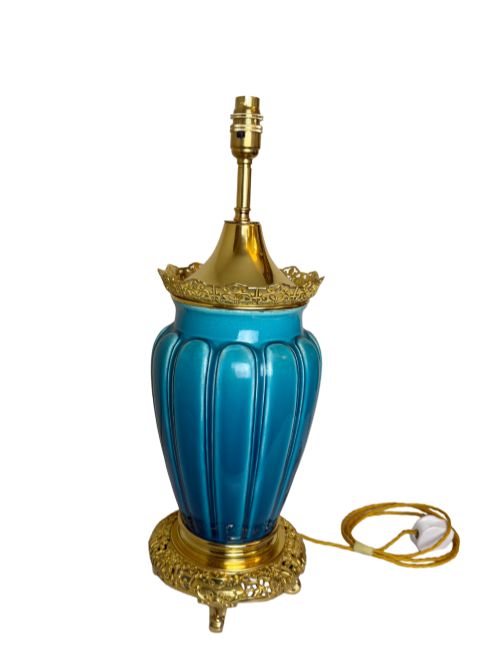
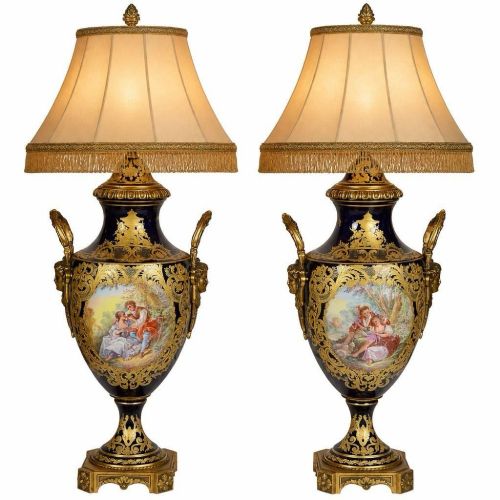
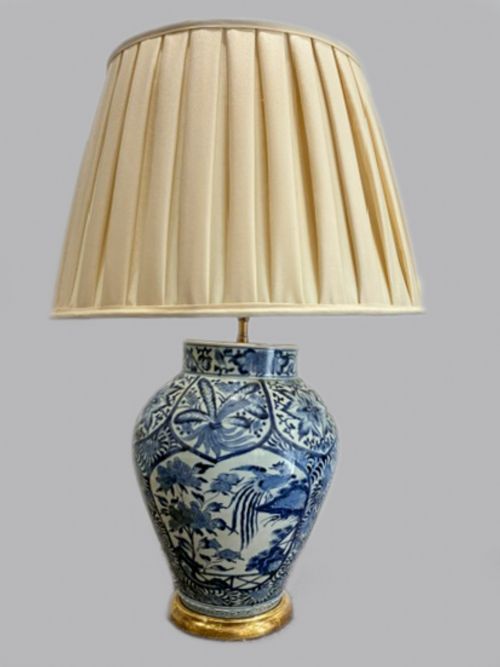
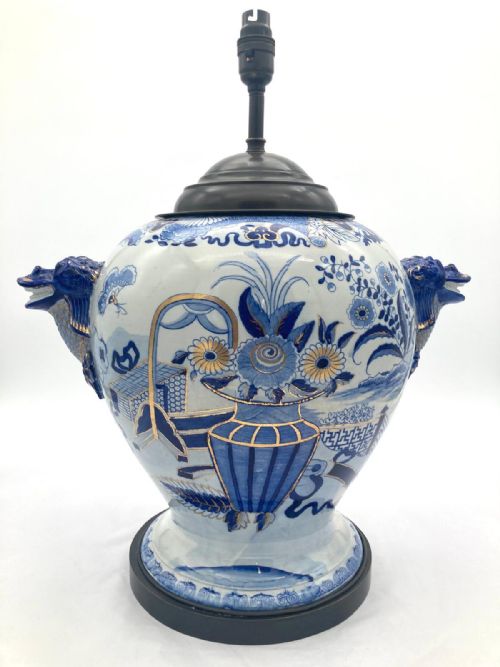
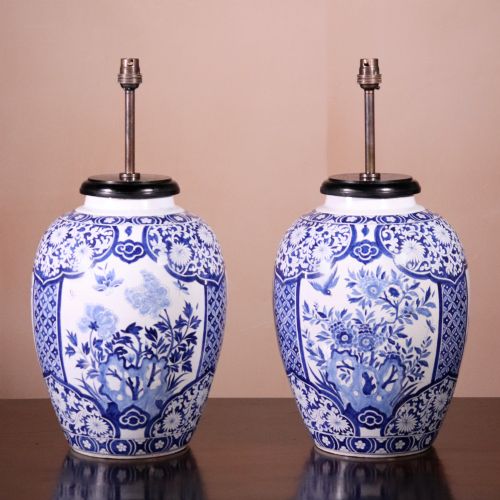
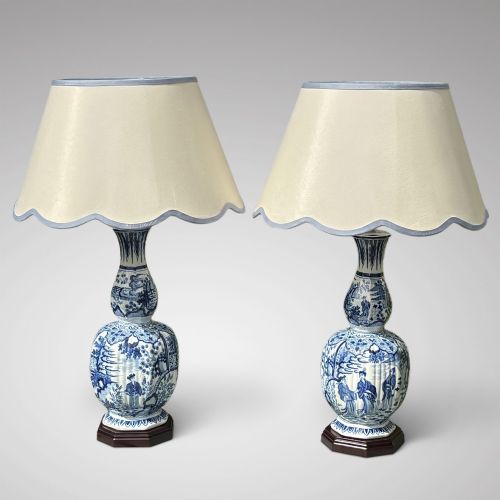
A blue porcelain table lamp typically originates as an earlier ceramic vessel, such as a ginger jar, vase, or bottle, which is subsequently adapted for electrical illumination. These bodies span Chinese export wares, Japanese Satsuma and Imari pieces, Dutch Delft earthenware, and French Sevres porcelain.
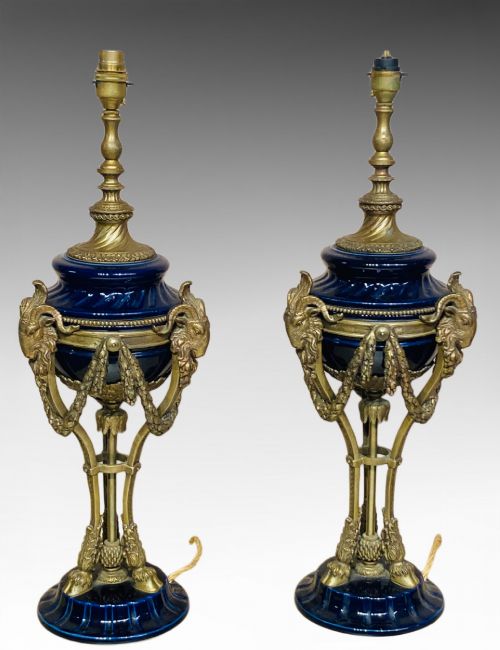
The selection ranges from 17th-century Japanese vases to 19th-century Chinese blue and white porcelain and 20th-century Art Deco creations. Many examples are found as balanced pairs, often incorporating historical styles like Chinoiserie and French Chateau.
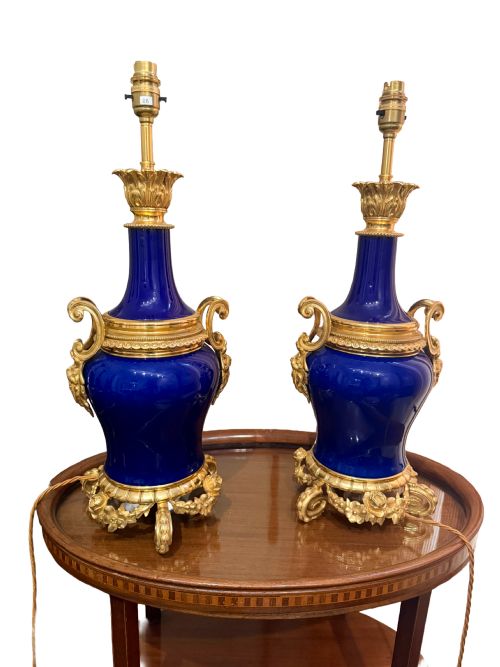
Conversions often integrate metal mounts or bases made from brass, gilt bronze, or ormolu, occasionally accompanied by handmade fabric or silk shades.
Materials and Construction
The primary material is fired porcelain or ceramic, frequently decorated with cobalt blue pigments under a transparent glaze or overglazed with intricate hand-painted designs. Crackleware finishes and celadon glazes also appear across the selection.
Metal components such as ormolu, gilt bronze, and brass form the bases, decorative collars, and mountings that secure the ceramic body and house the electrical fittings. Silk and fabric are utilised for complementary shades.
Blue Porcelain Table Lamp Retail Price Guide 2026
Typical asking prices for blue porcelain table lamp among the pieces listed under this phrase on Sellingantiques today, from the lower quarter to the upper quarter. They describe what is for sale here now, not the wider market.
Several unfortunate ginger jars surrendered their dignity to an electrician's drill bit, finding a second career as illuminated companions.
Assessing Quality
Quality rests upon the artistic merit and preservation of the original ceramic vessel, alongside the precision of the metal mounts. Hand-painted details with sharp definition and depth indicate superior craftsmanship.
The harmony between the converted vessel and its ormolu or brass mountings defines the piece. Finer examples display securely integrated hardware that respects the historical integrity of the porcelain without damaging the body.
Hicks and Meigh·Sevres
The Blue Porcelain Table Lamp Glossary
- Ormolu
- Gilded bronze mounts applied to furniture, clocks, and porcelain lamps, popular in French decorative arts. The technique involves applying a mercury and gold amalgam to cast bronze.
- Celadon
- A term for pottery denoting both wares glazed in jade green and the green glaze itself, originating in China. It frequently accompanies blue and white decoration in historical pieces.
- Imari
- A type of Japanese porcelain decorated in underglaze blue and overglaze red, gold, and green, produced in the town of Arita. These export wares were widely adapted into European lighting.
- Cloisonne
- An ancient technique for decorating metalwork objects with colourful materials separated by strips of metal. On lamps, this appears as intricate wirework panels alongside porcelain bodies.
- Ginger Jar
- A high-shouldered ceramic storage jar with a domed cover, originating in ancient China for holding spices. These vessels are frequently converted into the bases for table lamps.
Blue Porcelain Table Lamp: Frequently Asked Questions
How do I date a blue porcelain table lamp?
Dating relies primarily on the style, glaze, and potting characteristics of the ceramic body rather than the electrical components, which are usually modern replacements. Examining the base, mark, and painting technique helps determine whether the vessel is 17th-century Japanese, 18th-century Delft, or 19th-century Chinese.
Metal mounts also provide clues, as ormolu and gilt bronze styles shifted from Louis XVI revivals to Art Deco designs over the centuries.
Were these always electric lamps?
Most of these pieces started life as decorative vases, ginger jars, or oil lamps before being converted into electrical table lamps later in their existence. The conversion process often involved drilling a small aperture through the base for wiring and securing metal collars to the neck.
This adaptation preserves the decorative value of antique ceramics while allowing them to function in modern interiors.
How do I style a pair of antique lamp bases?
Pairs of ceramic lamps work effectively on large sideboards, mantels, or bedside tables where symmetry enhances the room's balance. Matching silk or fabric shades help unify the visual weight of the porcelain bodies.
Their substantial height and decorative blue patterns make them natural focal points within traditional or eclectic living spaces.
What is the difference between Delft and Chinese porcelain?
Delftware is European tin-glazed earthenware produced in the Netherlands, imitating the blue and white aesthetic of imported Asian ceramics. True porcelain is a dense, vitrified ceramic fired at higher temperatures, characteristic of Chinese and Japanese imports.
While both display blue decoration, porcelain possesses a more translucent body and greater durability than earthenware.