





Blue Pine Cupboard
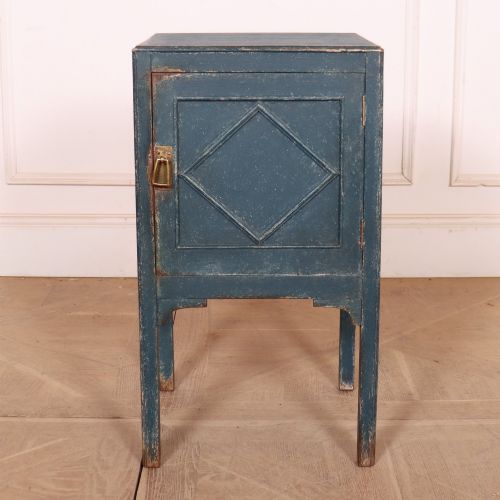
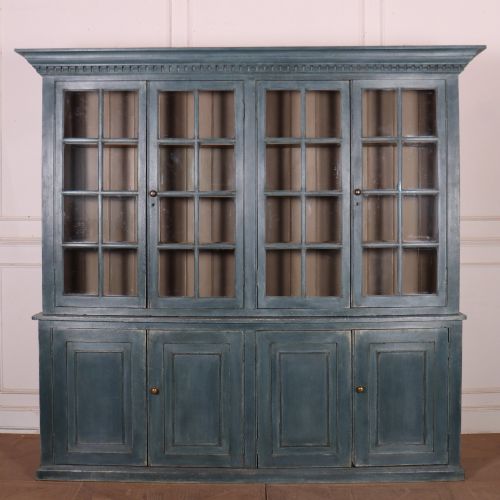
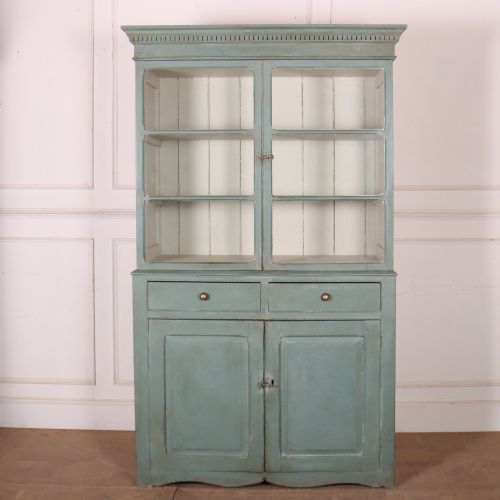
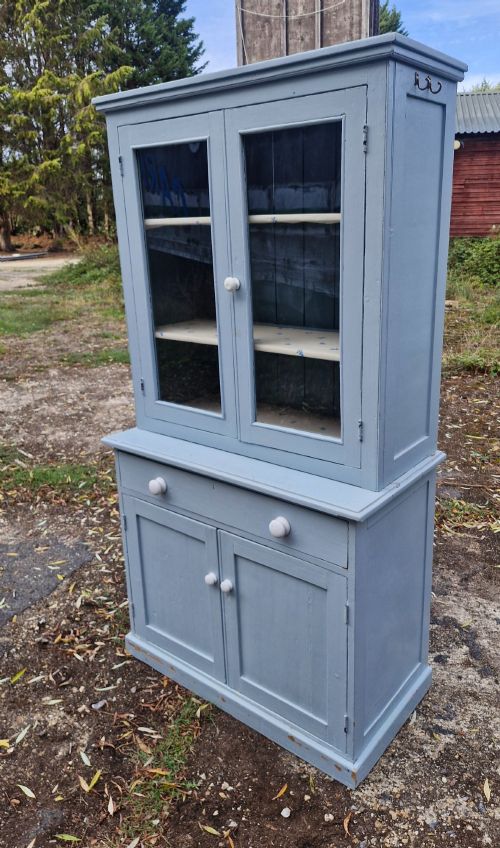
A blue pine cupboard brings practical country utility and striking historical pigment into a room.
Blue Pine Cupboard
A blue pine cupboard encompasses a range of storage furniture including kitchen dressers, bedside cabinets, linen cupboards, and wall-mounted units shaped by regional vernacular traditions. These pieces span the eighteenth century, the nineteenth century, the Victorian era, and early twentieth-century workshops.
The regional variety runs from English and Scottish country workshops to West Country vernacular pieces, alongside substantial Scandinavian, Swedish, Finnish, Austrian, and Austro-Hungarian examples. Domestic storage needs determined the forms, resulting in pieces built for kitchens, hallways, and bedrooms.
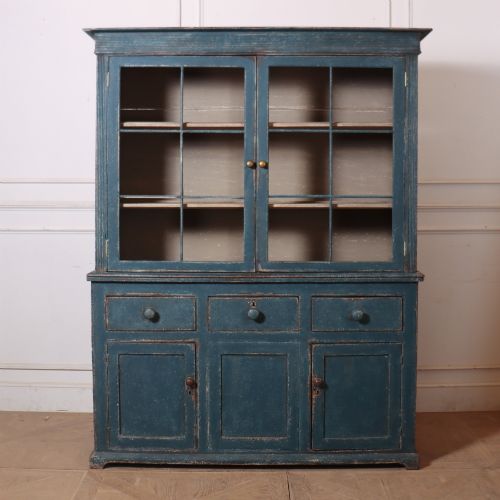
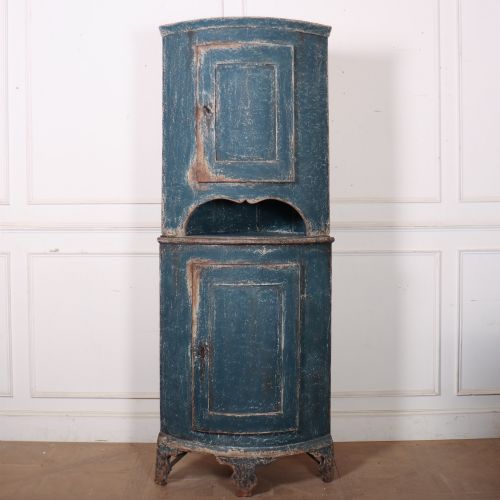
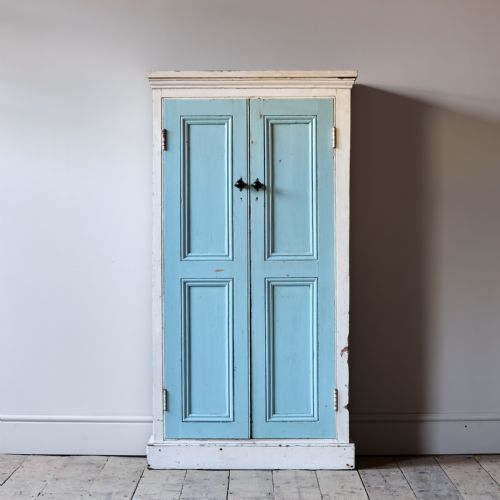
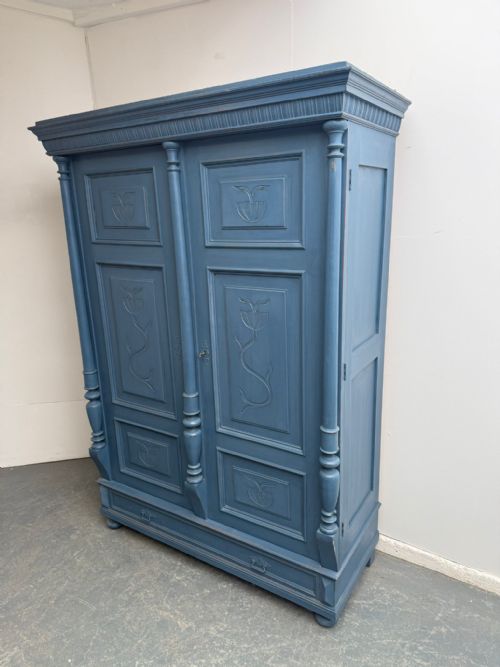
The primary versions met here wear historic blue or green painted surfaces, ranging from scraped original finishes to folk art decoration and ragwork techniques. Formats extend from compact wall cupboards and corner units to two-part kitchen cupboards, tall hall wardrobes, and marriage armoires.
Construction and surface
Carpenters constructed these cabinets primarily from solid pine, utilising iron and brass hardware such as hinges, hooks, and latches to secure doors and drawers. Construction methods relied on traditional joinery suited to regional vernacular furniture making.
Makers applied layers of paint to the pine surfaces, sometimes incorporating carved details or glazing with glass panels. Over generations, these painted finishes acquired natural wear, patination, and traces of earlier pigment schemes beneath top layers.
Blue Pine Cupboard Retail Price Guide 2026
Typical asking prices for blue pine cupboard among the pieces listed under this phrase on Sellingantiques today, from the lower quarter to the upper quarter. They describe what is for sale here now, not the wider market.
Some nineteenth-century marriage armoires carried so much hopeful blue paint that future generations spent decades trying to scrape down to the romance.
Evaluating quality and character
The integrity of the original painted surface dictates much of the distinction between examples, particularly where scraped pigment or folk art details survive intact. Untouched regional finishes with authentic age carry greater visual depth than later repainting.
Structural proportions and regional casework details separate standard utility furniture from finer vernacular pieces. Well-balanced cornices, original iron or brass fittings, and clean integration of panel doors reflect the skill of the original country maker.
The Blue Pine Cupboard Glossary
- Vernacular furniture
- Domestic pieces made by local tradesmen for regional use rather than high-style metropolitan workshops. These items reflect local building traditions and available materials.
- Ragwork
- A decorative paint technique where rags or cloths are used to apply or manipulate glaze on a surface, creating a textured pattern. It appears on nineteenth-century Scandinavian storage pieces.
- Dresser
- A kitchen or dining room storage piece combining lower cupboards or drawers with upper shelving for displaying ceramics. Regional versions vary across English, Welsh, and West Country traditions.
- Armoire
- A large freestanding wardrobe used originally for storing clothes and linens. Austro-Hungarian and continental examples often feature painted decoration.
- Gustavian
- The Swedish neoclassical style spanning the late eighteenth and early nineteenth centuries. It combines lighter proportions with restrained carved ornament and pale painted finishes.
Blue Pine Cupboard: Frequently Asked Questions
What rooms suit a blue pine cupboard?
These cupboards adapt well to kitchens, hallways, and bedrooms where enclosed storage is required. Their painted finishes add colour and texture to neutral or traditional interior schemes.
Compact wall cabinets fit smaller spaces, while taller armoires and dressers provide substantial storage capacity for everyday household items.
How do I care for historic painted pine?
Dust surfaces gently with a dry, soft cloth to protect the historic paint layers from abrasion. Avoid modern chemical cleaners or moisture, which can damage aged finishes.
Keep the timber away from direct heat sources and dramatic humidity fluctuations to prevent wood movement and flaking paint.
What is the difference between an armoire and a linen cupboard?
An armoire is typically a tall, double-door wardrobe designed for hanging or folding garments. They frequently feature architectural cornices and panelled doors.
A linen cupboard is generally built specifically for storing domestic textiles and bedding, often with interior shelving rather than hanging space.
How can I identify Scandinavian pieces?
Scandinavian cupboards from the eighteenth and nineteenth centuries often display distinctive folk art painted finishes, pale blue or green pigments, and clean neoclassical Gustavian lines. Regional Swedish and Finnish pieces frequently incorporate raised panels and traditional iron hardware.
Construction details and timber selection also point towards northern European workshops, distinguishing them from West Country or Scottish vernacular furniture.