
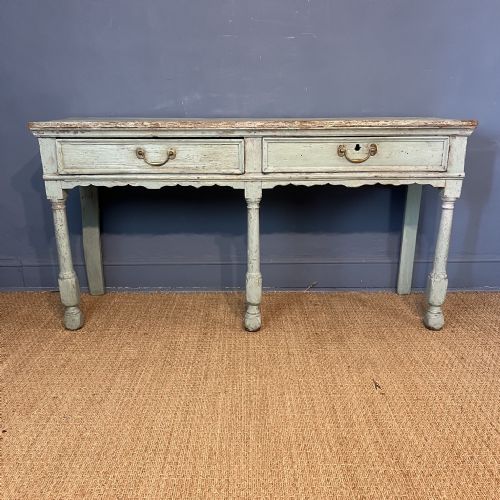

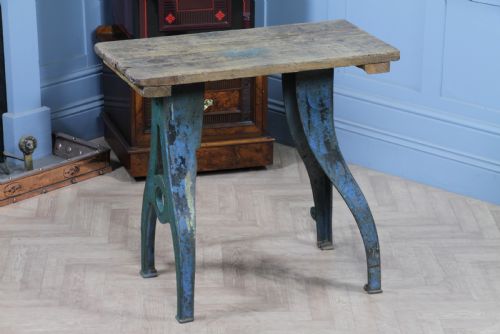


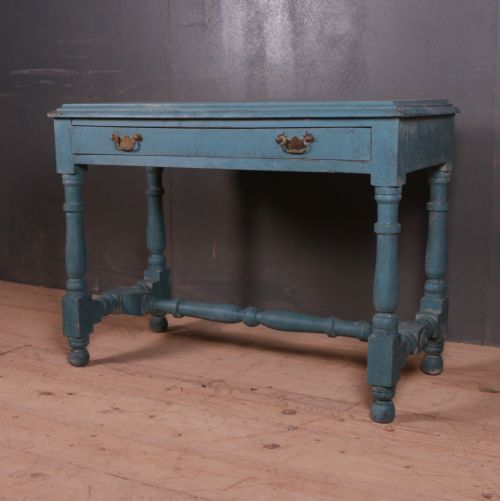
Blue Pine Console Table
A blue pine console table brings honest timber and weathered pigment together, offering a functional surface rooted in country houses and workshops.
Blue Pine Console Table
When you search for a blue pine console table, you are looking at utilitarian furniture transformed by historical paint finishes and domestic use. The pieces gathered here draw from eighteenth and nineteenth-century traditions, spanning English country workshops and Scandinavian farmhouses.
You are most likely to encounter nineteenth-century painted pine tables alongside eighteenth-century dresser bases and side tables. These forms served practical purposes in kitchens, halls, and workrooms before finding a place in contemporary interiors.
The aesthetic leans heavily toward English country, rustic farmhouse, and Gustavian styles, where structural utility meets decorative painted surfaces. Each piece carries the marks of its working past, from scrubbed tops to layered pigment.
How they were made
Makers constructed these pieces primarily using solid timber, relying on pine boards assembled with traditional joinery for everyday utility. Secondary materials such as brass and cast iron appear in supporting hardware or up-cycled machine bases.
Surface treatments define these items, utilising historical paint applications that have weathered over decades of use. The combination of exposed wooden grain and original painted wood creates the distinctive dual texture seen across the range.
Even florists needed sturdy furniture, as proven by the nineteenth-century French two-tier work table joining the rustic lineup.
What varies in quality
Quality rests in the integrity of the original construction and the survival of early painted surfaces. Pieces retaining their untouched period pigment hold greater character than those stripped or heavily repaid in later years.
The balance between utilitarian strength and refined proportion separates robust working furniture from finer domestic examples. Original hardware, such as brass fittings, adds another layer of distinction to the build.
The Blue Pine Console Table Glossary
- Pine
- A softwood commonly used for vernacular furniture due to its availability and workability. It accepts paint readily, which accounts for the surviving coloured finishes on these pieces.
- Console Table
- A side table designed to stand against a wall, often serving narrow spaces like hallways. The form varies from simple trestle supports to two-tier work tables.
- Gustavian
- A Swedish style characterised by light colour palettes and restrained classical detailing, often seen in nineteenth-century Scandinavian painted tables.
- Dresser Base
- A low sideboard or cabinet featuring drawers and sometimes a potboard shelf beneath. These sturdy items formed the backbone of country house kitchens.
- Potboard
- An open slatted lower shelf fitted between the legs of a dresser base. It provided practical storage for heavy pots and kitchen utensils.
Blue Pine Console Table: Frequently Asked Questions
What is a blue pine console table?
It is a practical wooden table finished with historical blue or painted pigment, originating from domestic and workshop settings. These pieces combine utilitarian forms with decorative surface patination.
They reflect vernacular furniture traditions from eighteenth and nineteenth-century Europe, serving as functional surfaces with distinct decorative character.
Where were these tables used?
Historically, such tables stood in farmhouses, country kitchens, workshops, and hallways where sturdy surfaces were required. They were built for daily labour rather than formal display.
Today, buyers place them in living rooms, entryways, and dining spaces to anchor rustic or eclectic interiors with historical depth.
How do I identify the period?
Dating relies on construction methods, timber choice, and the wear patterns of the painted finish. Eighteenth-century examples often display simpler joinery and deeper patination.
Nineteenth-century pieces may incorporate industrial elements like cast iron or reflect specific regional aesthetics such as Swedish Gustavian or English country styles.
Are the paint finishes original?
Surviving surfaces range from untouched early paint to layered coats accumulated over generations of use. The texture and crackle of the pigment provide clues to its age.
Examining the interface between the paint and the pine beneath helps distinguish period finishes from later decorative applications.
How do I care for antique pine?
Protect the wood and historic paint by keeping tables away from direct heat sources and excessive moisture. Routine dusting with a dry cloth is sufficient for maintenance.
Avoid harsh chemical cleaners that can strip fragile historical pigment or dry out the underlying softwood.