




Blue Pattern Accent Chairs
These blue pattern accent chairs bring character and pattern to a room, offering comfortable seating through diverse historical styles.
Blue Pattern Accent Chairs
Blue pattern accent chairs encompass a variety of seating forms designed to provide both utility and decorative presence in living spaces, bedrooms, and libraries. Buyers searching this phrase encounter nineteenth-century and early twentieth-century pieces spanning Victorian, Edwardian, and Regency periods alongside revival styles.
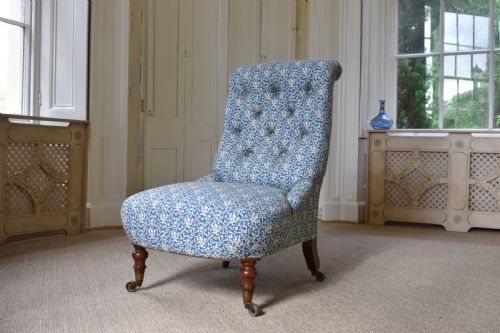
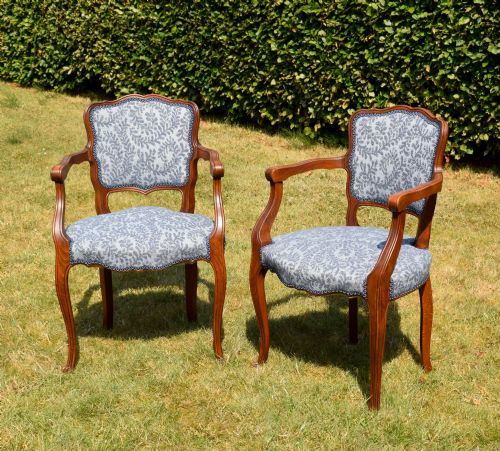
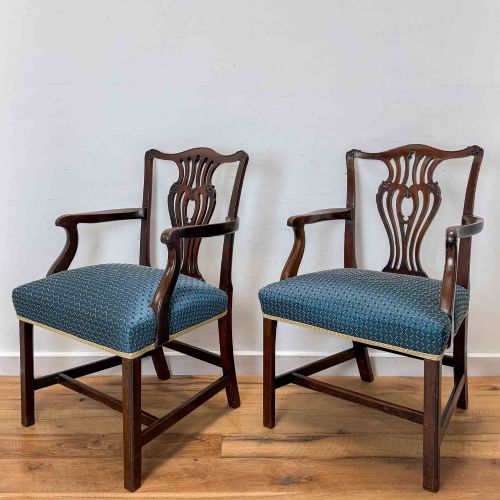
The selection includes armchairs, slipper chairs, side chairs, and bedroom chairs. Makers such as Howard and Sons and Whytock & Reid feature prominently alongside French early twentieth-century pairs and Chippendale style mahogany pieces.
How they were made
Construction relies heavily on timbers such as mahogany, walnut, and general wood frameworks, paired with brass details and turned front legs featuring castors. Frames often exhibit carved wooden elements and structural integrity designed for heavy domestic use.
Upholstery involves traditional textile coverings, cotton fabrics, and new geometric upholstery applied to deep-seated frames, button backs, and bergère style wing armchairs.
Blue Pattern Accent Chairs Retail Price Guide 2026
Typical asking prices for blue pattern accent chairs among the pieces listed under this phrase on Sellingantiques today, from the lower quarter to the upper quarter. They describe what is for sale here now, not the wider market.
Some chairs come equipped with castors, ready to roll across the floor at a moment's notice.
What varies in quality
Quality differences lie in the distinction between standard production pieces and documented workshop creations by makers like Howard and Sons or Whytock & Reid. The refinement of carved mahogany details, the scale of the armchair, and the execution of turned legs elevate certain examples above others.
The preservation of original structural elements combined with sympathetic restoration of upholstery fabrics determines the enduring appeal and historical integrity of each chair.
Howard and Sons·Whytock and Reid·William Morris
The Blue Pattern Accent Chairs Glossary
- Slipper chair
- A low-seated upholstered chair originally designed for bedrooms to assist with putting on shoes. They are typically compact and deep-seated.
- Wingback armchair
- A high-backed chair with side panels designed to shield the occupant from drafts. Early examples often incorporate claw and ball feet.
- Tub armchair
- A comfortable chair with a continuous curved back and arms forming a single rounded enclosure. This form provides supportive seating.
- Turned front legs
- Wooden supports shaped on a lathe to create cylindrical or decorative profiles. These legs frequently incorporate brass castors for mobility.
Blue Pattern Accent Chairs: Frequently Asked Questions
What is a slipper chair?
A slipper chair is a low-seated armchair designed historically for use in bedrooms. They offer compact proportions and deep seating.
Today, these chairs function well as accent seating in living rooms or dressing areas where space is limited.
How do I identify a Victorian armchair?
Victorian armchairs often feature dark woods like mahogany, turned front legs with castors, and button-backed upholstery. Stylistic influences vary from plain revival forms to ornate carvings.
Examining the construction methods and wood ageing helps distinguish these nineteenth-century pieces from later reproductions.
Where should I place an accent chair?
Accent chairs suit reading corners, bedrooms, and living room groupings where they introduce pattern and colour. Pairing them with complementary furniture creates a balanced interior.
Consider the scale of the chair in relation to surrounding pieces to ensure comfortable clearance.
What is a bergère style chair?
A bergère is a traditional French upholstered armchair featuring an exposed wooden frame and enclosed sides. These pieces offer a formal aesthetic.
They work effectively as focal points in drawing rooms or studies.